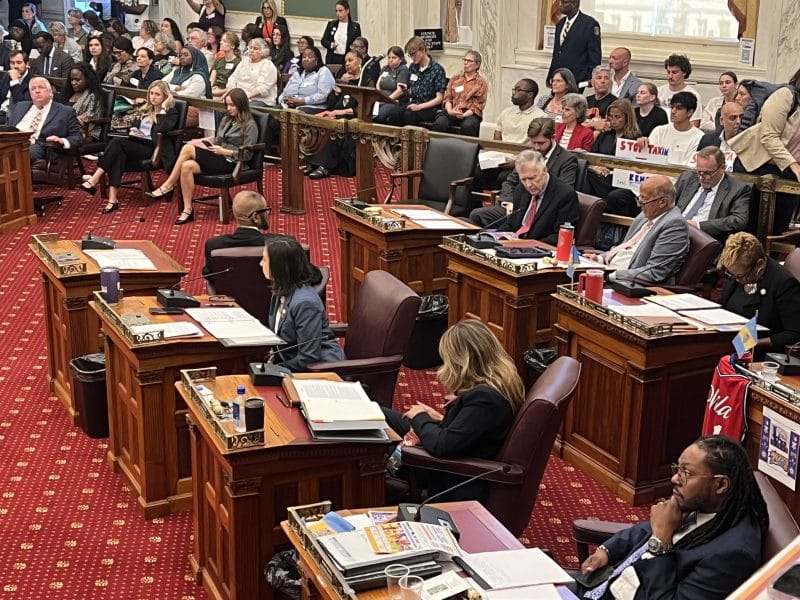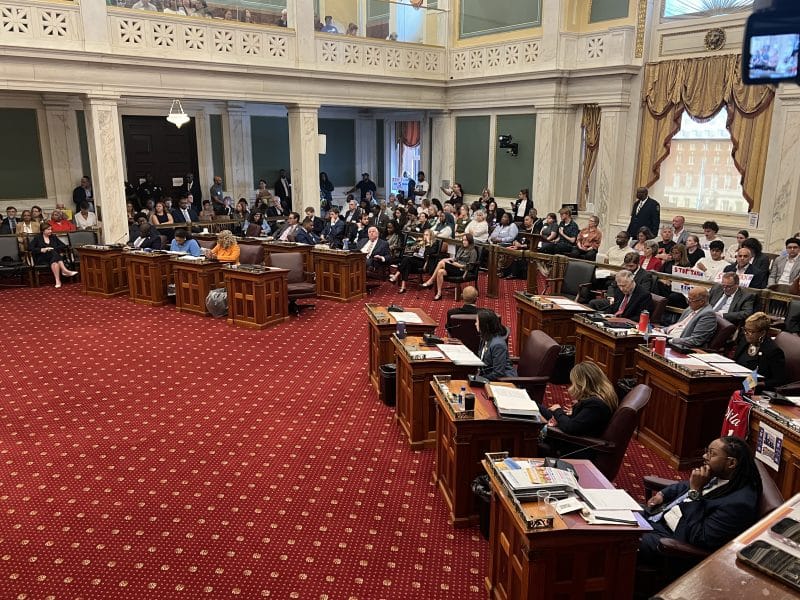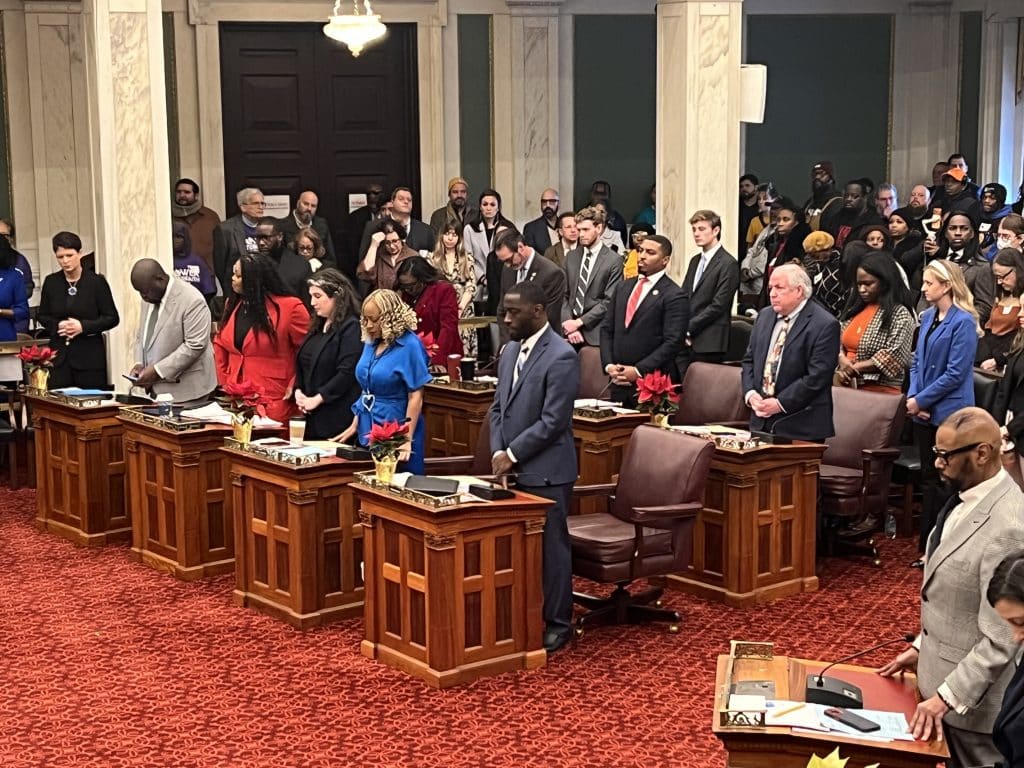
The Philadelphia City Council Committee on Public Safety heard testimony on Resolution 250863, “examining whether death by suicide for first responders should be considered as occurring in the line of duty, and to explore mental health initiatives aimed at preventing suicide and supporting the overall well-being of first responders.”
Council President Kenyatta Johnson, the originator of the legislation that called the hearing, said Council wanted to investigate the mental health resources currently available for first responders in Philadelphia.
“We need to understand what is working, where gaps exist, and how we can strengthen prevention, early intervention, and (provide) ongoing support,” Johnson said. “We will also examine the benefits provided to families in the tragic event of a first responders’ death by suicide, and whether such a death should be considered (to have occurred) in the line of duty.”
Regan Faulk, founder of the Kevin Regan Foundation and the widow of an officer who committed suicide, said that after suffering trauma from a difficult experience at work, her husband’s chief concern was not his own mental health, but concern that by seeking help for the trauma he would lose credibility within the department. He committed suicide 36 hours later.
”One thing I’m certain of,” Faulk said “Is that my husband did not have Post Traumatic Stress Syndrome (PTSD) from spending time with this family. He had PTSD and was in crisis from the stressors of his job.”
Faulk said first responders are 500 times more likely to experience traumatic events than the rest of the population, with 85% reporting some sort of mental health condition. The overwhelming majority of first responders will not seek help for these conditions for fear of jeopardizing their job and other associated stigma.
When Faulk’s husband died, she was told the health insurance she depended on for herself and twin one-year old boys would be ending within the month. However, she appealed to the Fraternal Order of Police (FOP) who agreed to extend the coverage for a further five years. She is nearing the end of that extension and must revisit the situation with the FOP to see if coverage can be extended again.
Others are not so fortunate, however. Faulk said she only received this coverage extension and her husband’s small pension because she continually inquired about such things. Others who are not as persistent received much less or nothing at all.
John Becker, a former first responder who now counsels current first responders, provided startling statistics as to how job trauma impacts the personal lives of police, fire, and EMT workers.
“71% of police officers report sleeping issues,” Becker said. “45% of firefighters expressed experiencing anxiety. 18% of police officers suffer from PTSD, which is double the national average.”
Becker said that 50% of firefighters report binge drinking, and 73% of EMS workers report occupational burn-out.
Administration representatives from the Departments of Human Resources and Risk Management attended the hearing to provide insight on governmental approaches to first-responder suicide. Notably, the Parker Administration did not make Police, Fire, or EMT representatives available.
Marsha Green-Jones, deputy Human Resources director for the City of Philadelphia, drew the ire of councilmembers when she said the city does not require a separate line-of-duty policy because it prioritizes the well-being of all its employees.
“We have robust support systems in place,” Green-Jones said. “Including the Employee Assistance Program, concierge services through Wellthy, and comprehensive employee and family wellness resources offered by On the Goga and Securian.”
Sharolyn L. Murphy, the Risk Manager in the city Finance Department, also caused concern among members of council by testifying that many factors can cause a first responder to commit suicide, and provided a hypothetical example.
“A police officer who has been on a leave of absence for one year to care for his ailing mother discovers that his house is going into foreclosure and he then commits suicide,” Murphy said. “If this suicide was considered a line of duty death, this would force he City to pay benefits for this death, even though it had nothing to do with work.”
“The City is better served by investing in preventative measures aimed at reducing or eliminating suicides amongst first repsonders, including mental health evaluations, mental health treatment, and out-paitient therapy.”
Murphy also explained how the city calculates survivor benefits, and discussed state law that defines the criteria that deems suicide compensable.
Describing a “chain of causation test,” Murphy said that after the death was proved a suicide, the folowing critertia must be met for payout of certain benefits:
The suicide occured after there was an initial work-related injury
The injury directly caused the employee to be dominated by a disturbance of the mind so severe as to override normal rational judgment
Which disturbance resulted in the the suicide
Murphy also described the compensation structure for the deceased’s survivors:
Surviving Spouse without children: 51% of the deceased worker’s average weekly wage (AWW)
Surviving spouse with one child: 60% of the AWW
Surviring Spouse with two or more children: 66 ⅔ of the AWW
Councilmember Jim Harrity seemed to express the feelings of council when he criticised the administration’s testimony, likening their viewpoint to the popular notion of how insurance companies operate.
“Your testimony reminded by of the book about insurance companies, how they delay, defend, deny. I really get upset when we use these actuarial number in order to assess how much someone’s life is worth,” Harrity said. “Who are we to put a number on something like that?”
Landau Recognizes HIV is Not a Crime Awareness Day
Councilmember Rue Landau introduced a resolution “recognizing February 28th, 2026, as HIV is Not a Crime Awareness Day in the City of Philadelphia.”
According to the resolution, 29 states currently have laws criminalizing specific acts by people living with HIV. Criminalization laws began passing legislatures in the 1980s, when the disease was still not fully understood, and remain despite significant advancements in treatment options that can render the symptoms almost non-existent.
The Pennsylvania Crime Code still contains provisions used to prosecute people living with HIV, which have been used when no other charges have been brought, thus discriminating against person due to their health status.
Thomas’ Charter Change Will Appear on Ballot
Councilmember Isaiah Thomas’ legislation to change the city charter by ballot referendum to allow city employees to run for political office without first resigning their current city position. The only exception to the proposed change is the office of the Mayor. Recent amendments to the legislation would require all city employees to resign their position to run for elected office, and city elected officials would have to resign to run for Mayor.
Thomas’ rationale for the change is that city officials would not have to risk their current office if they chose to run for a state-wide position, thus increasing the number of Philadelphia electeds who could potentially serve in a state-wide positions and therefore increase they city’s relevance in state government.
“Reforming the resign to run rule for local elected officials is a critical first step towards ensuring Philadelphians have the best representation possible at all levels of government,”Councilmember Isaiah Thomas said. “I am grateful for the close collaboration of my colleagues and stakeholders to get this legislation across the finish line here in Council. I look forward to hearing the public’s input at the May 2026 election.”
Ahmad Calls for Hearing on Gaming Platforms
Councilmember Nina Ahmad introduced a resolution “authorizing the Joint Committees on Public Health and Human Services and the Children and Youth to hold hearings to raise awareness regarding the role of gaming platforms and social platforms and their use in the grooming, recruitment, and exploitation of minors, including conduct that may lead to human trafficking.”
With online platforms used for games and other types of media becoming more ubiquitous, particularly for children, there have been heightened concern amongst law enforcement, child advocates, educators, and services providers about the potential for minors to be subject to inappropriate behaviors by adults.
Nationwide, state Attorneys General have taken action against certain gaming and communications platforms, with allegations up to and including child sexual exploitation, with some cases originating in Pennsylvania.
Our reporters sit through hours of city council meetings, dig through piles of documents, and ask tough questions other media overlook. Because we’re committed to addressing Philadelphia’s poverty crisis — and challenging those who sustain it. If you think this work is important too, please support our journalism.
We’re counting on readers like you.