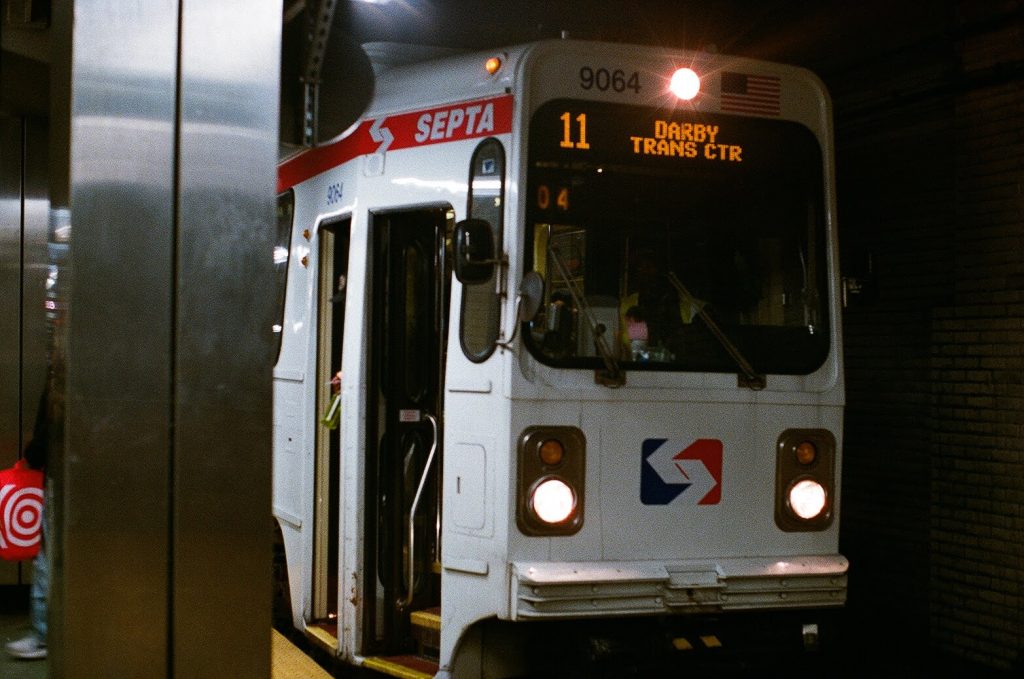
SEPTA began its annual budget hearing with a video statement from General Manager Scott Sauer. The hearing was presided over by Ms. Sarah Boutrous, the hearing examiner, who not only recommended the 45% service cuts and 20% fare hike last year, but also said there was no alternative.
The courts found differently and ordered the service restored. The money to operate the system was there. Being overturned in court and shown to be factually incorrect did not stop her reappointment.
The four days of hearings were attended by a handful of speakers. The hearings, scheduled to last two hours, lasted 30 minutes, with 20 of those minutes devoted to SEPTA witnesses. And still, the hearing examiner would not allow riders to ask questions and speak for more than three minutes.
The hearing’s most revealing moment came in response to Hall Monitor’s question: How much money will be in the Service Stabilization Fund at the beginning of the next fiscal year? The fund was established to keep surplus cash. It has been used as a stopgap to avoid service cuts during periods when subsidies and fares were insufficient.
SEPTA responded that it sought and received permission to no longer provide that information to the public. Far from being transparent, SEPTA is purposely hiding a cash fund so that the public cannot know how much, or little, cash SEPTA has and what they spend it on. In answering a direct follow-up question from Hall Monitor: “How can riders know how much is in the fund?” SEPTA responded: “It doesn’t know.”
The general manager testified that the proposed budget contains no fare hike or service cuts, writing, “SEPTA took the extraordinary step of diverting $394 million in state capital funds to cover its operating deficit for two years and avoid major service cuts to our system. In November, the state allocated $220 million in additional capital funds.” For the math-challenged, the drawdown from the capital budget wasn’t the stated $394 million, but $174 million. The federal government granted SEPTA more than expected: $234.8 million.
Sauer also stated that SEPTA has lowered its structural deficit — the difference between what SEPTA receives annually and what SEPTA spends — from $213 million to $192 million. If the amount in the Service Stabilization Fund were disclosed, riders would know how many more years SEPTA could operate at current levels, even if Governor Josh Shapiro were once again unable to get a predictable funding source through the State Legislature. This year’s budget states that the fund had $535 million in the last fiscal year, more than enough to restore service cuts and keep the system operating.
Despite Sauer’s testimony — the person who misled the public by rationalizing the 45% service cuts last year by saying SEPTA had to balance its budget, when it wasn’t true — saying the proposed budget contains no service cuts, it is a factually inaccurate statement.
Tens of thousands of riders will lose service, and some will have to wait four times as long for their bus. SEPTA doesn’t call them service cuts — they call them adjustments or the “New Bus Network.” For the riders of the 4 Bus, which runs up and down Broad Street, having to wait up to an hour for service instead of the current 15 minutes, it’s a service cut. For the 23,000 riders who will have to wait longer, miss connections, and who cannot use the subway, the “adjustments” are cuts. Changing the words doesn’t change what it means to SEPTA riders.
Hall Monitor asked how much it would cost to keep service at the same levels. SEPTA said it didn’t know.
No place in the budget does it say how many bus operator positions are still unfilled. There are 64 unfilled positions, and at the rate SEPTA has filled them in past years, there will not be enough this year to keep the scheduled routes running. Nor does the budget explain what is happening with Key Card 2, how much it is costing, when it will “come online,” or why it is needed, if SEPTA, as it says, is making it easier to use debit and credit cards. The hearing examiner ruled that questions about the Key Card were not pertinent to the operating budget.
Unlike other transit systems, SEPTA has no marketing plans to attract new riders. The new technologies allow SEPTA to try discounting off-peak rides to fill seats. There are no plans to try that approach. Other transit systems have free days. Every Saturday, Erie’s transit system runs a free bus to help people get to cultural events and shop in the city’s center. SEPTA has no “shopping specials” or “cultural fares” to encourage people to enjoy Philadelphia and use SEPTA. No new efforts are being made to move people out of cars and onto SEPTA.
Despite SEPTA’s dire warnings about its future, there is nothing in SEPTA’s budget that suggests anything other than business as usual. As the proverb goes: “Insanity is doing the same thing over and over and expecting different results.”
Our reporters sit through hours of city council meetings, dig through piles of documents, and ask tough questions other media overlook. Because we’re committed to addressing Philadelphia’s poverty crisis — and challenging those who sustain it. If you think this work is important too, please support our journalism.
We’re counting on readers like you.