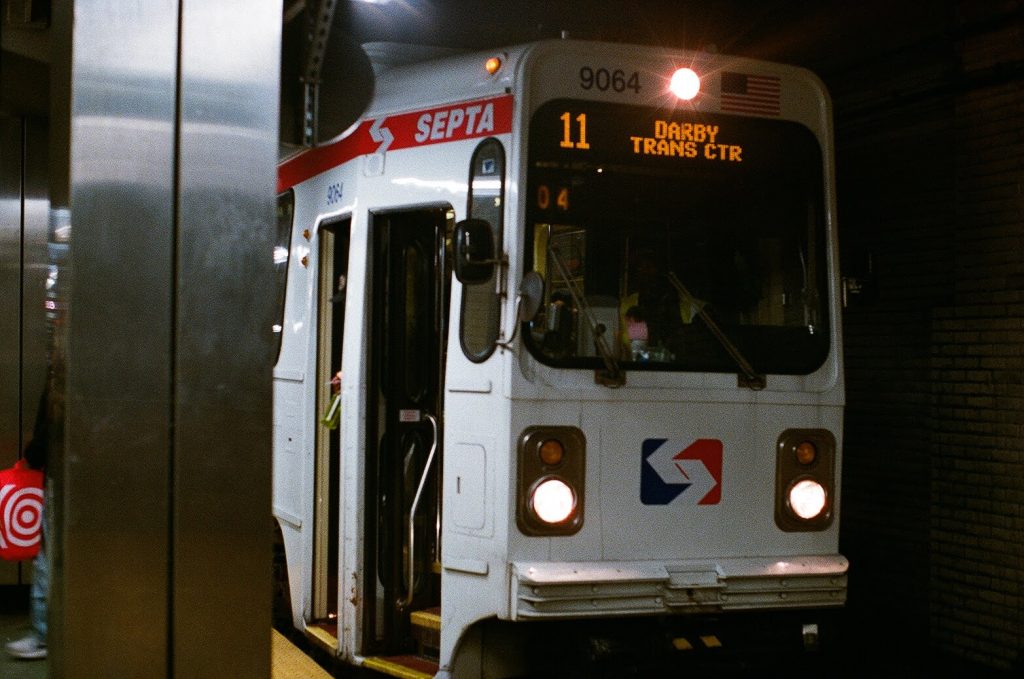
This Wednesday, April 15, at 11:00 am and 5 p.m., SEPTA will hold hearings at its headquarters, 1234 Market St, Philadelphia, about its plan to cut 23 bus routes and make most riders wait longer. The basis for the changes was called “The Bus Revolution,” which was developed by out-of-town “experts.” It was so unpopular that SEPTA no longer uses the term, but most of the plan is being enacted under a new name: “The New Bus Network” (NBN). The hearings — where the public must be allowed to ask questions and receive answers by law — are riders’ chance to ask: “Why are you eliminating my bus route?” and “Why are you making me wait longer?”
SEPTA’s early release of its budget plan announcing no proposed service cuts or fare hikes is misleading at best and could be called dishonest. SEPTA is planning to cut service on 23 routes, making most riders wait longer for their trips.
Phase 1 of the plan will eliminate four routes — the 35, 47M, 62, and 106. Eight routes will have service cuts — Route 4, a bus that goes up and down Broad Street, will go from every 16 minutes to 30 minutes, with no mention of what happens after 9 pm; Route 17 will be shortened; weekend service to the Navy Yard will be discontinued along with service to Broad and Patterson Avenues; Route 39 will be reduced on week days; Route 42 will be cut to only once an hour; Route 49 will be shortened and run less often; Route 53 will stop serving Hunting Park; Route 73 will cut service from every 20 minutes to every 30 minutes and no longer run overnight.
The first phase also includes the introduction of two new routes. The Route 72 will run on Cheltenham Avenue between Frankford Transit Center and Cedarbrook Plaza, and the Route 76 will run between Rising Sun Loop and Columbus Commons. There will also be several strategic route extensions (45, 53, 60, 61, 79, 105) that SEPTA said will improve overall connectivity, alignment changes (17, 25, 44, 49, 52, 57, 64), and eliminations of low ridership routes (35, 47M, 62, 78, 80, 89, 106).
SEPTA said, in addition to the New Bus Network phases, “FY2027 includes a limited set of targeted service changes driven by capital project requirements, critical safety concerns, or a need to update the Tariff Files to account for required operational adjustments. These changes were developed in coordination with the NBN planning process to ensure consistency with the emerging network and complement NBN-related service changes on nearby routes.”
What does that mean? The answers begin in Section 8 under “Appendix A.” It is there that the additional list of service cuts is disclosed. Fifteen routes are either eliminated or run at a reduced frequency. Six routes are added.
SEPTA’s justification: “Every year, as part of the Annual Service Plan, SEPTA staff will address routes that, based on the performance evaluation analysis, fall below the 15th percentile in both Passengers per Revenue Hour and Cost per Passenger.”
However, SEPTA is making changes to routes above the 15th percentile this year, and is dramatically cutting service to neighborhoods. An example is in South Philadelphia. The 4 bus, which runs up and down Broad Street, will have its service cut. Riders will have to wait twice as long for the bus.
SEPTA said riders can use the 45 instead, which runs south on 12th Street and North on 11th Street. But in Appendix A (page 64), SEPTA discloses that it will cut service on the 45 as well. After 9 p.m., it will only run once an hour.
Neither of these bus routes has low ridership. Neither falls below the 15% SEPTA sets as the threshold for considering service reductions or eliminations. The combined effect of cutting both the Route 4 and Route 45 in South Philadelphia isn’t disclosed.
How many riders know their bus is about to be eliminated or run less often? SEPTA said it has done outreach. Neither the 4 bus nor the 45 has signs posted along their routes explaining that SEPTA will propose eliminating buses, requiring riders to wait as long as an hour for service.
SEPTA said the changes will make the service faster and more reliable. The changes will not save SEPTA any money.
Certainly, the cuts will not make the service faster for people who ride the routes being eliminated or cut. Cutting service so that a bus only runs once an hour cannot make the service faster. Nor can service be faster if the bus no longer reaches riders’ destinations.
What then drives the cuts and changes? Is it part of SEPTA’s previous plan to eliminate 45% of its service? To change SEPTA from a public transit system to a commuter system? To help new developments (and therefore developers) at the expense of long-time Philadelphians?
Will City Councilmembers protect the riders? Will they stand up and demand that SEPTA place notices on the buses they want to eliminate or cut service? We will find out when the Council questions SEPTA at the City Council budget hearing, and whether any City Councilperson comes to the public hearing where SEPTA hopes to get permission to eliminate the service they don’t think riders need.
Our reporters sit through hours of city council meetings, dig through piles of documents, and ask tough questions other media overlook. Because we’re committed to addressing Philadelphia’s poverty crisis — and challenging those who sustain it. If you think this work is important too, please support our journalism.
We’re counting on readers like you.