Last Wednesday, April 15, SEPTA held two hearings seeking permission to eliminate seven bus routes, reduce service on at least six more, shorten 11 routes, increase the wait time for 23,000 riders every weekday so it can bring bus service to the Navy Yard, and create two new routes. Under oath, SEPTA admitted that it did not know how many bus stops it was eliminating.
It is impossible to know exactly how many people will lose service or how many routes will be cut. SEPTA admitted its exhibits were factually wrong and that other exhibits were still to be changed.
In its exhibit “Phase 1: Fall 2026,” SEPTA states it will reduce service on the 4 bus, which runs north-south on Broad Street and connects to east-west routes. Riders will have to wait twice as long for a bus. SEPTA, in writing, justifies this service cut by stating: “Route 45, located within a quarter mile, will continue to operate at its current schedule.” But this isn’t true; in Appendix A of SEPTA’s filing, they are also seeking permission to cut service on Route 45.
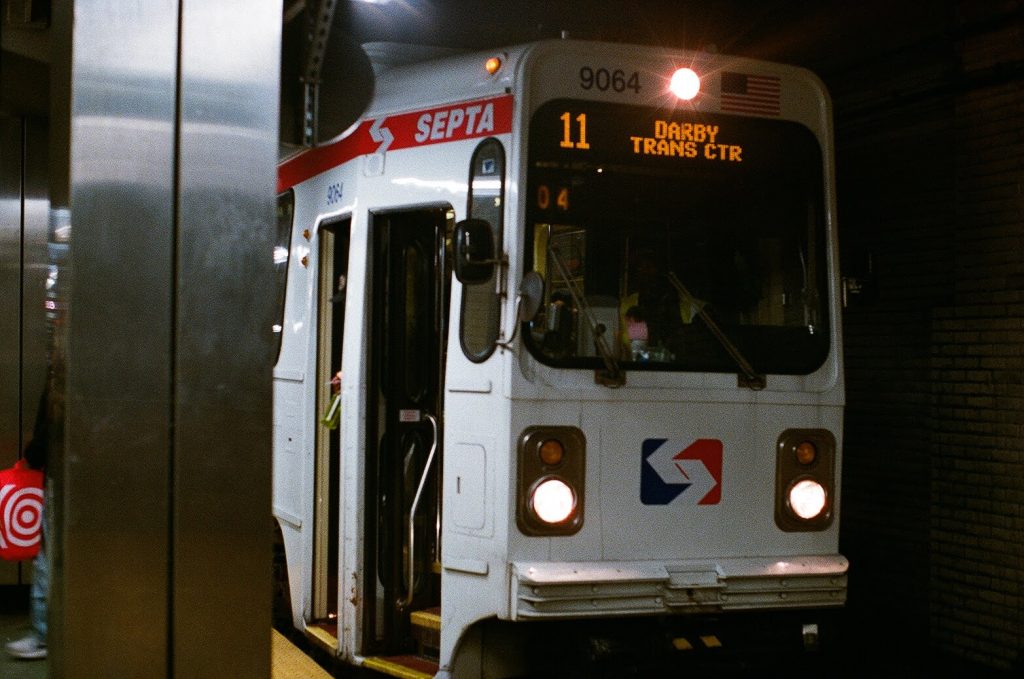
Facing questions, SEPTA admitted the exhibit was wrong, but that riders could always ride the Broad Street Subway. Not all subway stops are handicap-accessible. For those with physical limitations, the steps pose a challenge. But mostly, many riders find the Broad Street Subway unsafe. SEPTA declined to enter into the record the number of crimes committed on the Broad Street Line compared to the 4 bus.
Asked how much money SEPTA had in its fare stabilization fund to see if it could save the 23,000 riders from having their wait times double and reinstate the routes projected to be cut, the hearing examiner ruled the question was not pertinent to the hearings.
To Hall Monitor readers, that is not a surprise. The SEPTA Board Chairman reappointed Ms. Sarah Boutros to serve as the hearing examiner. Ms. Boutros was the hearing examiner last year who recommended that SEPTA eliminate 45% of its service.
The SEPTA board agreed with Ms. Boutros’ recommendation and cut service beginning on the first day of school for Philadelphia’s public schools. A court found SEPTA and Ms. Boutors’ actions and decisions unconstitutional and ordered the service reinstated. After that, SEPTA proved Ms. Boutros wrong by finding the money Ms. Boutros claimed didn’t exist to keep the system operating without any cuts.
Ms. Boutros’ reappointment proves that the Trump-era loyalty-over-competence ethos has been accepted by SEPTA. What other reason could there be for reappointing a hearing examiner who was proven wrong by the law and wrong on the facts?
Ms. Boutros continued her attack on the public hearings by refusing to tell riders that the law entitles the public to ask questions and receive answers. She continued to allow false testimony to be entered into the record and continued to limit speakers. This was despite the fact that so few were in attendance, and there was no need to do so.
Attendance was sparse because SEPTA did not post notices on the bus routes that it wants to eliminate or double the waiting time. Notices of the hearings were posted, but without telling riders what was being proposed. There was little reason for people to attend.
SEPTA’s General Manager, in an “Alice in Wonderland” first sentence, then trial style, told Philadelphia City Council that SEPTA would tell people about the pending cuts only after its hearings and their ability to object were over.
Even if one read the filing, it’s impossible to know just how damaging the proposed cuts would be. The cuts were not listed in one place, but were separated into “Phase 1” and 56 pages later, in “Appendix A.” The exhibits are factually wrong and mislead people into believing there are options when there aren’t.
To understand just how bad it is, consider this: South Philadelphia is served by Routes 45, 4, 32, and 27. The proposed cuts in Senator Nikil Saval and Council President Kenyatta Johnson’s districts would cut the 45, 32, and 4. Every person using one of those lines would have to wait at least twice as long. Only those brave enough and physically able to use the steps could consider the Broad Street Subway as an option. But who among us wants to ride the subway at 11 p.m.?
Why cut the service to Saval and Johnson’s districts so dramatically? The hearing examiner would not force SEPTA to answer questions, so we may never know. Perhaps there are also other districts where the combined service cuts are even worse, but the factually incomplete and inaccurate exhibits cover it up.
At SEPTA’s May Board meeting, we will find out whether the city’s SEPTA board members support eliminating city routes and making 23,000 people wait twice as long for a SEPTA bus.
Our reporters sit through hours of city council meetings, dig through piles of documents, and ask tough questions other media overlook. Because we’re committed to addressing Philadelphia’s poverty crisis — and challenging those who sustain it. If you think this work is important too, please support our journalism.
We’re counting on readers like you.