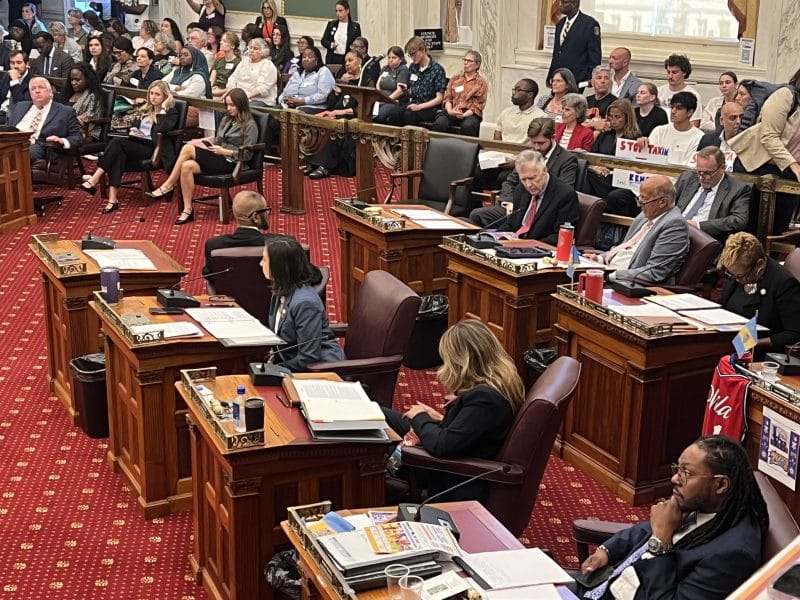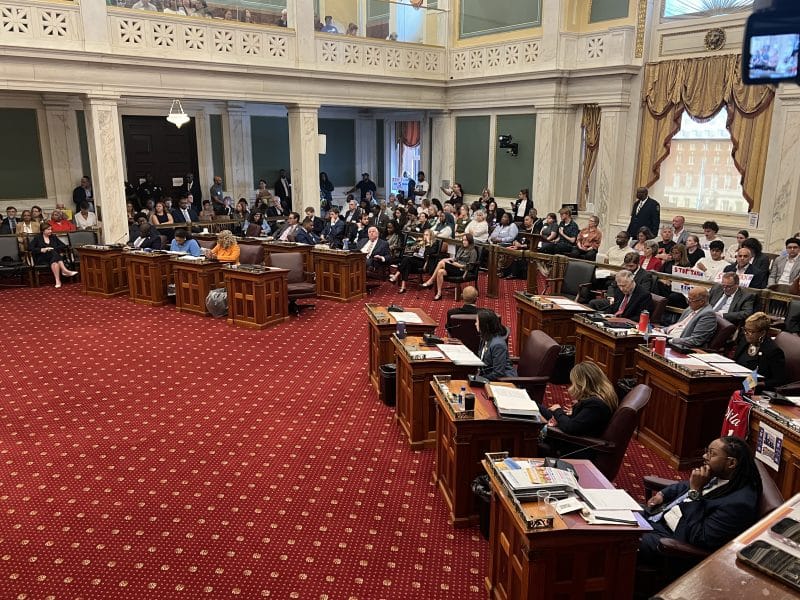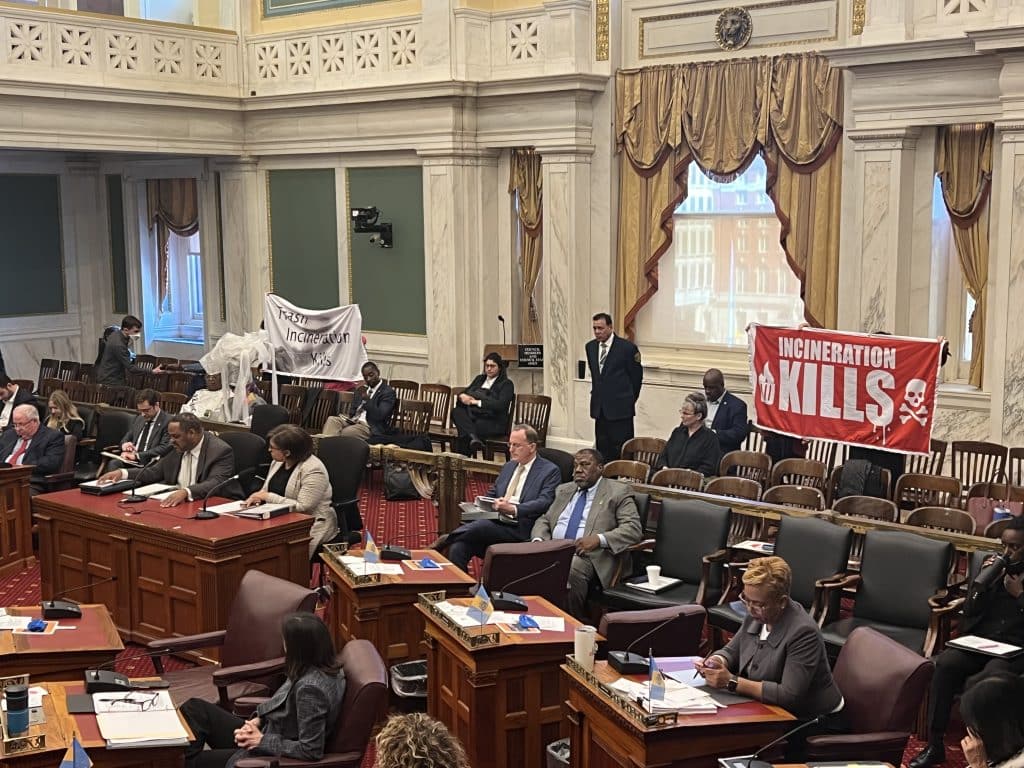
Councilmember Jamie Gauthier questioned Clean and Green Commissioner Carlton Williams about the city’s existing contract with ReWorld, the owners of the trash incinerator housed in Chester, Pennsylvania.
Gauthier cited studies showing that burning trash is 69% worse than landfilling and 23 times as harmful across all other public health and environmental measures combined.
Williams maintained the public position he has espoused for months, saying the department needed more time to analyze its options related to waste disposal. Williams said the department would not have an internal study prepared until either late spring or early summer, while a decision on the contract is needed by June 30th, which is one day before the 2027 fiscal year begins.
Williams said the city could request a one-year extension on the current contract to make a decision on future commitments.
Streets Testimony
Also testifying in the Tuesday session was the Streets Department, which, in response to a question from Councilmember Anthony Phillips, described the process by which streets are chosen for repaving.
Kristin Del Rossi, the commissioner for the Streets Department, said the city uses a two-fold approach when deciding whether to repave, while also noting that the city is in the process of reevaluating how individual streets are assessed.
“We do visual inspection that are conducted on the street, and then we take that information from our system called PRISM, which we sue to (schedule and catalog) inspections that are conducted city wide,” Del Rossi said. “Then each street is ranked and (we consider different conditions such as) defects, utility cuts, and then (perform a final ranking of which streets are a priority).”
Del Rossi added that each block that is repaved costs the city about $350,000. The city repaves about 31 miles of city streets per year.
Water Department Testimony
The Water Department testified at the Wednesday morning budget session, where they faced numerous questions over their significant rate increases. Councilmember Jaime Gauthier applauded the department’s efforts to increase investment in the Tiered Assistance Program (TAP) for low-income Philadelphians, but also questioned why rates had to be increased so significantly over the last few years.
“Before we say ‘no’ to helping more people in a time where they’re under siege by the federal government and by other factors, I think we have to look at how much we’re raising rates, how much we’re asking people to pay and increase bills, and truly consider whether we can do an expansion of relief programs.”
Councilmember Mike Driscoll, chair of the Public Utilities Committee, asked about specific steps the Water Department was taking to ensure middle-income residents who may not qualify for TAP but are still facing rising costs of living are protected from compounding annual increases.
“I think,” Benjamin Jewell, Commissioner of the Water Department, said, “The way we provide relief is by trying to do everything we can do to control costs. We are living in a world where affordability is a buzzword, and we all buy groceries in that world. We’ve seen (some of our costs) start to stabilize, but we’re also looking internally at what we’re doing to see if we’re making the best investment and return on those dollars.”
Jewell cited rising costs across all aspects of department operations as a reason for the increase, including needed repairs to aging infrastructure and onerous regulatory requirements. The department replaces roughly 32 miles of water mains each year, with about 3000 miles of mains throughout the city. Jewell said making hypothetical changes to that schedule, for example, would lead to other problems, such as infrastructure designated for replacement failing because the repairs were forestalled.
City Departments Testifying This Week
Sanitation Department
The mission of the Office of Clean and Green (OCG) Initiatives is to help make Philadelphia the safest, cleanest, and greenest big city in the nation with access to economic opportunity for all. This includes developing a proactive and responsive citywide strategy that addresses quality-of-life issues in every neighborhood, prioritizing the most underserved communities. OCG provides overall strategic direction and guidance to other City entities that perform work related to its clean and green mission. Two of these, the Sanitation Department and the Community Life Improvement Program (CLIP), report directly to the Executive Director of OCG and are therefore part of the overall Office of Clean and Green. Both have their own organizational missions.
FY 2026 Budget: $180,065,692
FY 2027 Budget: $190,041,082
Streets Department
The Department of Streets (Streets) provides safe streets in a cost-effective and efficient manner to make Philadelphia the safest,
cleanest, and greenest big city in the nation, with access to economic opportunity for all. The Department constructs and maintains the City’s transportation network and ensures the safety of multimodal users to achieve Vision Zero goals.
FY 2026 Budget: $139,285,359
FY 2027 Budget: $87,524,843
Water Department
The Philadelphia Water Department (PWD) is a resilient utility, committed to providing reliable, safe drinking water, wastewater, and stormwater services to the community while protecting the Philadelphia region’s environment, supporting public health, and promoting a cleaner and greener city
FY 2026 Budget: $607,501,207
FY 2027 Budget: $619,885,011
Aviation Department
“Proudly Connecting Philadelphia with the World!” – the Department of Aviation (“Department” or “Aviation”) is comprised of the Philadelphia International Airport (PHL) and the Northeast Philadelphia Airport (PNE). A self sustaining entity, Aviation operates without the use of local tax dollars while generating over $18.7 billion of economic activity for the region. Travelers through the PHL gateway have opportunities to experience a wide variety of products and services that are distinctly Philadelphian.
FY 2026 Budget: $286,629,000
FY 2027 Budget: $294,479,000
Licenses and Inspections
Under Mayor Parker’s leadership, the Department of Licenses and Inspections (L&I) has been split into two departments – Inspections, Safety and Compliance (ISC) and Quality of Life (QOL) – to help it better perform its core functions. ISC enforces the City’s codes for the safe and lawful construction and use of buildings to support the Mayor’s goal of building mutual trust and safety in city neighborhoods and providing access to economic opportunity for all. QOL responsibly and respectfully serves the community of Philadelphia by providing quality code education and enforcement services through transparency, approachability, and embracing positivity to make Philadelphia the safest, cleanest, and greenest big city in the country with access to economic opportunity for all.
FY 2026 Budget: $47,366,669
FY 2027 Budget: $50,448,577
This article is a part of Every Voice, Every Vote, a collaborative project managed by The Lenfest Institute for Journalism. The William Penn Foundation provides lead support for Every Voice, Every Vote in 2024 and 2025 with additional funding from The Lenfest Institute for Journalism, Comcast NBC Universal, The John S. and James L. Knight Foundation, Henry L. Kimelman Family Foundation, Judy and Peter Leone, Arctos Foundation, Wyncote Foundation, 25th Century Foundation, Dolfinger-McMahon Foundation, and Philadelphia Health Partnership. To learn more about the project and view a full list of supporters, visit www.everyvoice-everyvote.org. Editorial content is created independently of the project’s donors.
Our reporters sit through hours of city council meetings, dig through piles of documents, and ask tough questions other media overlook. Because we’re committed to addressing Philadelphia’s poverty crisis — and challenging those who sustain it. If you think this work is important too, please support our journalism.
We’re counting on readers like you.