Photo: Lisa Haver
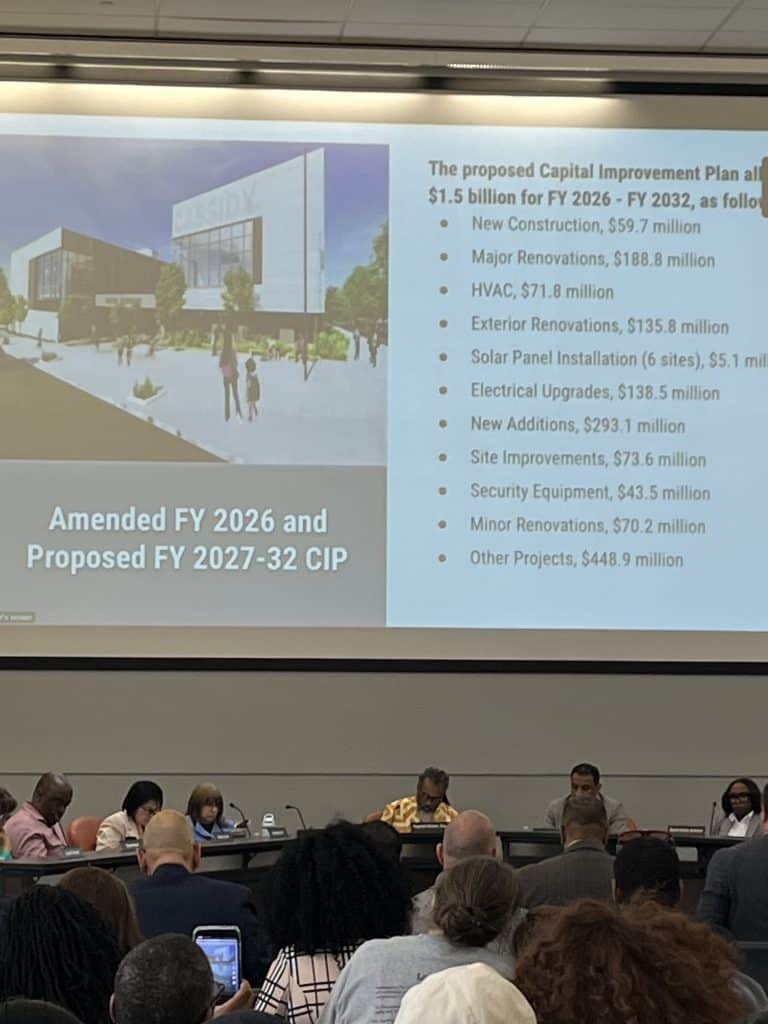
At its May 28 action meeting, Philadelphia’s Board of Education passed by unanimous vote a $4.6 billion budget for the 2026-27 fiscal year beginning next month. The board also approved a 5-year Capital Improvement Program (CIP) that includes some of the projects included in the Facilities Master Plan passed in April. For many, there remain unanswered questions about how the district would be able to carry out the improvements promised by Superintendent Tony Watlington Sr. with this budget’s current revenues and obligations.
Only half of the board members present asked questions of Watlington or his representatives about the budget. Board Member ChauWing Lam did ask Operations Chief Oz Hill why no item for construction of a new high school in the Northeast, as proposed in the Facilities Master Plan (FMP), was listed in this CIP summary. Hill explained that the funding for that school had not been secured. Actually, most of the proposals in the FMP open with the caveat “If the district is granted additional government and/or philanthropic funding…” Board Member Whitney Jones, who was a No vote on the FMP last month, observed that administration’s “intentions are exceeding revenues” and requested that the administration give regular updates on how they would fulfill the specific proposals of the FMP. Watlington repeated his promises to increase services to students, including more Algebra courses in middle school and more pre-K programs.
The district went into this budget process predicting a $300 million deficit. Watlington appeared with Mayor Cherelle Parker at the May press conference at which she proposed a $1. rideshare tax that would add $48 million to district coffers annually.
District CFO Mike Herbstman, during his presentation, congratulated the mayor for her “courage” in pushing the tax, stating unequivocally that its passage would allow the district to cancel the 300 staff cuts. In that same presentation, however, Herbstman projected a balanced budget by FY 2030 and a surplus of $130 million the following year.
Those of us with little experience in analyzing large administrative budgets were left wondering how the district would be able to spend more on classroom resources, new construction and building modernizations while the state’s contribution was decreasing by over $5 million next year. In addition, City Council last year passed a massive tax cut for businesses that will decrease revenue to the city by approximately $3 billion by 2038. That loss of revenue may affect the city’s ability to increase funding to the city’s schools. And the mayor is still pushing for a 20-year tax abatement on empty office buildings and vacant school buildings. Business taxes go down while another regressive sales tax–in addition to the liquor-by-the-drink tax, the cigarette tax, and the soda tax–would be placed upon poor and working people.
The district allocates 37.8% of its total budget for its 81 charter schools, almost half of which are underenrolled. The board is poised to approve 5-year renewals for nine charters, eight of which failed to meet basic academic standards, including one with only a 44% rating. The board’s Charter Schools Office recommended two schools for non-renewal, which will almost certainly begin an extensive and costly legal battle.
Based on the district’s current allotments, the cost to the taxpayers to operate all eleven schools over the five years would total approximately $900,000,000. One of those recommended for non-renewal, Global Leadership Academy (GLA) at Huey, failed to meet standards in all major categories, yet recent IRS documents show the school paying one of its CEOs a combined annual income of over $500,000. The board says it can’t afford to keep public schools open but refuses to hold public renewal hearings to examine charter school spending.
City Councilmember Isaiah Thomas has been a consistent advocate for charter schools, appearing before the board two years ago in support of GLA’s application for a third school. Thomas spoke in front of district headquarters before the May meeting, telling reporters, “We are asking them to come back to the table” in order to reach a “happy compromise” on school closings. Thomas did not specify the terms which would satisfy him or identify who else was at the table. Have any negotiations between Council and board members or the mayor’s office included public education advocates or members of school communities targeted for closure?
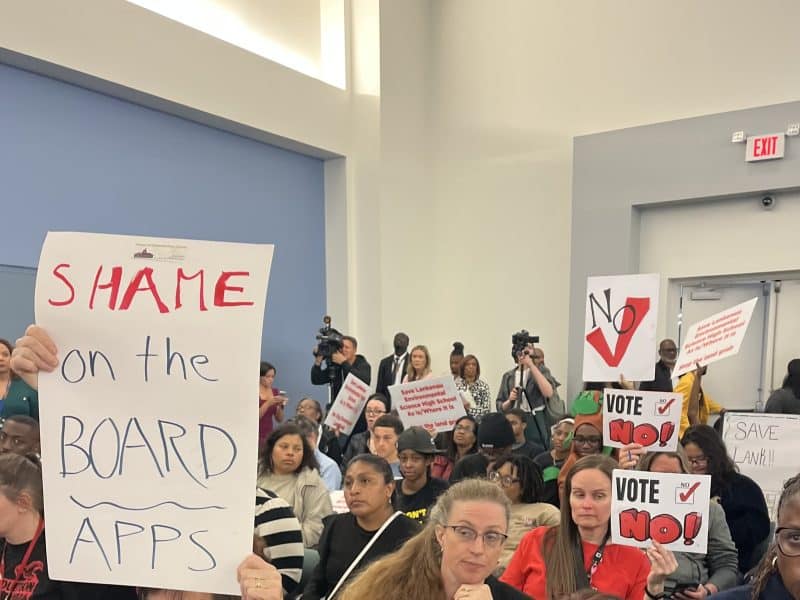
With the exception of Councilmember Jeffery Young, Council in fact does not oppose the Facilities Master Plan. Council’s Education Committee has yet to convene a hearing on the issue. Council has given every indication that they will accept the closures of neighborhood schools in Frankford, Kensington, North Philadelphia and West Philadelphia in exchange for removing a couple of special admit schools from the list. Council has passed no resolution reflecting the demands of the parents, teachers, students and community members who returned to the board last week: that the facilities plan must not include closings of neighborhood public schools.
Lisa Haver is a retired Philadelphia teacher. She is a co-founder and coordinator of the Alliance for Philadelphia Public Schools. appsphilly.net
Our reporters sit through hours of city council meetings, dig through piles of documents, and ask tough questions other media overlook. Because we’re committed to addressing Philadelphia’s poverty crisis — and challenging those who sustain it. If you think this work is important too, please support our journalism.
We’re counting on readers like you.