On Monday, Mayor Cherelle Parker announced her nominees to serve on the Philadelphia Board of Education. Parker chose to keep four of the present board members: Reginald Streater, Joyce Wilkerson, Sara-Ashley Andrews, and Chau Wing Lam. The five new nominees are Whitney Jones, Joan Stern, Crystal Cubbage, Crystal Harper, and Wanda Novales. After confirmation hearings held by City Council, the new board will be sworn in on May 1.
What do we know about the mayor’s nominees other than in the short bios released by the mayor? Whatever we can find online–or from the Inquirer and Philly Power Research. Nominees were selected and interviewed in a process that shut out the public completely. There were no debates or town halls, no opportunities for members of the public to see who they are; what kind of experience in education they have, if any; or what they stand for. Have they ever advocated for more funding for public education? Have they testified at a school board meeting or in City Council as a parent or educator or community member? Will they fight to bring back school librarians or commit to funding smaller class size? From the information released so far, it appears that only present board president Reginald Streater has children in the public school system.
Voters choose members of other governmental bodies based on their experience, their beliefs, and their stands on the issues. Philadelphians can’t do any of that when a school board is selected. We are relegated to being passive observers.
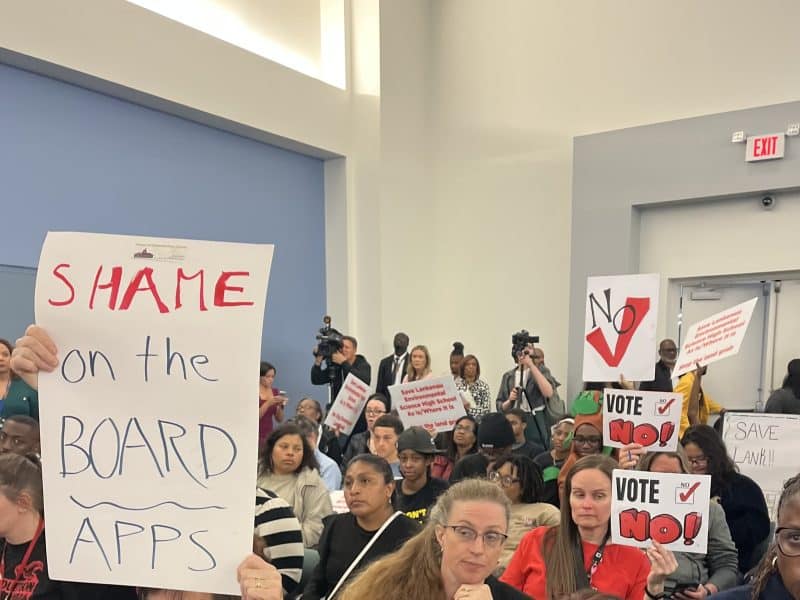
We do know who the current board members are and can look at their voting records, but that doesn’t reveal much. In recent years, they have implemented speaker suppression policies to limit the number of speakers at every board meeting–and at times to bar those not on the list from entering the auditorium. They vote on 30 or more items in one roll call vote, with very little deliberation, making it very difficult for the public to follow the money. so that the public cannot follow the money.
Mayor Parker has chosen two nominees with backgrounds in the charter sector. That comes as no surprise to those who heard her statements on charters during the campaign or see the appointments to her education subcommittee. Whitney Jones served in administrative positions for KIPPcharters in both Philadelphia and San Antonio. He previously monitored charter schools for the DC Public Charter School Board and worked for EdTec, a consulting firm supporting charter schools. https://edtec.com/meet-the-team/ Wanda Novales was the CEO and Founding Principal of Pan American Charter School in Philly and also was a board member for Esperanza Academy Charter School 2018-2020. The mayor has framed this issue as one with opposing teams: public versus charter. It is important to understand the history and the politics of the privatization of public schools as a movement funded by wealthy individuals and corporations to take public assets and put them in the hands of private investors, to bust unions, and most importantly, to take education out of the realm of public good and subject it to free-market forces.
Mayor Parker has also selected: Crystal Cubbage, a former teacher and current director of the Philadelphia Learning Collaborative; Cheryl Harper, a former district teacher and director of human resources under Superintendent Constance Clayton; and Joan Stern, a public finance attorney.
The Board of Education, as the governing body of the School District of Philadelphia, oversees a $4.5 billion annual budget, formulates educational policy and practices, authorizes any new charter schools and votes on whether to renew current charters. They will decide on whether to close more neighborhood schools and how much to spend to build new schools.
Advocates for public education have been deeply disappointed with the failure of the present board to improve the educational experience of the city’s children. Educational issues can be complicated, but some reforms are obvious: restore school librarians to every school, lower class size, bring back reading specialists, end the practice of leveling, reduce standardardized testing.The board appointed by Mayor James Kenney after the dissolution of the School Reform Commission has accomplished none of this. They are indistinguishable from the SRC in their spending priorities; they send too much money to outsourcing and consultants and not enough to classrooms. The board has continued the SRC’s legacy of protecting charters by conducting charter business through private negotiations with charter operators and renewing substandard charters without any public scrutiny.
A board not chosen by the public, by definition, cannot be truly accountable to the public. But we have to hold out hope that a new board under a new mayor might show the leadership that the city needs to make schools truly better for our children.
Lisa Haver is a retired Philadelphia teacher. She is a co-founder and co-ordinator of the Alliance for Philadelphia Public Schools, a grass-roots advocacy organization.
Our reporters sit through hours of city council meetings, dig through piles of documents, and ask tough questions other media overlook. Because we’re committed to addressing Philadelphia’s poverty crisis — and challenging those who sustain it. If you think this work is important too, please support our journalism.
We’re counting on readers like you.