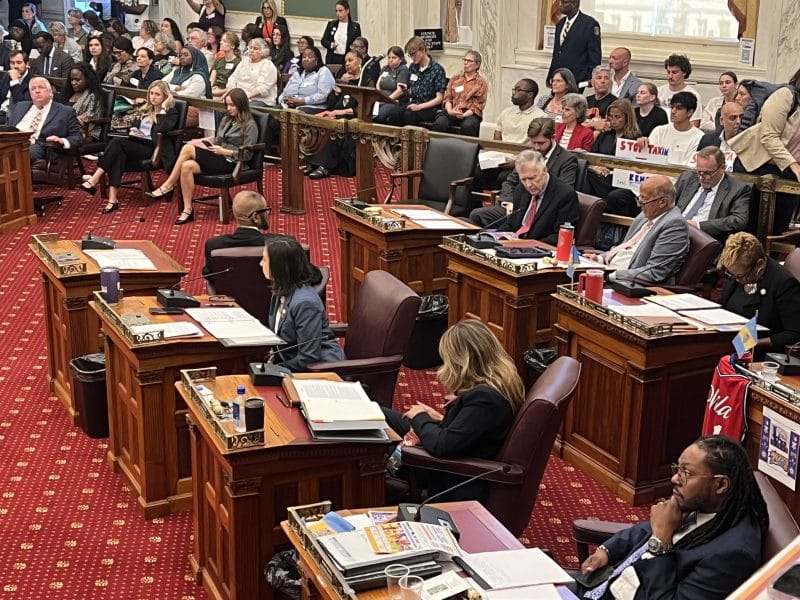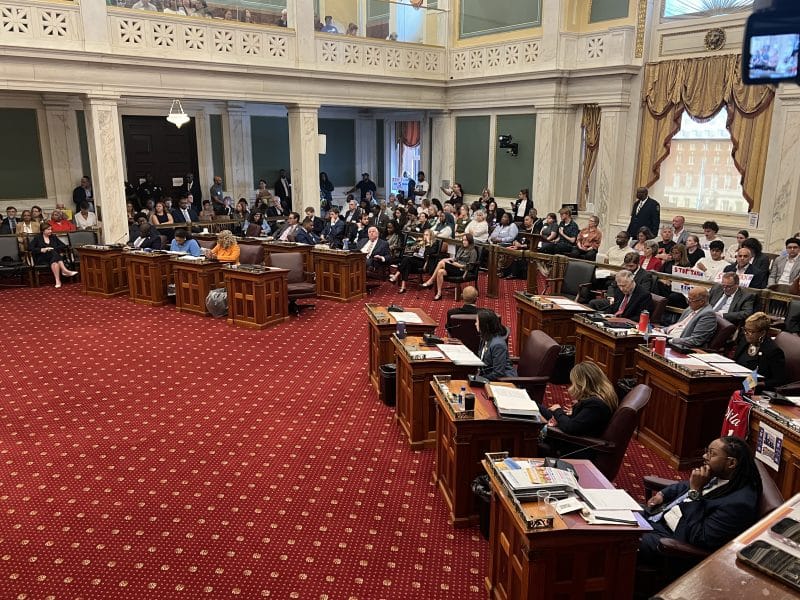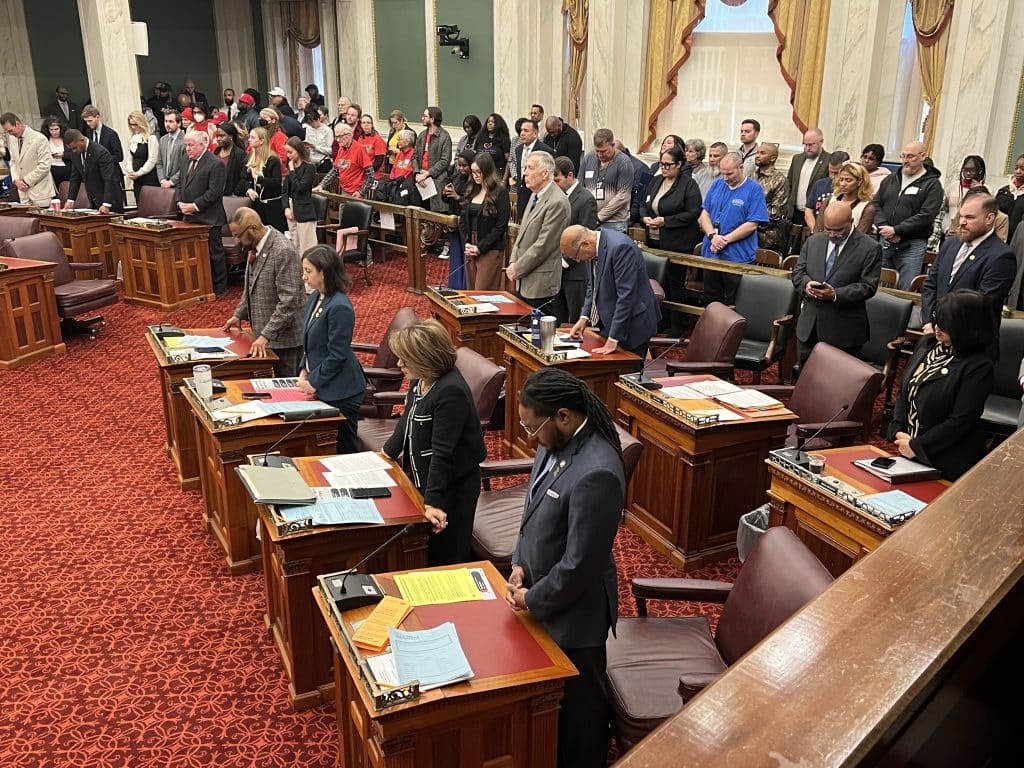
The Philadelphia City Council Committee on Fiscal Responsibility and Intergovernmental Cooperation held its quarterly meeting to discuss the city’s fiscal health.
This particular meeting was held amid uncertainty, as the city is still unsure if there will be changes or disruptions in federal support for key city programs.
Rob Dubow, the city’s Finance Director, said the city was facing a litany of economic challenges, including a low fund balance, pension fund issues, and high infrastructure costs.
“We have a high rate of poverty that both depresses our revenue base and increases demand for services,” DuBow said. “We also face the unusual risk of a potential economic slowdown. That risk is heightened by uncertainty around the federal government’s action.”
Last year, the city received $2.8 billion in federal grants. Earlier this year, the Trump Administration issued a confusing executive order that paused all grant funding, which was rescinded after public outcry. However, the threat of additional funding cuts remains.
Marissa Waxman, the Executive Director of the Pennsylvania Intergovernmental Cooperation Agency (PICA), expressed concerns about future fund balances and debt.
” Looking ahead, PICA recommends that the city sustain and expand its efforts to maintain and enhance its fiscal condition by allocating additional resources for expected and unexpected circumstances,” Waxman said.
Waxman also raised concerns about the possible removal of federal workers from the city and how this might affect the city’s wage tax.
“I believe around $100 million of the wage tax each year comes from federal government employees,” Waxman said. “There’s a real vulnerability for us that we haven’t had in the past.”
Thomas Looks for Expanded Use of Speed Cameras
Councilmember Isaiah Thomas introduced a bill allowing the city to use “automated speed cameras on routes located within specified school zones.”
The legislation stipulates that the owner of a vehicle exceeding the posted speed limit by 11 miles per hour or more at one of the following locations violates the ordinance:
Visitation B.V.M. School on East Lehigh Avenue
John B. Stetson Middle School on East Allegheny Avenue
KIPP North Philadelphia Charter School on 16th Street
Widener Memorial School on West Olney Avenue
Northeast High School on Cottman Avenue
High School of the Future on West Girard Avenue
Willam Sayre High School on Walnut Street
“Every student deserves a safe trip to school. In a city where 4 children are hit by a driver while walking each week, we must take bold and proactive steps to bolster traffic safety on dangerous roads around our school campuses,” Councilmember Isaiah Thomas said via press release. “I want to commend Mayor Parker and the experts at OTIS for their focus on traffic safety for our most vulnerable constituents.”
Landau Introduces Two LGTBQ+ Resolutions
Councilmember Rue Landau introduced a resolution “honoring the life and legacy of Tyrone Smith, longtime community leader and champion for the Black LGBTQ+ Community in Philadelphia.”
A co-founder of the Philadelphia Black Gay Men’s Leadership Council, Smith was also active in the Philadelphia AIDS Task Force and established Unitt, Inc., the city’s “first organization for Black gay men.”
According to the resolution, Smith was awarded the Living Legacy Award and inducted into the LGBTQ+ Hall of Fame in 2024.
Landau also introduced a resolution “recognizing February 28th, 2025, as HIV is Not a Crime Awareness Day in the City of Philadelphia.”
According to the resolution, while there are now effective methods to both treat and prevent the spread of HIV, there are still misconceptions about transmission, treatment, and prevention, which guide outdated laws. This prevents some with HIV or at risk for the disease from receiving needed care.
The resolution makes the following points:
Pennsylvanians living with HIV have been charged with crimes for conduct that would not be criminal or would be less severe but for their HIV status, a phenomenon known as HIV criminalization and
Pennsylvanians living with HIV may fear prosecution or be threatened with prosecution, especially in cases of intimate partner abuse and
HIV criminalization increases stigma against individuals living with HIV, and according to the United States Department of Health and Human Services 2019 Plan for Ending the HIV Epidemic, stigma “can be a debilitating barrier preventing people living with, or at risk for, HIV from receiving the health care, services, and respect they need and deserve”; and
HIV criminalization laws have been disproportionately used to prosecute people of color, women, sex workers, the LGBTQ+ community, and other marginalized groups
Lozada Concerned by 7th Distrcit Sink Holes
Councilmember Quetcy Lozada introduced a resolution “authorizing the Committee on Streets and Services and the Committee on Transportation and Public Utilities to hold joint hearings examining water main breaks and sinkholes occurring in District 7, evaluating the underlying causes of these issues, and identifying solutions to prevent and mitigate their frequency.”
The resolution explains that the 7th District has “experienced approximately 35 water main breaks” since 2024 and had 145 reports of sinkholes, potholes, plumber’s ditches, and water main breaks from 2022 to 2024.
These issues have led to significant quality-of-life issues in the 7th, the poorest District in the city.
Harrity Calls for Hearing on Art Therapy
Councilmember James Harrity introduced a resolution “authorizing the Special Committee on Kensington to Hold Hearings on the Implementation of Art Therapy Programming as a Low-Barrier Intervention Method in Addressing Substance Abuse Disorder and Serious Mental Illness During and After Incarceration.”
62% of Philadelphians who enter city jails experience recidivism. At the same time, those with substance abuse disorders experience higher rates while also committing more in-prison misconduct, according to statistical information in the resolution.
Art therapy has become a proven “low barrier intervention that promotes emotional healing and personal growth, particularly for those in recovery from addiction and trauma.”
“A study by the California Department of Corrections showed 74.2 % of participants in the ‘Arts-in-Correction’ program had favorable outcomes.”
This article is a part of Every Voice, Every Vote, a collaborative project managed by The Lenfest Institute for Journalism. The William Penn Foundation provides lead support for Every Voice, Every Vote in 2024 and 2025 with additional funding from The Lenfest Institute for Journalism, Comcast NBC Universal, The John S. and James L. Knight Foundation, Henry L. Kimelman Family Foundation, Judy and Peter Leone, Arctos Foundation, Wyncote Foundation, 25th Century Foundation, Dolfinger-McMahon Foundation, and Philadelphia Health Partnership. To learn more about the project and view a full list of supporters, visit www.everyvoice-everyvote.org. Editorial content is created independently of the project’s donors.
Our reporters sit through hours of city council meetings, dig through piles of documents, and ask tough questions other media overlook. Because we’re committed to addressing Philadelphia’s poverty crisis — and challenging those who sustain it. If you think this work is important too, please support our journalism.
We’re counting on readers like you.