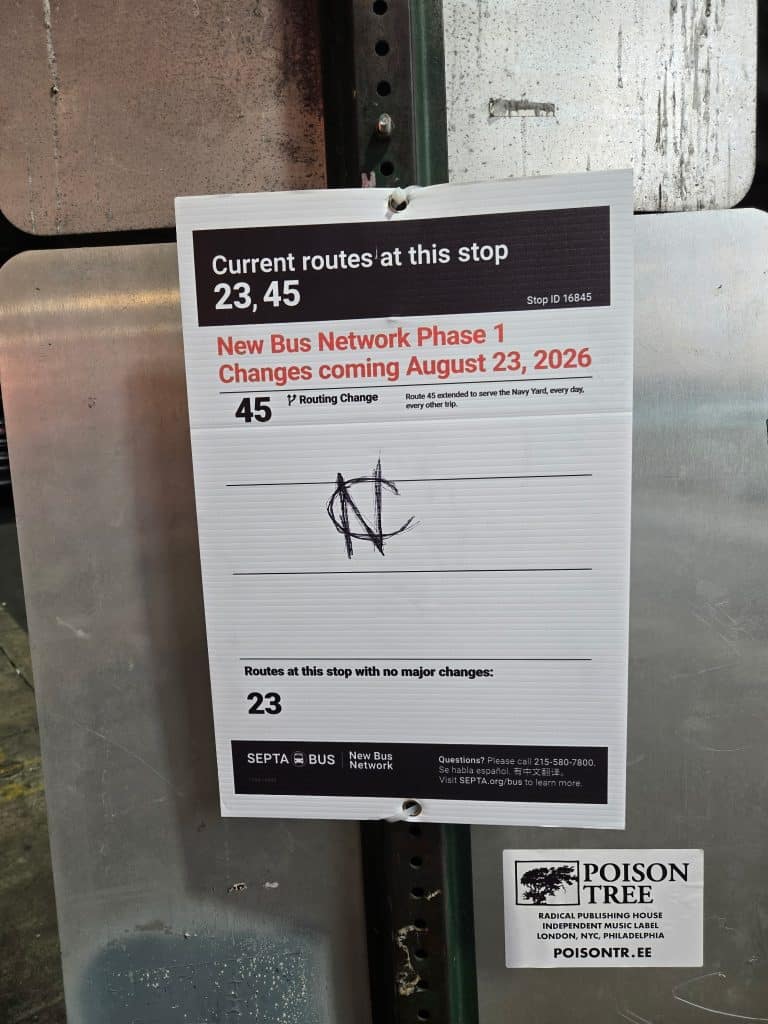
SEPTA, the Southeastern Pennsylvania Transportation Authority, is changing its bus routes. Together, these changes are called the “New Bus Network.” Seven routes will be eliminated; two new routes have been created. The changes will require riders to make more transfers. There will be fewer direct routes.(https://www.inquirer.com/transportation/septa-bus-route-changes-august-2026-phase-one-20260822.html)
Hidden on web pages are the service cuts SEPTA is making. The 4 bus, which runs up and down Broad Street, will have its frequency reduced on weekdays from every 16-25 minutes to every 30 minutes from 6 a.m to 9 p.m. The 45, which runs on 11th and 12th Street, will reach the Navy Yard. To accomplish this, SEPTA cut its frequency. After 9 p.m., service will be reduced by 50%, increasing the wait time. In total, in the first wave of changes, 7 bus routes are eliminated, and 14 bus lines will have service cuts.
The New Bus Network, according to SEPTA,” is not a service cut; it is the modernization of the entire bus network to better match the needs of today’s riders with more reliable, more frequent, seven- day-a-week service. Bus service is being organized in a different way to improve connections, simplify routes, and better reflect today’s travel patterns”. SEPTA’s “goal is to get more people to more places in the shortest time, and that means how you get around may change.”
It is hard to see how eliminating bus routes, forcing people to transfer, and increasing wait times will meet SEPTA’s goals. Forcing people to use the Broad Street Line and the El, where access for people with disabilities is limited, isn’t a realistic alternative to the service cuts. Nor will the new plan save money. SEPTA says the changes are “revenue-neutral”
SEPTA has not been transparent about how much it has spent implementing its new system. Because SEPTA’s monthly financial statement doesn’t list one-time expenses or how much cash SEPTA has on hand, there is no way to know if SEPTA had to borrow to cover the costs of changing the bus routes. What is known is SEPTA does not have the permanent funding it says it needs to avoid a 45% service cut next year. Instead of conserving money, in an attempt to avoid the threatened cuts, SEPTA is spending an undisclosed amount on its new network.
What is missing from SEPTA’s press releases and public statements is how SEPTA will evaluate the success or failure of the new routes. SEPTA might believe more people will ride, and SEPTA may be right, but the riders will answer the question in the coming months.
The new bus routes may make trips faster for buses. But bus speed isn’t the issue; it is the time it takes a rider to get where they are going. If a rider has to wait 30 mimiutes for a bus because of the announced service cuts, or has to transfer because of route changes, it will take longer, even if the bus averages a few miles an hour faster.
Hall Monitor asked SEPTA’s spokesperson what criteria SEPTA will use to decide if the “New Bus Network” is a success or, like the fabled “New Coke,” something only the executives wanted.
The request was made 5 days ago, and like so many SEPTA riders, we are still waiting.
Our reporters sit through hours of city council meetings, dig through piles of documents, and ask tough questions other media overlook. Because we’re committed to addressing Philadelphia’s poverty crisis — and challenging those who sustain it. If you think this work is important too, please support our journalism.
We’re counting on readers like you.