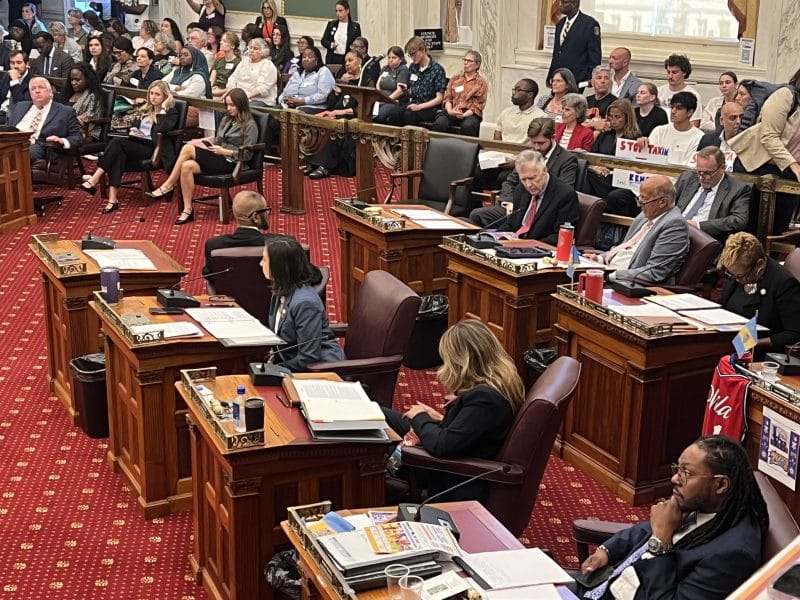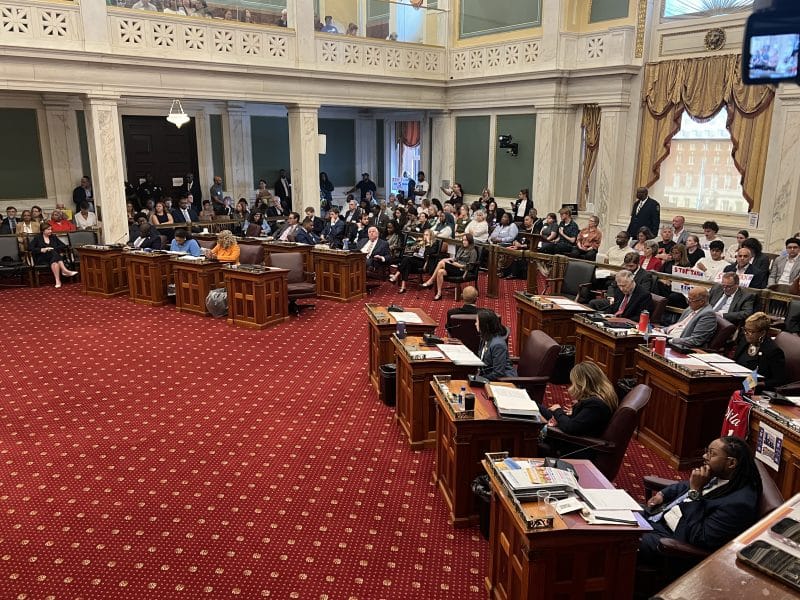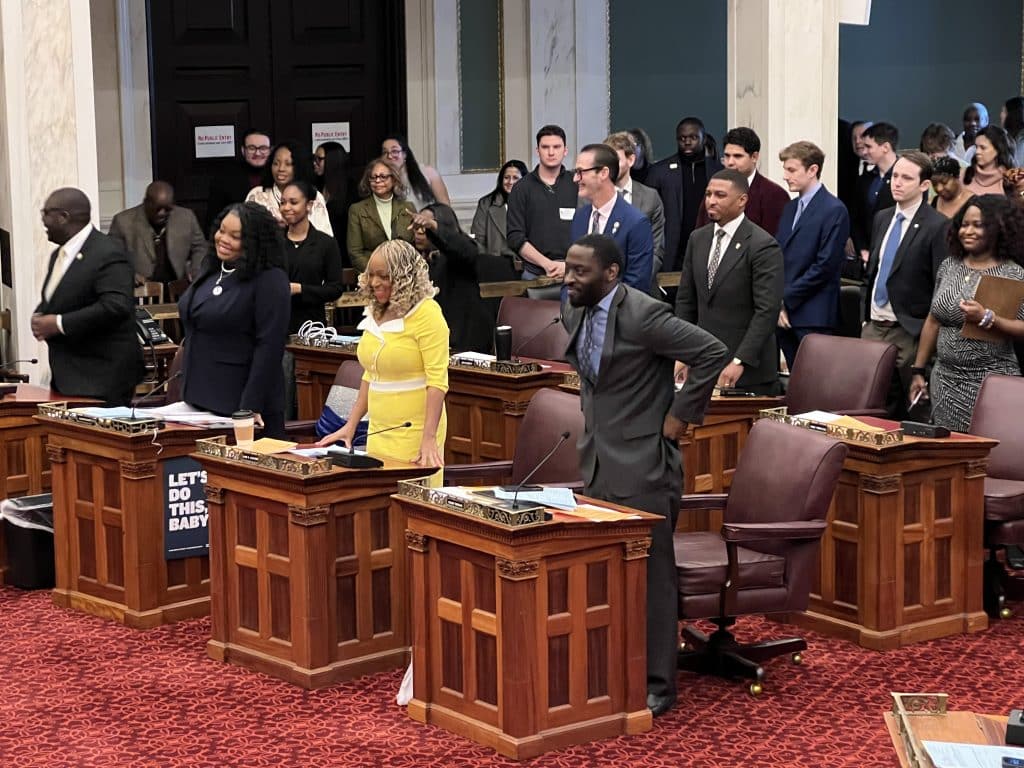
The Joint Committees on Public Safety and Legislative Oversight met Tuesday, March 4th, to “examine actions necessary to significantly reduce the Philadelphia prison population to permanently close Philadelphia’s oldest and most inhumane prison facility, the Detention Center.”
Councilmember Nicholas O’Rourke, the sponsor of the hearing resolution, detailed some of the ongoing issues in the city’s prisons, particularly the $25 million federal judgment against the city after being held in contempt for not making the necessary improvements from the 2022 settlement.
According to O’Rourke, federal monitors found that the city only complied with 30% of the agreement’s provisions.
The agreement’s stipulations dealt with issues such as out-of-cell time for prisoners, access to health care and behavioral health, and access to the law library.
“By its inaction, the city has failed to honor its dedicated workforce and prolonged the neglect of many incarcerated persons. It must take ownership, the city now, of every substantive provision in this court’s orders and resist any political inclination to shirk responsibility, shift blame, or scapegoat as occurred during the initial settlement term.”
District Attorney Larry Krasner testified that the city’s prison population has declined from nearly 11,000 in 2018 to 3700 behind bars today.
“It’s not a situation where the more people you lock up, the safer you are,” Krasner said. “On the contrary, the more people you lock up, the fewer resources you have for public schools, sports programs, for everything else that is preventative and proactive.”
Krasner also took aim at inconsistencies in how the city applies bail. Bail is set by commissioners who are usually not attorneys or law enforcement officials. Krasner discussed the Early Bail Review program, which allows for municipal court judges, the Public Defenders Office, and the District Attorney’s Office to review bail decisions. In some cases, bail can be reduced or dropped for certain crimes, which reduces the need to detain people.
Expanding on Krasner’s point, Michael Resnick, Commissioner of Philadelphia Prisons, said 43% of the people released from the city prisons had only been in custody for two weeks or less.
However, Resnick said the decline in the prison population is insufficient to close the Detention Center.
“Ten years ago, the percentage of our population that was classified as ‘close custody (the most difficult prisoners)’ was only 30%,” Resnick said. “Currently, that percentage is over 60%. Good correctional practice prohibits us from housing closed custody inmates with those who are minimum or medium or even community custody, which is why the Detention Center is still very much needed.”
Thomas Sounds Alarm Over Potential Department of Education Closure
Councilmember Isaiah Thomas introduced a resolution “opposing any attempts to dismantle the U.S. Department of Education or slash federal funding for public school programs that support low-income students and students with disabilities.”
The resolution correctly asserts the Department of Education’s true purpose, which is not to set curriculum but to enforce civil rights law and support districts so they can ensure equal access to education programs.
According to the resolution, eliminating the department would mean the following:
26 million vulnerable kids in every school district across the nation—rural, suburban, and urban—will lose critical services designed to keep them ahead and on grade level.
7.5 million students with disabilities (15 percent of students) in every community in America will lose access to special education services funded by the federal government.
Ten million students from working-class families could lose needs-based Pell Grants or subsidized loans, increasing college costs for working-class families.
Twelve million students across all 50 states would lose access to career and technical education programs designed to help them master the skills and knowledge required for employment in today’s rapidly changing economy.
Landau Celebrates Consumer Protections
Councilmember Rue Landau introduced a resolution “declaring March 2-8, 2025 National Consumer Protection Week in the City of Philadelphia.”
Councilmember Landau introduced consumer protection legislation last year. The legislation would allow the city Law Department to investigate potential violations and refer them to a city agency designated by the mayor.
Consumer protections are now being eroded at the national level, as the Trump/Musk Administration is looking to eliminate the Consumer Financial Protection Bureau. This office has returned billions of dollars to American consumers who American corporations bilked.
According to the resolution, in 2023, Americans lost over $43 billion to fraud and scams. Philadelphians who suspect they were the victim of a scam should contact the Philadelphia Consumer Protection Task Force, the Bureau of Consumer Protection at the Office of the Pennsylvania Attorney General, or the Federal Trade Commission. Low-income Philadelphians can also use the city’s Financial Empowerment Centers.
Our reporters sit through hours of city council meetings, dig through piles of documents, and ask tough questions other media overlook. Because we’re committed to addressing Philadelphia’s poverty crisis — and challenging those who sustain it. If you think this work is important too, please support our journalism.
We’re counting on readers like you.