Mayor Cherelle Parker made the rounds of local churches on Sunday to ask for help with her H.O.M.E plan. That’s she’s asking people to bypass the most disadvantaged in a church is its own bit of irony.
My plan for this week’s column was to write about why it was probably a good idea for the Trump Administration to not acknowledge World AIDS Day, but, as it sometimes does, the news cycle changed my plans.
Or, should I say, it changed some of my plans. While I’m going to write about how a politician is manifesting insensitivity to a traditionally marginalized community, my column is going to have a local focus instead of a national one.
I tend to do that when a politician gets offered more money to do something and, because it’s not what they want to do, goes to a house of worship to try and convince people to demand less.
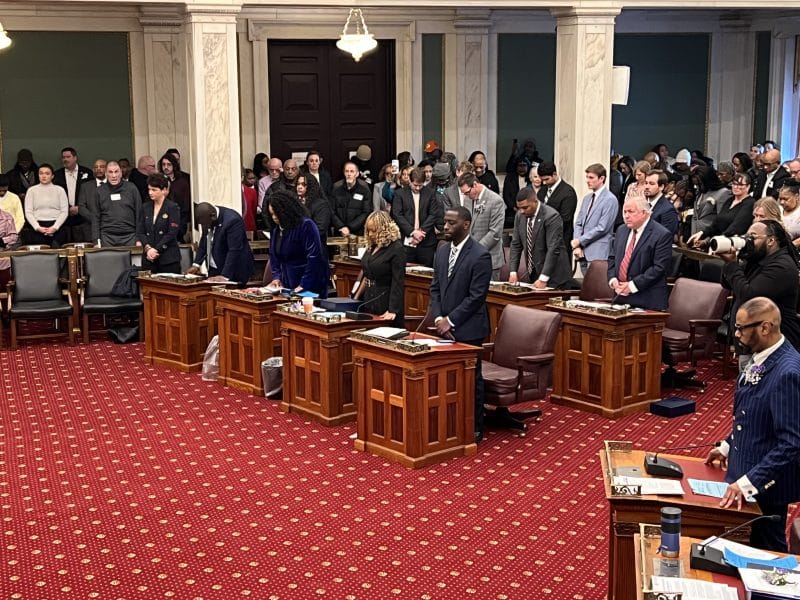
If you listened to or watched Wednesday’s Hall Monitor, you know that Philadelphia City Council passed a resolution regarding Mayor Parker’s Housing Opportunities Made Easy, or H.O.M.E plan. Council gets a say in how the yearly budgets involved in the $800 million bond plan designed to build 30,000 units or new or refurbished housing over the next four years are utilized.
Members of the Mayor’s cabinet came to Council and asked for a little under $200 million for the plan, but some of the Councilmembers wanted the Administration to put promises of help for low-income residents put in writing.
When the Parker Administration wouldn’t do that, Council President Kenyatta Johnson and company took matters into their own hands and passed a resolution that not only increased the amount of funding for this first part of the H.O.M.E. plan but put help for the poor in writing.
The allocation, which is now $277 million, puts more money into the Affordable Housing Preservation Fund (from $29,627,500 to $46,172,000), the Turn The Key program, which was originally zeroed out, but gets $43,500,000 now, and the Basic Systems Repair Program, which gets a boost from $34,775,000 to $40,000,000.
Parker and Johnson played Dueling Statements after the vote was taken.
But Parker decided that she would take her message to the people, and that meant going to the member churches of the Black Clergy of Philadelphia and Vicinity that just happen to be located in the districts of the Councilmembers that voted for this resolution. The goal? Get these parishioners to call their Councilmembers and ask them to vote against the H.O.M.E. resolution when it comes up for a vote during Thursday’s council meeting.
At the Church of Christian Compassion, which just happens to be in Committee on Housing chair Jamie Gauthier’s district, Parker stuck to her message of why her version of the H.O.M.E plan should be the one that prevails.
“We’ve got to take care of the people who are most in need, but we can’t penalize the people who are going to work every day, pay their taxes, contribute to the city, and they can’t benefit from home improvement programs,” she said.
While Mayor Parker saying this makes me angry, it doesn’t make me quite as angry as what came from the mouths of some of these ministers.
For example, here is what the Rev. Lonnie Herndon, the pastor of what I now view as the ironically named Church of Christian Compassion gave the mayor’s office as a quote for their press release.
“I believe in taking care of those less fortunate. Jesus commands us to. And yes, we must help those who are struggling the most,” he said. “But we also must be fair. We cannot penalize the hardworking families who get up at 5a.m., go to work every day, pay their taxes, and still don’t qualify for help because they make five dollars over the limit.”
Where do I start?
First of all, you’re asking church people to do something that is, well, un-Christian. The Bible says in Proverbs Chapter 28, Verse 27 that “Those who give to the poor will lack nothing, but those who close their eyes to them receive many curses.” I don’t know about you, but ‘many curses’ sounds bad.
Secondly, there’s nothing in this resolution that says that those who make $5 over the limit won’t get consideration. The resolution says that 70% of the bond will go to those most in need. That leaves 30% for everyone else. Also, I’d be willing to bet that as we speak, people are planning for changes to resolution for the second-year bond offering that will address more of these issues.
And third, I got a news flash for you, chief. The poor work. And in many cases, they work harder than you ever could. Or should I bring up the fact that there are more than a few people who are unionized city workers that need SNAP benefits to help them keep food on the table?
Now, I get that everyone needs help these days. It’s tough out there.
But there’s a certain irony to getting more money to help the poor at a time when people are holding fundraisers to give the poor a better Christmas and not wanting to use it for that purpose.
And it gets even more ironic when you go to churches and ask parishioners to try and get you out of it.
Our reporters sit through hours of city council meetings, dig through piles of documents, and ask tough questions other media overlook. Because we’re committed to addressing Philadelphia’s poverty crisis — and challenging those who sustain it. If you think this work is important too, please support our journalism.
We’re counting on readers like you.