Last week, the 2026-27 National Football League began its season, and 123 million people tuned in on various platforms to watch games. Perhaps it is time for our government and our regulators to look at how football has become the number one sport in America, the most watched and most successful.
It’s no secret that most football teams sell out stadiums. 97.6% of all seats across all teams were filled. A team’s value increased by 31% last year. The average team, including the Green Bay Packers, which is owned by its community, is worth $9.34 billion. This is at a time when the average American’s net worth has remained stagnant.
More people watch football than baseball or basketball. This is despite the fact that none of the teams that played in last year’s Super Bowl were in the top five media markets — 125 million people still watched. Viewership for the NFL championship game was 250% higher than Game 7 of last year’s World Series, in which the Dodgers, located in the second-largest media market, played. Game 5 of the NBA championship, which featured the New York Knicks, in the nation’s largest media market, was watched by 33 million — 25% of the Super Bowl’s viewership.
One reason people watch NFL games is that the teams are competitive. Last week, six of the 16 games were one-score games. The Green Bay Packers, who are in the smallest media market of any team, have a playoff record of 37 wins and 28 losses, which is notable among NFL teams. They have won four Super Bowls and 13 championships, making them one of the most successful franchises in NFL history.
Unlike most corporate owners, NFL franchise owners seek to increase competition and share revenues with players (workers). Unlike in Corporate America, team owners cannot buy up other teams and dismantle them. Each owner can only own one team. Corporations routinely buy up competitors rather than compete.
The NFL is unionized. The union negotiates a collective bargaining agreement, giving the players 48% of the revenues. Players receive health care. There is a defined-benefit pension plan—something Corporate America is trying to end. While there is little question that the collective bargaining agreement isn’t perfect and the players should receive more, it is so much better than what most workers get. Keeping the players playing adds to fans’ enjoyment of the game. It also raises each team’s skill level. Imagine a team with 100% turnover every year because players could make more elsewhere or needed a new job because, without health care, the game was too risky.
To keep the games competitive and give each team a chance, the NFL established a draft system, allowing the last-place team from the previous year to be the first to choose which player it wanted to sign to a rookie contract. The Super Bowl winner chooses last. American Corporations are the antithesis. The more successful a corporation, the more likely it is to have its first choice of workers. Smaller startup businesses don’t get first choice in signing workers to compete.
The schedule also helps keep teams competitive. While many factors determine a team’s schedule, the conference it plays in and its division, last year’s winners are given harder schedules. This makes it more likely for emerging teams to compete. That’s not so in corporate America. Last year’s winners can use their wealth to hire lobbyists and make political contributions to make rules and regulations more friendly to big businesses’ interests. Smaller businesses cannot compete with big businesses’ political clout, creating a situation where smaller businesses are often regulated more than big businesses.
And of course, no team owner can ship their team overseas to avoid paying taxes without the consent of other owners.
It could be better. Every team, like the Green Bay Packers, could be owned by its community. The Packers have been a publicly owned, nonprofit corporation since 1923. Approximately 5,204,625 shares are owned by 538,967 stockholders. No team could abandon its community. Taxpayers would not be forced to pay billions for teams to stay or move.
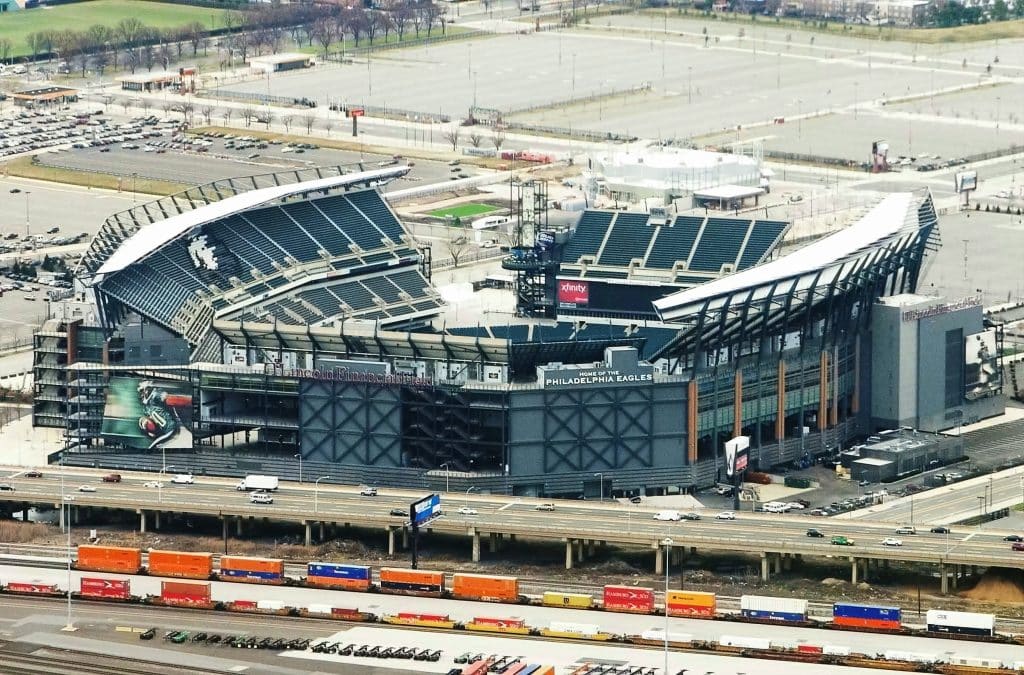
The Mayor and City Council could use eminent domain to take over the Eagles and ensure they never moved. And if a Packer ownership structure were used, imagine how many people would vote for the team’s leadership — more than in most elections.
If we believe competition keeps businesses growing and delivering better products, it’s time to look at the NFL’s rules and see what we can adapt.
Photo Credit: Ron Reiring
Our reporters sit through hours of city council meetings, dig through piles of documents, and ask tough questions other media overlook. Because we’re committed to addressing Philadelphia’s poverty crisis — and challenging those who sustain it. If you think this work is important too, please support our journalism.
We’re counting on readers like you.