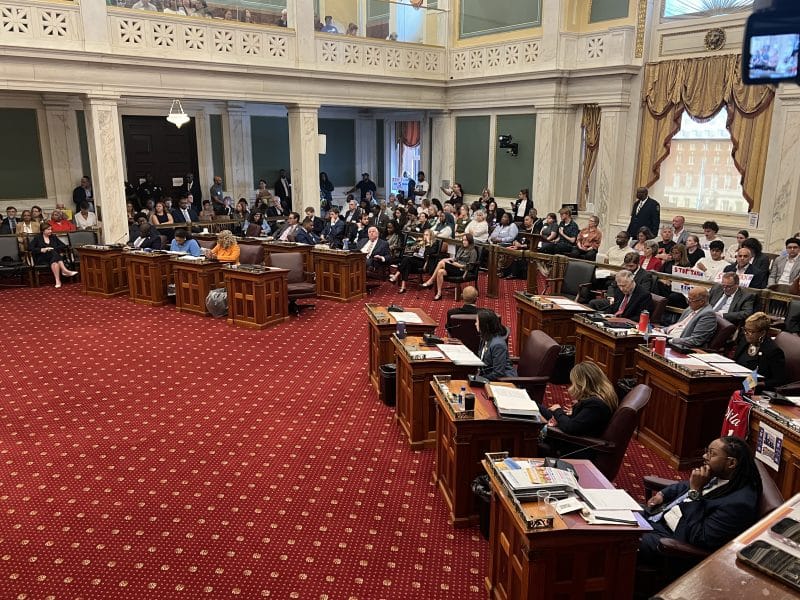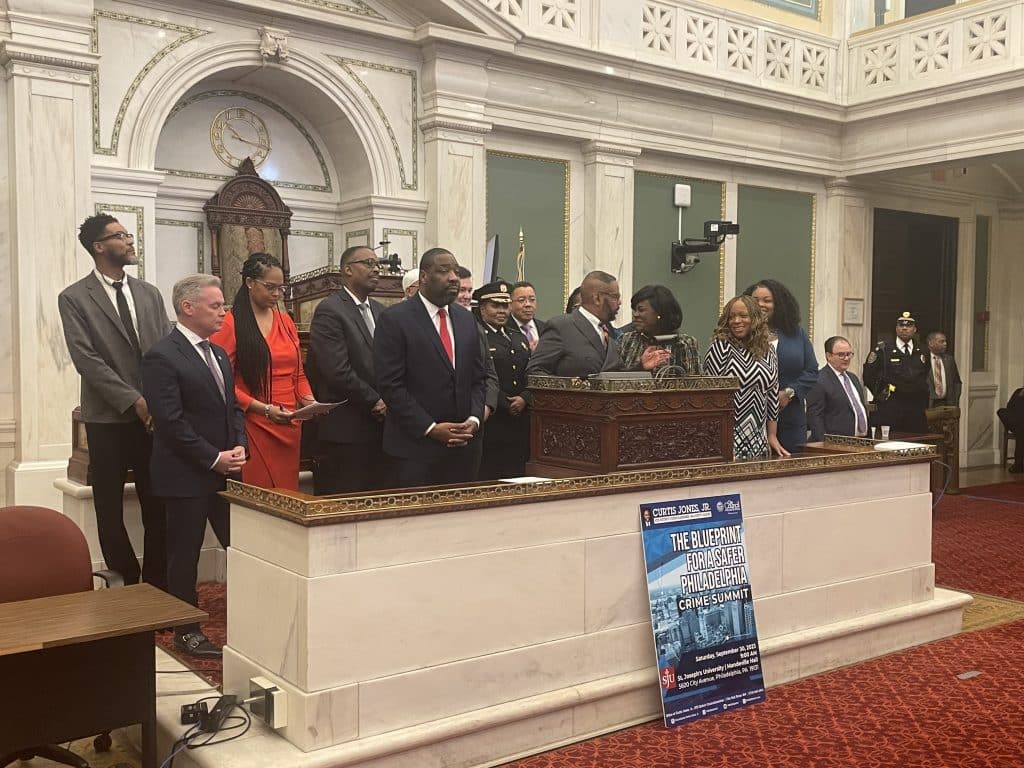
Yesterday, December 21st, Councilmember Curtis Jones, flanked by various public officials such as incoming Mayor Cherelle Parker and District Attorney Larry Krasner, held a press conference in City Council chambers to release “The Blueprint for a Safer Philadelphia,” which was billed as a comprehensive public safety plan to be considered by the incoming mayoral administration.
The report results from a summit held last September, at which over 150 representatives from various government and private sector organizations convened at St. Joseph’s University.
The 144 recommendations identify specific problems, solutions, and next steps to be considered. The report is broken down into the following sections:
Education and the School-to-Prison Pipeline
Poverty and Criminal Justice System
Combating the Threat of Illegal Guns and Increasing the Closure Rate of Homicides
Addressing Mental Health
Alternatives to Incarceration
Law Enforcement
Use of Technology to Combat Crime
Collaboration with the Private Sector and Boots on the Ground Credible Messengers
Youth Involvement in the Criminal Justice System
Drill Music and the Music Industry
Combating Specific Types of Crime
Data
Combating Institutional White Racism
Crafting a Positive Public Messaging Campaign
Councilmember Jones offered an optimistic tone about the potential impact of the recommendations in the report.
“I truly believe that the ingredients to keep the city moving in the right direction and within the city’s grasp,” Jones said. “I am excited about the possibilities,”
Mayor-Elect Cherelle Parker praised those attending the press conference and those who participated in creating the report for engaging in intergovernmental cooperation and planning.
Discussing her campaign promise to work collaboratively with other governmental agencies, she pledged to a familiar refrain: to make “Philadelphia the safest, cleanest, greenest big city in the nation with access to economic opportunity for all.”
While the report identifies key issues and suggests solutions, there is not much in the way of “next steps,” except recommendations on how other governmental departments and offices should incorporate the stated solutions into their work.
Furthermore, there does not seem to be a comprehensive strategy for implementation; the report appears to leave possible actions to other departments to carry out at their own discretion.
There is also a need for more cohesion-what happens if one solution is carried out in full? Does it lead to a drop in crime in a particular area or amongst a specific group of people?
While it is crucial to understand the problems the city faces regarding crime and safety, it seems there is nothing in the report that has not already been discussed by council. The crucial next steps are legislative fixes that carry out recommendations and a cohesive plan for implementing what can be done at the council level.
The first real test of this plan will be January 25th, when Philadelphia City Council reconvenes under new leadership. Early on, if we do not see legislation addressing the issues mentioned in the report, it will be fair to say this is nothing more than a well-meaning doorstop. The second big test will be budget season, which begins in March. If funds are not allocated for specific programs that will lead to the solutions offered by the report, then what is the point?
Our reporters sit through hours of city council meetings, dig through piles of documents, and ask tough questions other media overlook. Because we’re committed to addressing Philadelphia’s poverty crisis — and challenging those who sustain it. If you think this work is important too, please support our journalism.
We’re counting on readers like you.