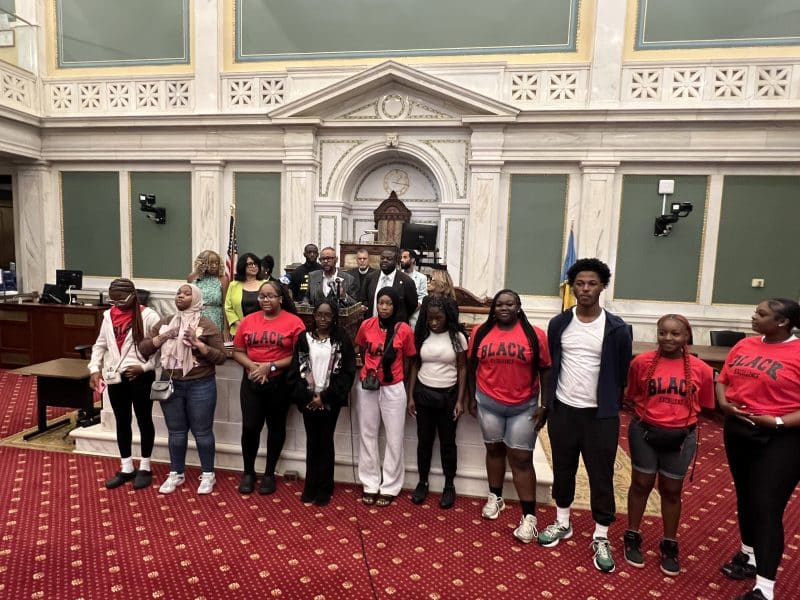
The Spring Session of Philadelphia City Council held it’s final Stated Meeting on Thursday, June 12th. At the meeting, the final budget bills and HOME initiative legislation was passed, making them law. The budget will take effect on July 1st, and the $400 million borrowing will begin this summer.
The budget bills were passed by a vote 15-1, with Councilmember Kendra Brooks the only ‘no’ vote amongst the present members. Councilmember Nicholas O’Rourke was absent. In a release issued by the Minority Wing after the bills’ first reading the previous week, Brooks and O’Rourke were critical of the final product.
“This budget falls far short of what the people of Philadelphia deserve. Despite participation from thousands of community members leading into negotiations, the final budget was decided behind closed doors without meaningful input from the whole of council. The communities we represent were shut out of the process and denied genuine influence on the direction of our city.
This process led to a budget that fails to address critical needs in our communities and ignores the dire consequences of federal cuts. The POWER Act is the most significant legislation that Council passed this session, yet there is no new funding for the Department of Labor to implement it. There is no new funding for L&I to protect tenants from hazardous conditions, as the Federal Reserve Bank of Philadelphia reports that 40% of rentals need repairs. There is no new funding for reproductive healthcare. There’s no new funding for mobile crisis teams for people who are going through a mental health crisis. There’s no wage tax refund, for people who are making poverty wages – which was part of our tax plan. And there’s no new money for the School District, for our city’s public school students.
Instead, this budget prioritizes corporate tax cuts. Philadelphia’s taxes will become more regressive. Small businesses will see a tax hike because of the elimination of the BIRT exemption on the first $100,000. This tax plan follows the Trump playbook, draining resources to create more wealth for the wealthiest. In the first six months of this federal administration, we have seen devastating cuts with more promised in the future. This budget ignores that reality.”
Council President Kenyatta Johnson was more optimistic about the final budget, highlighting what he viewed as a successful collaboration with Mayor Cherelle Parker.
“I want to thank my fellow Council members and Mayor Cherelle L. Parker for their due diligence in negotiating and reaching an agreement on the new Fiscal Year 2026 Operating and Capital Budgets and new Housing Opportunities Made Easy Plan” said Philadelphia City Council President Kenyatta Johnson (Second District). “This is a balanced budget that reflects the needs of the citizens of Philadelphia.”
“In a city with rich history and resilient people, no one should be forced to sleep on the streets, live in unsafe conditions, or choose between rent and putting food on the table,” he continued. “We must invest in long-term housing solutions – supporting both affordable rental units and pathways to homeownership – so that Philadelphia remains a city where everyone has a place to call home.”
While the final budget leaves some long-term questions regarding tax rates and future revenues, it is the HOME plan that bears watching. Council President Johnson told reporters the borrowing will begin in July of 2025, earlier than the original Fall of 2025 estimate.
The July borrowing will be for $400 million, with a subsequent borrowing in 2027. The two outstanding questions to which Hall Monitor has sought answers-Will the city be able to spend the $400 million quickly enough to avoid paying debt service on unused funds, and what is the general timeline for the disbursements, have to date remained unanswered.
Regarding the first, when questioned by Majority Leader Katherine Gilmore Richardson about the city’s difficulty in spending bond funds in the past, Finance Director Rob Dubow did not seem concerned about making the sure the $400 million was appropriated and spent in a timely fashion. However, no public schedule for such disbursements has been issued.
Hall Monitor will have more information and anaylsis of the plan in upcoming newsletters and on our live program.
All told, City Council passed or adopted 73 bills and resolutions at Thursday’s meeting. Council’s Fall Session will begin on Thursday, September 11th, at 10:00 AM.
This article is a part of Every Voice, Every Vote, a collaborative project managed by The Lenfest Institute for Journalism. The William Penn Foundation provides lead support for Every Voice, Every Vote in 2024 and 2025 with additional funding from The Lenfest Institute for Journalism, Comcast NBC Universal, The John S. and James L. Knight Foundation, Henry L. Kimelman Family Foundation, Judy and Peter Leone, Arctos Foundation, Wyncote Foundation, 25th Century Foundation, Dolfinger-McMahon Foundation, and Philadelphia Health Partnership. To learn more about the project and view a full list of supporters, visit www.everyvoice-everyvote.org. Editorial content is created independently of the project’s donors.
Our reporters sit through hours of city council meetings, dig through piles of documents, and ask tough questions other media overlook. Because we’re committed to addressing Philadelphia’s poverty crisis — and challenging those who sustain it. If you think this work is important too, please support our journalism.
We’re counting on readers like you.