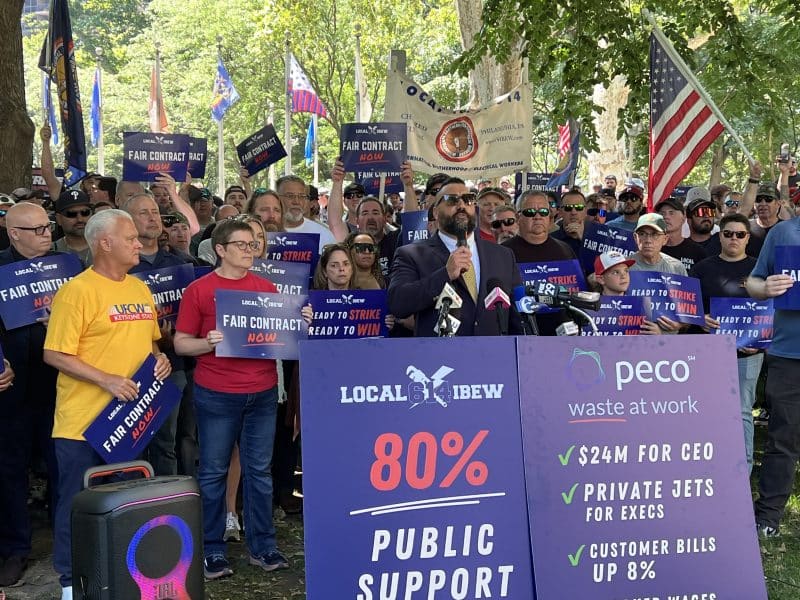
Members of Asian Americans United and APPS at November Board of Education meeting. (Photo: Lisa Haver)
“I love being able to come face to face with different people every day and being able to shine a light on a day, no matter whether it’s making a big impact or a small impact.”
Rasheima Hainey, School District of Philadelphia Special Education Assistant
Rasheima Hainey could have run when faced with danger. But when the special education assistant at Castor Gardens Middle School in Northeast Philadelphia saw a student with a knife, her only thoughts were about keeping her students safe. Hainey told the Philadelphia Inquirer’s Kristen Graham that she would rather be hurt herself than have to tell another parent that their child was injured or worse. So she risked her own safety as she ran toward the danger, protecting students and alerting school staff and administration. Eventually the boy was taken into custody. Though still shaken, the next day Hainey showed up to work. Continuing to show up, she told the Inquirer. is “the right thing to do”.
Hainey’s heroic actions may have been on the minds of those who attended the November action meeting of Philadelphia’s Board of Education. Board members showed up but could not have been more clear about wanting to distance themselves from their constituents.
Members of the public, for the first time, were directed to sign in and were issued an ID sticker to be worn during the meeting. Security guards were stationed on both sides of all public speakers. Board members conducted business from behind a newly constructed barrier that stretched the width of the auditorium. They entered and exited only through a side door on their side of the barrier.
All of this, apparently, was in reaction to a disruptive though peaceful protest at the October meeting. None of the board members, at this meeting or the last, have said they felt they were in any danger. In justifying having the board leave the October meeting and re-convene in a barricaded room, President Reginald Streater told the Inquirer that he expected “…everybody in the space will comport themselves in a certain way.”
The board also distanced itself from public accountability when they waited until two days before the meeting—after the window for public speakers to sign up had closed—to post an agenda item that would, along with a vote in City Council, green-light significant tax breaks for developers of the proposed 76ers arena to be built at Chinatown’s door. The day before the meeting, the board added a presentation from a representative from the Philadelphia Industrial Industrial Corporation (PIDC), in order to make a case for the tax breaks and, by extension, the arena. The PIDC presentation, including questions from the board, took 35 minutes; equal time was not given to the students or Chinatown residents who came. Then again, how could they have composed an informed response to a presentation they had no prior access to? Board Members Chou-Wing Lam and Wanda Novales explained their No votes, saying that the board needed a better explanation of the proposed Tax Increment Financing (TIF) and its effect on long-term district spending. Those seven who voted for the developer tax breaks were silent, even after students who had urged them to vote no became visibly distraught.
The district’s mishandling of the facilities process is already creating mistrust between the board and the parents and students whose schools may be targeted for permanent closure. Streater told the Inquirer in September that the board would not “gaslight the community” about the facilities plan, but the misinformation and evasion at the meetings tells another story. Meetings have been cancelled at the last minute with little notice and no explanation. History about the long-term effects of the 2013 closing of over 25 schools is being rewritten, with fictional figures about savings to the district in subsequent years.
Many Philadelphians still remember the students and parents who begged the School Reform Commision, to no avail, not to close their schools. Euphemisms like “co-location” and “repurposing” don’t fool people. When the board attempts to deceive the public about the future of their schools, they distance themselves from the public they were appointed to serve. .
Elected officials can’t hide from their constituents and expect to be reelected. The board’s actions again leave no doubt that Philadelphia needs and deserves an elected school board.
Lisa Haver is a former Philadelphia teacher and co-founder of the Alliance for Philadelphia Public Schools.
Our reporters sit through hours of city council meetings, dig through piles of documents, and ask tough questions other media overlook. Because we’re committed to addressing Philadelphia’s poverty crisis — and challenging those who sustain it. If you think this work is important too, please support our journalism.
We’re counting on readers like you.