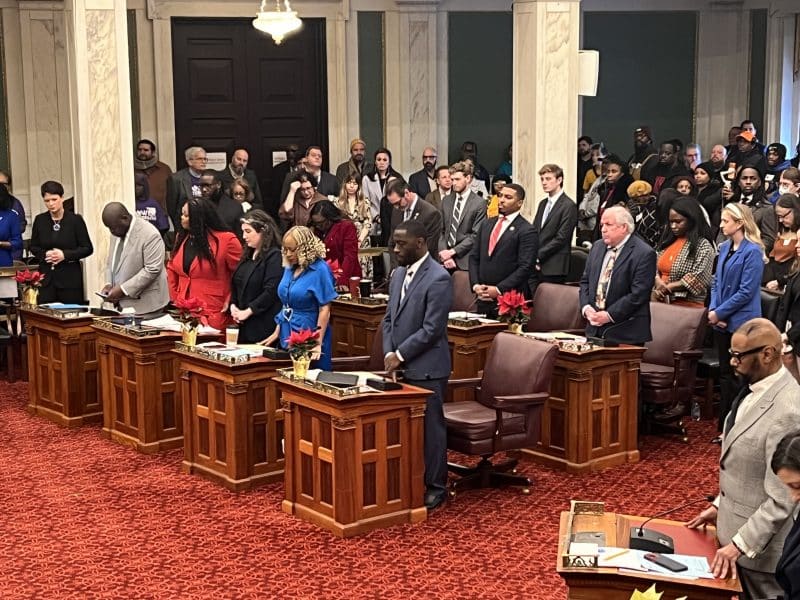
Last Thursday, March 7th, supporters of harm reduction organizations across Philadelphia gathered around City Hall to protest City Council and the Mayor’s new policies on targeting the opioid epidemic in Kensington.
Executive director Sarah Laurel spoke to the crowd when they reached the center of City Hall.
“Together, if we can get enough support, we can actually make a change. We can actually affect change in the future. We can help our communities choose leaders who choose humanity,” she said. “Because today, our caucus is making decisions against humanity, against public health, and we’ve already had those decisions made for us.”
She targeted Quetcy Lozada and the rest of the Kensington Caucus for not taking input from Savage Sisters or organizations like it.
Laurel and many others who attended had the same need: “We need treatment. We need resources. We need humanity. We need the people to stand up for harm reduction every single day.”
Erin Cookman, a volunteer with a suburban harm reduction organization, sees harm reduction as the community’s adaptation to government failures.
“To me, it matters because harm reduction is the community’s response to policy failure, to people getting kicked out and being treated as less than human,” they said.
Cookman works in harm reduction in the suburbs, and has seen people move from Kensington to the city’s outer counties. Xylazine came with them.
Liv Knable, another protester who works with Unity Recovery Organization’s harm reduction arm, specializes in wound care, and has interacted with many xylazine users firsthand.
“It’s been really eye opening,” they said. “It’s changed the entire way that I look at the world and how I understand privilege and class, and how the government intersects with all of this.”
Knable said that harm reduction’s humanist view sets it apart from government and police responses.
“We learn their names and forge relationships with them, and a lot of people who go out there don’t do that kind of stuff,” they said. “They don’t always treat people as they’re human, so our job is treating people like they’re human. That’s what harm reduction is, treating people like they’re human.”
Ultimately, protesters across the board said that they want a voice in the conversation about how to better Kensington.
“A big tenet of harm reduction is, ‘Nothing for us without us,’” Knable said. “To me personally, it makes no sense that people who have no lived experience with using drugs or being houseless are making these decisions.” The only member of the caucus who has lived experience with addiction is Councilmember Jim Harrity, who has been open about his struggle with alcoholism.
Adam Al-Assad, Savage Sisters’ Director of Operations, also spoke to the crowd during the rally.
“We need harm reductionists, public health workers, and social justice workers to have a seat at the table,” he said.
The final vote on Councilmember Quetcy Lozada’s business curfew bill, which would prevent most Kensington shops from operating between 11am and 6pm, has been delayed until at least March 14.
Our reporters sit through hours of city council meetings, dig through piles of documents, and ask tough questions other media overlook. Because we’re committed to addressing Philadelphia’s poverty crisis — and challenging those who sustain it. If you think this work is important too, please support our journalism.
We’re counting on readers like you.