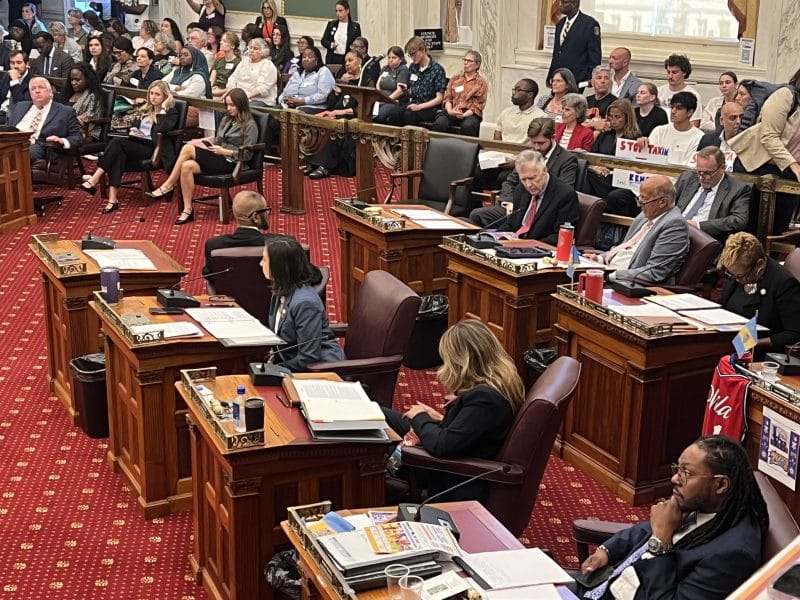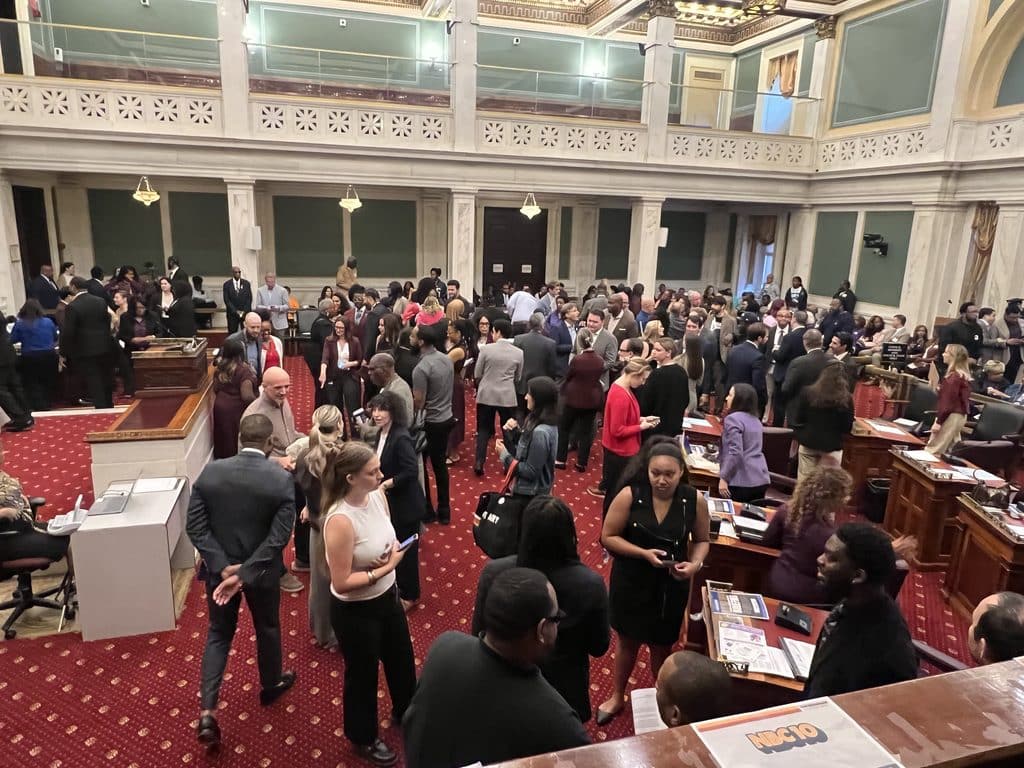
Majority Leader Katherine Gilmore Richardson introduced a bill to combat nuisance businesses, the latest in a series of legislative actions aimed at curbing the proliferation of local stores that sell items not suited for children.
This legislation would create a new tobacco retailer use definition in the zoning code. This would require tobacco shops to adhere to different zoning stipulations and restrictions, allowing for the city to have more control over their placement and more enforcement power.
“This legislation marks the biggest attempt at regulating tobacco sales in Philadelphia in years,” Gilmore Richardson said via press release. “We have heard time and time again that our communities do not want these businesses in their neighborhoods. The Commonwealth has preempted us from making decisions about where and how tobacco can be sold in our neighborhoods. However, the City has explicit control over zoning, and in taking this step, we are exercising our authority to say where these products can be sold.”
Domestic Violence Awareness Month
Councilmember Quetcy Lozada introduced a resolution “declaring October 2026 as Domestic Violence Awareness Month in the City of Philadelphia.”
The resolution celebrates organizations such as Women Against Abuse, which provide “essential services, advocacy and education to help individuals find safety, stability, and healing.” According to the resolution, Women Against Abuse assists over 10,000 people annually through emergency shelter, transitional housing, legal advocacy, and safety planning.
Other organizations highlighted in the resolution include the Philadelphia Domestic Violence Collaborative, which includes Congresso de Latinos Unidos, Lutheran Settlement House, Women In Transitions, and Women Against Abuse.
Bass Calls for L&I Hearing
Councilmember Cindy Bass introduced a resolution “authorizing the Committee on Licenses and Inspections to hold hearings to examine the maintenance, inspection, enforcement, and demolition of deteriorating, blighted, and unsafe properties in the City of Philadelphia.”
Bass’ resolution calls on the city’s inspection, enforcement, and demolition procedures to include “appropriate consideration of the potential impacts on adjacent properties, including structural damage and other hazards that may arise from the deterioration or demolition of neighboring structures.” In some cases, L&I’s actions have caused property owners financial difficulties.
The overall goal of the hearing will be to determine the City’s responsibilities when it comes to demolition work conducted in the interest of public safety, and how the costs of such work should be allocated.
New Amnesty Program for Parking Fines
Councilmember Jay Young introduced a bill that would provide an amnesty program for fines, fees, and parking violations.
This reauthorizes a program that existed eight years ago, sponsored by then-Councilmember Jannie Blackwell. This iteration of the amnesty would begin on January 1, 2027, and end on March 31 of the same year, and would include parking violations incurred prior to 2021 and towing and storage fees incurred before 2023.
Councilmember Young said the program had the dual benefit of helping Philadelphians clear their records of the violations and fees, while also providing some revenue to the Philadelphia Parking Authority that it would otherwise not receive. Young said the 2018 interaction of the program netted the Authority over $9 million.
Phillips Questions Quality of School Lunches
Councilmember Anthony Phillips introduced a pair of resolutions aimed at improving the quality of school lunches for School District of Philadelphia students.
The first recognizes “National School Lunch Week, celebrated in schools October 12–16, 2026, and honoring the role of school meals and school food service employees in addressing food insecurity and supporting the health, learning, and well-being of Philadelphia’s students.”
24 percent of School District households face food insecurity, and 19 percent of students reported not going hungry because they did not have sufficient food at home, according to a survey conducted by the District.
The second calls “on the School District of Philadelphia to reexamine its policies and practices concerning school meal quality, food preparation, procurement, and student dining experiences and to develop a publicly shared improvement plan.”
Phillips said he knew school lunches were a problem; he just didn’t know how severe until he visited Olney High School and spoke with students.
“Currently, most of our school lunches are being shipped from New York and brought to Philadelphia to be reheated,” Phillips said. “The students (told me) the food is not reheated well, and that there is no variety when it comes to food.”
Phillips said that while the school lunches were subsidized by the federal government, it didn’t mean the quality had to suffer, and the Philadelphia schools couldn’t find a way to improve the overall quality.
Our reporters sit through hours of city council meetings, dig through piles of documents, and ask tough questions other media overlook. Because we’re committed to addressing Philadelphia’s poverty crisis — and challenging those who sustain it. If you think this work is important too, please support our journalism.
We’re counting on readers like you.