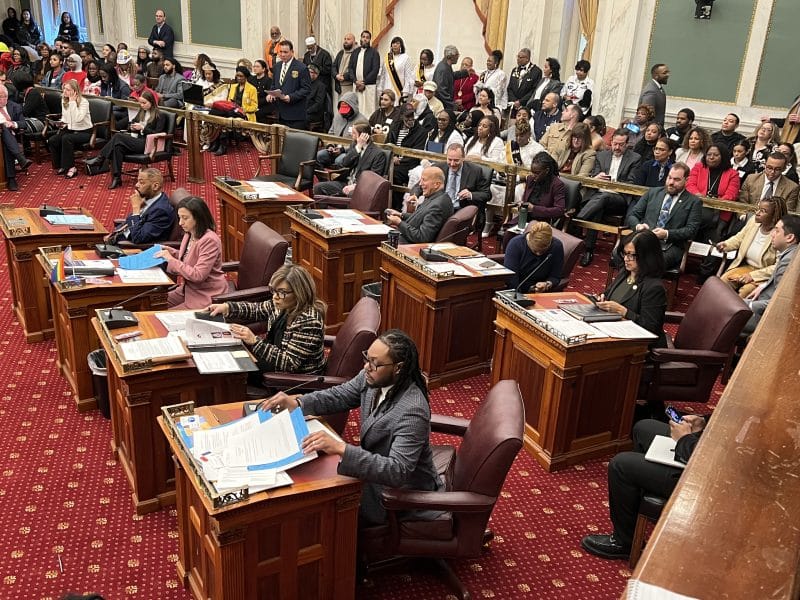
Budget hearings continued this week as the Philadelphia City Council Committee of the Whole heard testimony from the following departments:
Chief Administrative Officer
What they do:
“The Office of the Chief Administrative Officer (CAO) works to modernize city government and improve the efficiency and effectiveness of City services. The CAO oversees seven City departments and offices, innovating and strengthening their administrative functions and supporting their resident-facing operations to evaluate, plan, and continually improve their service delivery.
The seven City departments and offices that report to the CAO include: Department of Records, the Office of Administrative Review (OAR), the Office of Innovation and Technology (OIT), the Office of Talent & Employee Success, Procurement Department, PHL Service Design Studio, and Strategic Transformation.”
FY 2025 Budget Request: $20,467,630
FY 2026 Budget Request: $12,434,400
Net Change: -$8,033,230
Note: The budget reduction from this department is due to the SEPTA Key expenditures being moved to the Commerce Department.
Office of Human Resources
“What they do: The Office of Human Resources (OHR) works with City departments, agencies, boards, and commissions to attract and keep a talented and diverse workforce for the City of Philadelphia.
The City employs over 25,000 people in more than 1,000 different job categories. We are committed to developing careers that make a difference in the lives of others.
Our office:
Promotes employee growth and development.
Ensures a supportive work environment.
Provides education and training programs.
Manages employee benefits.
Makes sure employees understand City policies.
We partner with the:
Department of Labor.
Administrative Board.
Civil Service Commission.
Board of Pensions.”
FY 2025 Budget Request: $11,040,860
FY 2026 Budget Request: $16,656,224
Net Change: $5,615,364
Office of Innovation and Technology
What they do:
The Office of Innovation and Technology (OIT) drives the City’s technology strategy. The office creates innovative solutions to make government services more efficient and transparent.
OIT manages major technology projects for the City and encourages municipal employees and the public to engage with technology in useful ways.
OIT’s responsibilities include:
Setting and driving a technology strategy for the City of Philadelphia.
Providing for the technology needs of City departments and their employees.
Modernizing and securing the City’s technology infrastructure.
Ensuring continuity of the City’s technology operations.
Designing, developing, and supporting the City’s web presence.
Managing technology programs and services to better serve residents.
FY 2025 Budget Request: $140,992,579
FY 2026 Budget Request: $160,066,516
Net Change: $19,073,937
Notes: The nearly $20 million in additional funds is required to upgrade cyber security capabilities, the public safety system, and the 911 system.
Office of Procurement
What they do:
The Procurement Department assists in getting the City all the materials and services it needs to serve its residents. We inspect supplies and property purchased under City contracts and certify local businesses. Our office also manages public advertising for things like election and health notices, open bids for contractors, and other City needs.
Business owners can bid on opportunities to provide:
Supplies and equipment for City departments.
Maintenance or repair services.
Construction or improvement of a public property, street, bridge, highway, or sewer.
Concession opportunities on City property.
Environmentally responsible disposal of waste or City property.
FY 2025 Budget: $6,935,292
FY 2026 Budget: $6,904,589
Net Change: -$30,703
Office of Human Services
What they do:
Philadelphia’s Department of Human Services is the county child welfare and juvenile justice agency and is overseen by the Office of Children and Families. Our mission is to provide and promote safety, permanency, and well-being for children and youth at risk of abuse, neglect, and delinquency. Our main service areas include:
Prevention. We work with families to safely care for children in their own home to reduce child abuse and neglect.
Child Welfare. We operate Philadelphia’s child abuse hotline, investigate allegations of child abuse and neglect, and help children involved with DHS achieve a permanent home. We manage the private organizations (Community Umbrella Agencies) that provide case management and other support services in 10 geographic regions throughout Philadelphia.
Foster and Adoption. We contract with state-licensed agencies who certify homes as placements for children and youth who are not safe in their own homes. The goal of foster care is to reunite children with their families. When this is not possible, as determined by the courts, many resource parents choose to adopt the children who are in their care. Find out how to become a foster parent and how to adopt a child.
Juvenile Justice. We operate the county’s juvenile detention facility, manage contracts for court-ordered youth programs, and work to divert youth from the formal justice system through intensive prevention services.
FY 2025 Budget: $224,277,186
FY 2026 Budget: $229,206,948
Net Change: $4,929,762
Mayor’s Office of Education
What they do:
The Mayor’s Office of Education (MOE) provides leadership to advance Mayor Parker’s vision of a world-class system of education for Philadelphians of all ages and socioeconomic backgrounds.
To achieve this vision, we:
Focus on education goals that improve economic opportunities for all.
Partner with multiple stakeholder groups to strengthen local schools.
Support the Board of Education appointed by the mayor.
Promote hiring and retaining teachers from diverse backgrounds.
Oversee new initiatives that support today’s families.
Our goal is to ensure that children succeed and thrive in all educational settings.
FY 2025 Budget: $970,866
FY 2026 Budget: $9,210,440
Net Change: $8,239,574
Note: The budget increase in FY 26 is due to this department absorbing three programs from other departments.
Department of Sanitation
What they do:
The Department of Sanitation manages the City’s solid waste management system. The system includes trash and recycling collection and waste disposal.
We also clean illegal dumping sites and dispose of:
Abandoned tires.
Bulk items.
Household hazardous waste.
Every year, the Department of Sanitation:
Collects over 610,000 tons of trash.
Collects over 80,000 tons of recycling.
Mechanically cleans 410,000 miles of streets.
Services over 510,000 households.
FY 2025 Budget: $171,928,417
FY 2026 Budget: $180,014,254
Net Change: $8,085,837
Office of Clean and Green
What they do:
The Office of Clean and Green Initiatives addresses quality of life issues like litter and graffiti, starting in the city’s most underserved neighborhoods.
The Office was created to solve persistent quality of life problems and help build a safer, cleaner, and greener city. We’re creating a data-driven action plan to guide our work and proactively address:
Litter.
Illegal dumping.
Graffiti.
Abandoned automobiles.
Vacant lots.
Nuisance properties.
The Office of Clean and Green Initiatives oversees:
The Department of Sanitation
The Community Life Improvement Program (CLIP)
The PHL Taking Care of Business Clean Corridors Program
*Budget is included with the Department of Sanitation
Philadelphia Energy Authority
What they do:
Mission
PEA aims to be a catalyst for the growth of a robust, equitable, diverse clean energy economy in Philadelphia through the development of long-term energy projects, policy, education and market-building activities.
Vision
Philadelphia will serve as a model for leveraging clean energy to address the climate crisis, create local jobs, attract global businesses, drive economic development and improve the quality of life for its residents.
Values
In order to achieve our goals, PEA subscribes to the following core values:
Strategic Partnerships
Diversity and Equity
Transformational Impact
Organizational Sustainability and Accountability
FY 2025 Budget: $14,605,738
FY 2026 Budget: $15,477,562
Net Change: $871,824
Department of Streets
What they do:
The Department of Streets designs, builds, and repairs the City of Philadelphia’s streets and roadways. We lead infrastructure projects that enhance our local transportation network and help build a safer, cleaner, and greener city.
Strong transportation systems are essential to creating good quality of life and economic opportunity for all. Our department keeps Philadelphia moving by:
Constructing and maintaining 320 bridges and 2,525 miles of streets and highways.
Gathering data on traffic and evaluate causes of crashes.
Providing all surveying functions for the City of Philadelphia.
Planning the location, time, and methods for street construction work.
FY 2025 Budget: $80,756,545
FY 2026 Budget: $79,629,318
Net Change: -$1,127,227
Water Department
What they do:
The primary mission of the PWD is to plan for, operate, and maintain both the infrastructure and the organization necessary to purvey high quality drinking water, to provide an adequate and reliable water supply for all household, commercial, and community needs, and to sustain and enhance the region’s watersheds and quality of life by managing wastewater and stormwater effectively.
In fulfilling its mission, the utility seeks to be customer-focused, delivering services in a fair, equitable, and cost-effective manner, with a commitment to public involvement.
FY 2025 Budget: $569,263,202
FY 2026 Budget: $640,495,206
Net Change: $71,232,004
Note: The significant increase in the Water Department’s budget is due, in part, to increasing labor costs, regulatory compliance, and other significant purchases.
Department of Aviation
What they do:
Serving the entire Philadelphia region with national and international flights operated by major airline carriers.
FY 2025 Budget: $280,329,000 (Department funds); $562,183,008 (Aviation Fund)
FY 2026 Budget: $284,029,000 (Department funds); $564,062,025 (Aviation Fund)
Net Change: $3,700,000 (Department funds); $1,879,017 (Aviation Fund)
Note: The Aviation Fund is what’s known as an “enterprise fund.” This fund comprises revenue levied to the airport from aircraft landing fees, building terminal rentals, concessions, and other facility charges.
O’Rourke Celebrates Fair Lease
Councilmember Nicholas O’Rourke introduced a resolution “celebrating the launch of the Philadelphia Fair Lease on the City of Philadelphia’s Landlord Gateway.”
The resolution lauds the work of University of Pennsylvania Law School Professor David Hoffman, the Office of Homeless Servcies, and the Division of Housing and Community Development, who created the gateway which provides “model lease language that is short, free, legal, and fair for landlords and tenants alike.”
Longer leases are more complicated to understand and can lead to uncertainties when signed-most tenants do not have the time nor expertise to properly scrutinize a lease prior to signing.
Thomas Calls for Education Hearings
Councilmember Isaiah Thomas introduced a resolution “authorizing the Committee on Education to hold hearings investigating the current state of higher education as this pillar of the Philadelphia economy and cultural landscape undergoes generational change.”
The impetus for the resolution is concern over recent mergers and closures of small colleges and universities in the city and the Delaware Valley, particularly the University of the Sciences, Cabrini University, The University of the Arts and, most recently, Rosement College.
Potential cuts and changes at the federal level further complicate an increasingly opaque picture of higher education in and around the city, creating uncertainty for the 120,000 students in city schools and the 300,000 in the Philadelphia Metro area.
Committees Hold Hearing on School District Punishments and Chief of Joy
The Philadelphia City Counci Committees on Education and Children and Youth held a joint hearing to hear testimony on resolutions creating a “Chief of Joy” in the Philadelphia School District and to discuss the prevalence of exclusionary school disciplne and collective punishment in the city schools.
Testifiers shared experiences and concerns with the school district, including the “dirty dozen,” or the twelve items advocates would like to see the district eliminate:
Silent Lunch
Collective Punishment
No recess
Bathroom restrictions
Harsh discipline
Yellinga and shaming
Unengaged curriculum
Teaching to tests
No enrichment
Too much screen time
Not enough art and/or music
Too few or no field trips
Keisha Nicholson, a Parent Member of Lift Every Voice Philly, said the first task of the Chief Joy Officer would be to review district policies and establish a baseline for potential improvements.
“The Cheif Joy Officer can coordinate mechanisms to address these things,” Nicholson said. “Whether it’s training and development, talking about wher fuding needs to be directed, or evaluation of programs. One of the most important things is putting in policy.”
As to why the “dirty dozen” punishments have been allowed to continue, Nicholson said she believed it was because some don’t believe Black children do not derserve joy.
“I’m a parent with Black children,” Nicholson said. “The district is majority Black. I’ve sat in rooms wher as a progressive educator, (I faced pushback) for the way I ran my school. We had happy, joyful children that had dance, art, and music that we’re punished for being children.”
Dr. Jayme Banks, the Interim Chief of Student Support Services for the School District of Philadelphia, said the District is committed to creating policies that reflect the needs of students, and said the work of the Distrcit office of Student Support SErvices strongly relfevst the “spirit and intent behind the vision for a Chief of Joy,”
“Our mission is to ensure students feel safe, connected and respected ans supported,” Banks said. “Our work serves as the foundation that can belp guide and inform continue priortixation of joy in the District.”
Councilmembers pushed back on some aspects of the Distrcit’s testimony, and had questions regarding specific policies such as collective punishment. Some of council’s questions could not be answered during the hearing, and will be revisited when District officials return for their budget hearing later in the month.
This article is a part of Every Voice, Every Vote, a collaborative project managed by The Lenfest Institute for Journalism. The William Penn Foundation provides lead support for Every Voice, Every Vote in 2024 and 2025 with additional funding from The Lenfest Institute for Journalism, Comcast NBC Universal, The John S. and James L. Knight Foundation, Henry L. Kimelman Family Foundation, Judy and Peter Leone, Arctos Foundation, Wyncote Foundation, 25th Century Foundation, Dolfinger-McMahon Foundation, and Philadelphia Health Partnership. To learn more about the project and view a full list of supporters, visit www.everyvoice-everyvote.org. Editorial content is created independently of the project’s donors.
Our reporters sit through hours of city council meetings, dig through piles of documents, and ask tough questions other media overlook. Because we’re committed to addressing Philadelphia’s poverty crisis — and challenging those who sustain it. If you think this work is important too, please support our journalism.
We’re counting on readers like you.