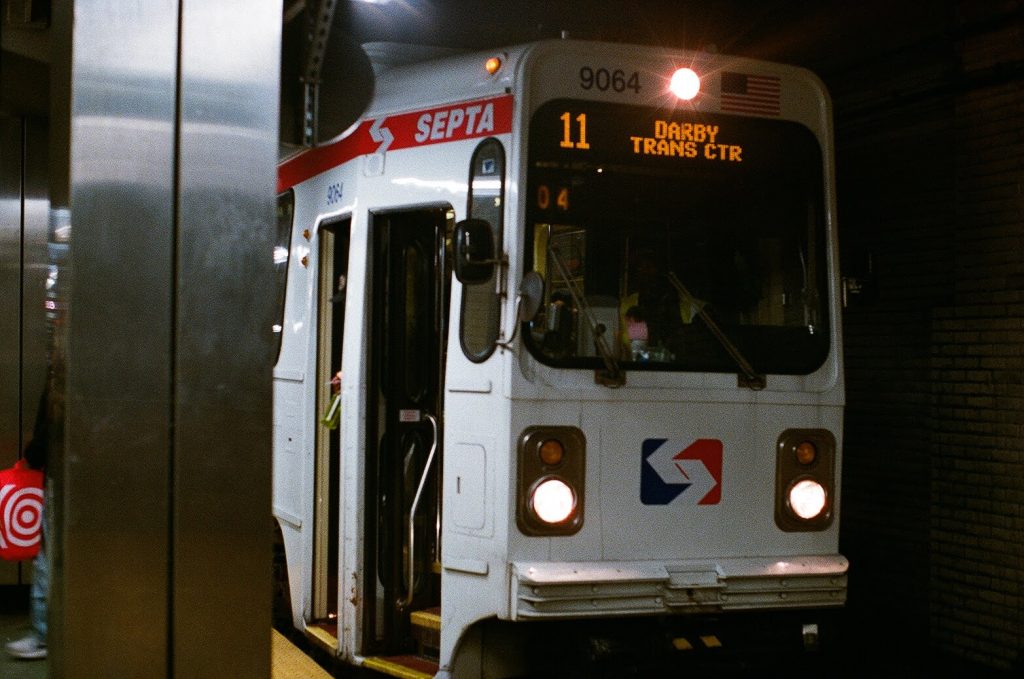
Last year, the Southeastern Pennsylvania Transit Authority (SEPTA) spent $471.357 million on materials, services, power, fuel, rentals, and claims payments. Over 25% of every dollar in SEPTA’s operating budget pays a contractor, lawyer, or for supplies or claims. Millions of those dollars are spent without taking bids to find the lowest available price.
SEPTA usually seeks bids for goods and services it needs. This not only helps keep costs down but also prevents politically connected firms from being awarded contracts. SEPTA’s website provides information on how a business can submit a bid. In the past, SEPTA supported minority- and women-owned businesses, but since October 2025 — as a result of the Trump administration’s dismantling of programs that had begun to help the historically disenfranchised — SEPTA no longer offers such programs.
“Immediate Changes Being Made to DBE Program Regulations
Effective October 3, 2025, the United States Department of Transportation (USDOT), Office of Civil Rights, published a DBE/ACDBE Interim Final Rule (IFR).
As a result of the IFR, there are changes to the DBE/ACDBE program that have caused us to pause the certification process. Therefore, we are not accepting new DBE/ACDBE certification applications or DOEs at this time.”
Similar to the City of Philadelphia’s elimination of the small-business tax abatement program, SEPTA has not sought a workaround to help small, locally sourced businesses. There is nothing on its website suggesting an advantage for businesses located in neighborhoods experiencing poverty, for businesses that pay all workers a living wage, or for businesses that institute a profit-sharing program with workers or are worker-owned. There is no rule against using rider and taxpayer money to help increase wealth in the region served by SEPTA.
Neither the Trump administration nor SEPTA has changed how SEPTA avoids the bidding process to award contracts to companies it prefers.
SEPTA, in its monthly board meeting, refers to the awarding of contracts without accepting bids as a “sole source procurement.” Unlike contracts given to the lowest responsible bidder, the only requirement for a sole-source procurement contract is that the business knows someone at SEPTA.
Sole-source procurement is not the only way SEPTA increases what it pays a contractor without the bidding process. The other way is through a “change order” or amendment to an existing contract.
In the last two months of 2025, SEPTA authorized $74.75 million, without requiring the contract to be given to the lowest responsible bidder, without requiring the business to be located in SEPTA’s service area, and without requiring all jobs to pay a living wage or a profit-sharing program.
Some of the “sole source” contracts are easier to understand than others. For example, SEPTA gave a no bid contract worth $2.75 million to Integrated Power Services, LLC for “the provision of blanket contract for the repair overhaul and return of 18 main transformers for the Silverliner IV rail car fleet.” The rail cars are over 45 years old and it would be impossible using a bidding process to find replacement transformers by next month, when the company receiving the no-bid contract is scheduled to commence.
But there are also hard-to-understand no-bid contracts that are awarded. Rather than seeking new tasers through a bid process, SEPTA awarded the contract to Axon Enterprises for an amount not to exceed $1.564 million. Tasers are still being built. There appears to be no reason that this is the only model SEPTA officers can use. Nor does the decision to award the contract directly to Axon allow SEPTA to leverage the collective buying power of Philadelphia and State Police to reduce the price per taser. If the contract can be given without a bid, then SEPTA could certainly investigate ways to save money by pooling its purchasing with other governmental purchases.
The proposal includes a notice that a “staff summary” is available on this subject. But it’s not included in the monthly agenda, and searching SEPTA’s website doesn’t bring it up. Another example is that SEPTA gave CVS a $21.3 million no-bid contract. Again, there is no explanation as to why SEPTA could not join with the city or state to save money. The only explanation for awarding the no-bid contract is “increases in medication costs.”
The millions given in change orders and amendments also raise questions. Many of the increases were due to newly identified conditions. For example, SEPTA gave ecoservices another $320,000 to remove asbestos and lead from a warehouse SEPTA rented. How is it possible that, at the time the original lease was signed, lead and asbestos were present in the building, yet no one noticed that both needed to be removed?
Perhaps there is no way to avoid no-bid contracts or to prevent those who win them from receiving even more than was agreed upon. But certainly, riders should expect board members to ask a question — every now and then — when millions are given away without anyone else being able to offer the good or service for less.
Our reporters sit through hours of city council meetings, dig through piles of documents, and ask tough questions other media overlook. Because we’re committed to addressing Philadelphia’s poverty crisis — and challenging those who sustain it. If you think this work is important too, please support our journalism.
We’re counting on readers like you.