Assessment Notices Go Out in June
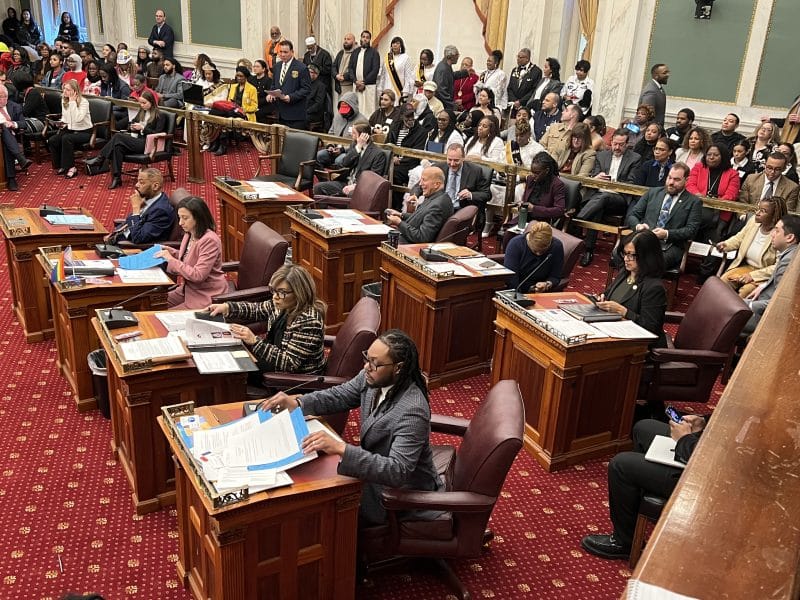
The Philadelphia Office of Property Assessment (OPA) testified before City Council this week regarding their upcoming plans for property tax assessments, the last of which occurred in 2023 and drew considerable ire for the surprising tax increases seen in some city neighborhoods.
According to their website, the OPA “determines the value of all real property in Philadelphia. OPA is dedicated to doing so in a fair, accurate, and understandable way so that properties of the same value are assessed and taxed at the same rate.”
Read More
The methodology OPA uses includes the size and age of a property, it’s location and condition, and recent sales of similar properties in the area. OPA also utilizes information from field inspections, aerial photography, data from other city departments, and commercial sources.
In his prepared testimony, James Aros, the Chief Assessment Officer for OPA, said a revaluation of the entire city will take place in 2025. In doing so, OPA will retain an outside firm to evaluate how the upcoming revaluation measures against industry standards.
A recent report released by the Reinvestment Fund determined the 2023 assessment inaccurately assessed and over assessed Black, Hispanic, and low-income residents. In response to the report and concerns over the assessment process, Mayor Cherelle Parker created the Philadelphia Residential Property Assessment Task Force, which will partner with the Reinvestment Fund and Community Legal Services to identify best practices and make recommendations for creating new frameworks for implementation.
Councilmember Jamie Gauthier raised concerns over the 2023 assessment, explaining that high revaluations can displace residents, and questioned the timing of the upcoming citywide reassessment.
“I’m very challenged as to how we can go through with 2025 assessments when the task force hasn’t convened and we don’t know what we’ll do differently,” Gauthier said.
Aros said steady progress had been made in improving the assessment process, which would lead to an overall improvement in the results of the upcoming revaluation.
The estimated value of all the properties in the city is $208.8 billion.
Finalized home values will be available in May, and notices will be made to homeowners in June, which will include paperwork to file a first-level review, the process by which a homeowner can appeal their tax increase.
First-level review requests will likely be due by September 2024 and homeowners must be able to prove one of the following criteria:
Incorrect market value or property characteristics: The valuation of your property is too high or too low, and/or the characteristics of your property that affect its valuation are substantially incorrect.
Non-uniformity: The valuation of your property is not uniform with other properties throughout the city.
Incorrect exemption or abatement: The exemption or abatement listed for the property is not correct or is missing.
If the results of the first-level review are not satisfactory, homeowners can make a formal appeal to the Board of the Revision of Taxes. The deadline for this appeal is usually the first Monday in October.
The city has established multiple relief programs, including:
The Homestead Exemption
The Longtime Owner Occupant Program (LOOP)
Senior Tax Freeze
Property Tax Abatements
To learn more about your property, visit OpenDataPhilly.
Thomas Call for Hearings on School Board Process; Rec Centers
Councilmember Isaiah Thomas introduced two resolutions, the first “authorizing the Committee on Education to hold hearings on exploring possible alternatives to Philadelphia’s current school board governance model.”
The resolution mentions different selection models used in other cities such as Washington D.C. and Chicago, “where partial or fully elected school boards have been adopted.”
Read More
“We are at a turning point in our city as it relates to education,” Thomas said via press release. “With a historic facilities crisis, subpar academic achievement, and concerns over consistent climate and culture incidents, Philadelphia families have been looking for answers and accountability for some time now.”
Thomas also introduced a resolution “authorizing the Committee on Parks, Recreation and Cultural Affairs committee to hold hearings on ensuring Recreation Centers have the full complement of staff needed to respond to the diverse challenges of Philadelphia neighborhoods.”
Citing decades of disinvestment and underfunding as the prime factors in the current state of city recreation centers regarding staffing, the resolution touts fully-funded and staffed centers as a tool to address trauma, mental health, and at-risk youth.
Lozada Seeks Controller Report
Councilmember Quetcy Lozada introduced a resolution “Requesting the City Controller to conduct a performance audit on all allocations and funding distributed by the City in the Kensington area, and examine the policies and procedures of the recipients and their impact on the City of Philadelphia.”
At previous hearings concerning remediation efforts in Kensington, it came to light that nearly $70 million had been invested in the area, but the effectiveness of the infusion of dollars remains unclear. Additionally, other money, such as opioid settlement funds, are also awaiting dispersal.
Read More
Once completed, the report will be submitted to City Council, the Mayor, and the Governor.
Special Committee on Kensington Formed
Earlier this week, City Council announced the formation of the “Special Committee on Kensington,” which will consider of Councilmembers Quetcy Lozada, Mark Squilla, Curtis Jones, Mike Driscoll, Nina Ahmad, and Jim Harrity.
The committee will “will analyze and examine the effectiveness of current policies and work together to establish a framework for addressing the root causes of these issues facing the Kensington area including poverty, crime, substance-use, and homelessness.”
Read More
Additionally, the committee will hold regular planning meetings and evaluate the effectiveness of current programs and policies, and identify best practices in consultation with experts in various fields.
“The establishment of a Special Committee for Kensington is unique,” Councilmember Driscoll said via press release. “However, the challenges facing the neighborhood are exceptional and require a comprehensive and coordinated strategy. I look forward to this committee’s work and want to assure Kensington residents and businesses, as well as all Philadelphians, that my council colleagues and I are committed to the positive transformation of Kensington going forward.”
Our reporters sit through hours of city council meetings, dig through piles of documents, and ask tough questions other media overlook. Because we’re committed to addressing Philadelphia’s poverty crisis — and challenging those who sustain it. If you think this work is important too, please support our journalism.
We’re counting on readers like you.