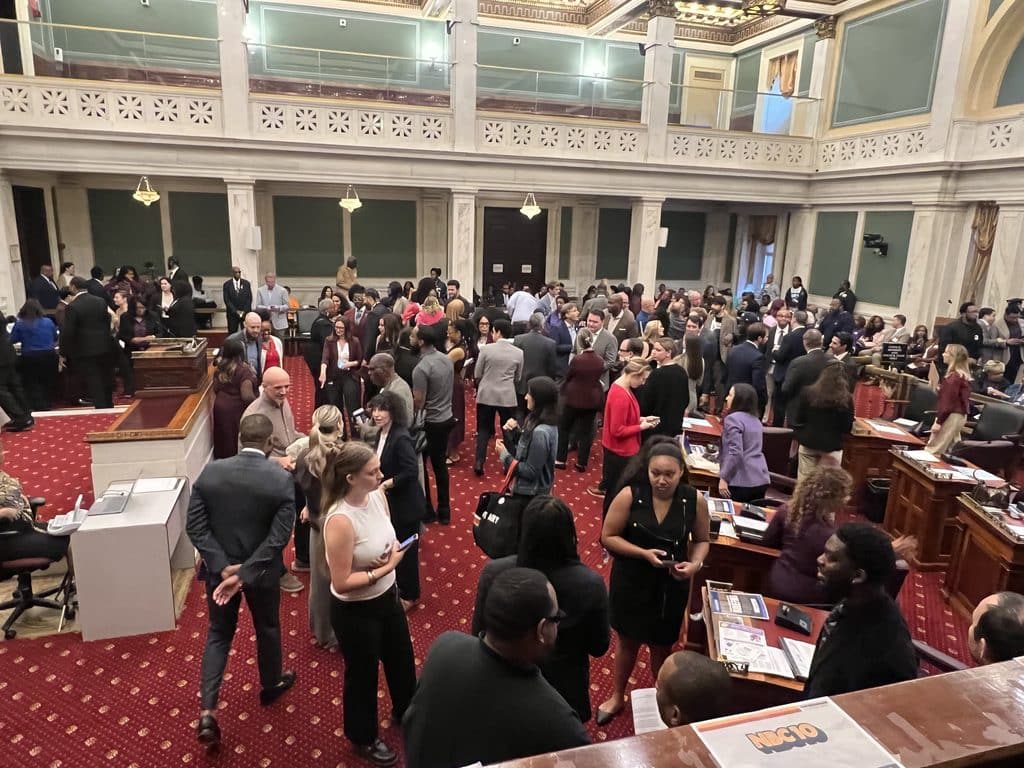
The Philadelphia City Council Committee on Housing, Neighborhood Development, and the Homeless heard testimony on Resolution No. 260101, which called for the examination of the Office of Property Assessment regarding methodology, the appeals process, the impact of rising property assessments, and property taxes on Philadelphia residents.
Long the bane of Philadelphia homeowners, property tax increases based on updated assessments of city real estate have contributed to gentrification and have disproportionately affected seniors living on fixed incomes. There are also wide discrepancies in rate increases throughout the city. All the while, the process by which assessments are set has largely been opaque.
Councilmember Quetcy Lozada, who sponsored the hearing legislation, said Kensington, a neighborhood she represents, saw a median property assessment of 15.3% as compared to 3% citywide.
“(This) raises important questions about how assessments are determined across neighborhoods,” Lozada said. “We also know that an independent audit raises serious concerns about OPA’s assessment practices, and this City Council called for reforms back in 2019. We’re still having the same conversation about a process that has been unfair, nontransparent, and has been a problem for everyone.”
Lozada also expressed frustration that progress has not been made in creating an easier appeals process.
Ira Goldstein, Principal and Founder of IJG Urban Advisors and a senior advisor at the Reinvestment Fund, offered the findings of the Home Assessment Bias Task Force, which had been established by Mayor Cherelle Parker to better understand disparities in residential assessments and recommend solutions. Goldstein said the report showed OPA was meeting standards citywide, but that does not necessarily mean equal quality across neighborhoods. He recommended the following actions:
“First, OPA should pursue better property information, including from the Multiple Listing Service, which they had attempted to secure in the past but (to which they were not permitted access),” Goldstein said. “Second, (OPA should) undertake fair housing self-monitoring and examine the assessment process. OPA should seek legal and industry advice (on how to do so).”
Goldstein also said OPA should publish more complete property data and clearer explanation of the assessment process, and further recommended greater transparency.
Despite the report, members of Council seemed to be unmoved, and it remains to be seen what actions will be taken to improve city assessment practices.
Council Issues Hearing Resolutions Directed at DHS and CUAs
In response to the death of Malayshia Alford, City Council introduced three resolutions calling for investigations into the tragedy.
Councilmember Cindy Bass, the most prominent and consistent critic of the Community Umbrella System (CUA), introduced a resolution “authorizing the Committee of the Whole to hold public hearings examining the City’s Community Umbrella Agency (CUA) system and the School District of Philadelphia’s hiring and screening practices.”
In a press release, Bass said Alford’s death has raised deeply troubling questions about the oversight of foster care placements, background checks, home safety assessment, and the agencies entrusted with protecting vulnerable children.
“Malayshia’s death is heartbreaking, and it should compel every one of us to take a hard look at the systems we have entrusted with protecting our children,” Bass said via press release. “We cannot continue to have conversations about children falling through the cracks without confronting the systemic failures that allow it to happen. We owe our children more than explanations after the fact. We owe them a system that protects them.”
In past hearings, Bass has questioned whether the development of the CUA system, which entrusts outside entities to administer certain child protective services, is actually an improvement over the City handling these responsibilities itself.
Minority Leader Kendra Brooks introduced a resolution “authorizing the Committee on People with Disabilities and Special Needs to hold hearings examining Philadelphia’s Community Umbrella Agency system, its failure to significantly reduce child fatalities and near-fatalities, and the oversight of child-welfare case management and foster-care placement within the Department of Human Services, especially as it pertains to children with disabilities and special needs.”
The CUA system was implemented in 2006 following the death of Danieal Kelly, a Philadelphia child with cerebral palsy, according to the resolution. The Department of Human Services had failed to adequately monitor Kelly and her placement.
However, twenty years later, problems still exist. The resolution mentions that 70 lawsuits have been filed against CUAs, including 14 involving child deaths, and 50 resulting in settlements or verdicts of $1 million or more.
Councilmember Anthony Phillips introduced a resolution “authorizing the Committee on Children and Youth to hold hearings to examine policies and practices that keep children safe and support their families, including safeguards to protect children placed outside their homes through Philadelphia’s dependency system, engagement with relatives and supportive adults, coordination among agencies and service providers, and opportunities to strengthen accountability and prevent child abuse, neglect, and fatalities.”
Initial placement: How emergency and initial placements are selected, who is responsible
for the child during the transition, and how the child’s immediate needs are met. The
hearings shall also examine how relatives and other trusted adults are identified and assessed
for kinship care, how siblings are kept together when appropriate, and what happens when a
suitable placement is unavailable.
Training and support for resource parents. What training placement providers are
required to provide to foster and kinship caregivers before approval, before accepting a
placement, and on an ongoing basis. The hearings shall examine what training providers
actually deliver, whether it prepares caregivers to meet children’s needs and recognize and
report safety concerns, how completion is verified, and what coaching, respite, and crisis
support caregivers can access after placement.
Training and supervision of providers and Community Umbrella Agencies. What
training DHS requires of placement providers and Community Umbrella Agencies, including
their caseworkers and supervisors, and what training DHS and contracted providers deliver to
those agencies. The hearings shall examine who sets and delivers the training, how often it is
required, how DHS verifies completion and assesses whether staff can apply it, and what
additional training or supervision is needed to assess placement safety, escalate concerns, and
follow through on protective action.
DHS oversight of agencies resource family screening. How DHS monitors Community
Umbrella Agencies and placement providers, verifies compliance, and requires corrective
action. The hearings shall also examine how DHS records the outcomes of prior abuse or
neglect investigations and what information providers can lawfully access and consider
during interviews, home studies, and approval decisions, including when a former resource
family applies through a different provider.
Child advocacy and representation. The respective roles and responsibilities of attorneys
appointed to represent children, guardians ad litem, and other child advocates, including how
they communicate privately with children, convey children’s wishes and interests as
appropriate to their roles, raise and follow up on safety concerns, and address barriers to safe
reunification.
Safety monitoring and response. How caseworkers verify a child’s safety after placement,
including the frequency and quality of visits, opportunities to speak privately with the child,
and follow-up when visits are missed. The hearings shall also examine how agencies,
providers, schools, and other partners share information and who must act when someone
reports harm, a child is unexpectedly absent from school, or the child’s whereabouts cannot
be verified.
Family connections and safe reunification. How agencies preserve safe contact with
parents, guardians, siblings, and other supportive adults, provide families with the services
they need, and reassess whether a child can safely return home. The hearings shall also
examine how agencies maintain continuity in schooling and health care and support children
through placement changes or another permanent placement when reunification is not
possible.
Accountability and prevention. How the City identifies recurring gaps, tracks corrective
actions, and evaluates whether safeguards are working. The hearings shall consider what
findings and outcomes can be reported publicly while protecting the privacy of children and
families and complying with applicable confidentiality requirements.
Jones Calls for Utility Assistance Hearing
Councilmember Curtis Jones introduced a resolution “authorizing the Committee on Transportation and Public Utilities to hold hearings to examine the processes used by the Philadelphia Electric Company (PECO), Philadelphia Gas Works (PGW), and the Philadelphia Water Department (PWD) to determine customer eligibility for financial assistance programs, identify barriers to enrollment, and explore strategies to increase participation in such programs to prevent utility service shutoffs.”
According to information provided in the resolution, the Philadelphia Gas Works (PGW) disconnected 29,388 residential customers for nonpayment between April and August 2026, and 21,176 during the same period in 2025, for a 39 percent increase in shutoffs.
Lagging enrollment in these programs is caused by numerous factors, including customer lack of awareness, a cumbersome application process, but also because of a lack of publicity and coordination among utility agencies.
Gauthier Looks to Preserve Housing
Councilmember Jamie Gauthier introduced a resolution “authorizing the Committee on Housing, Neighborhood Development, and the Homeless to hold hearings examining the potential sale of the 925-unit Neighborhood Restorations affordable housing portfolio, the possible impact if homes are sold on the open market, and current efforts underway to preserve it as permanently affordable housing.”
The housing mentioned in the resolution is in danger of losing its affordability restrictions in the next decade, and the company which owns them, Neighborhood Restorations, informed the city of their intent to sell the properties, mostly 3-4 bedroom single family homes. The 925 units are not located in a single site, but are spread throughout West Philadelphia.
In order to maintain the affordability of the units, state and city funding would be required. The City would be required to invest $36 million in the program.
Our reporters sit through hours of city council meetings, dig through piles of documents, and ask tough questions other media overlook. Because we’re committed to addressing Philadelphia’s poverty crisis — and challenging those who sustain it. If you think this work is important too, please support our journalism.
We’re counting on readers like you.