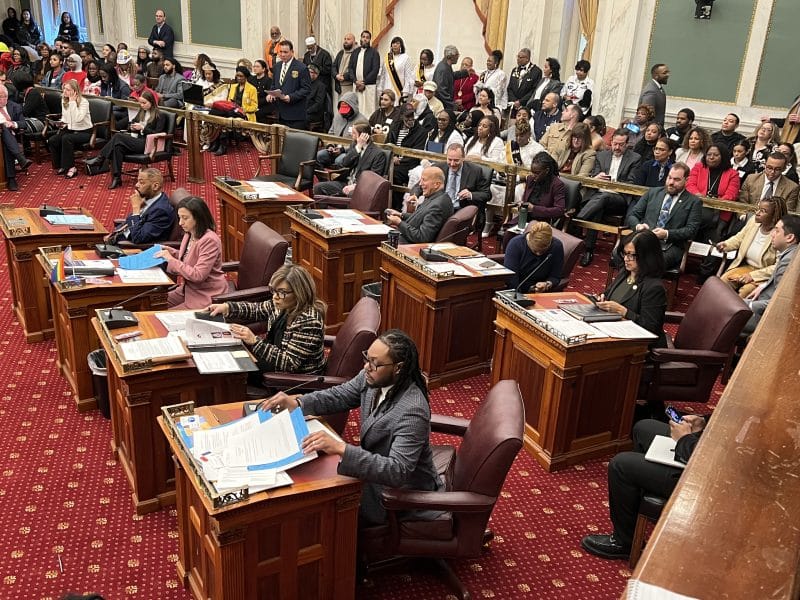
Philadelphia Mayor Cherelle Parker made her annual budget address before City Council, the third of her first term in office.
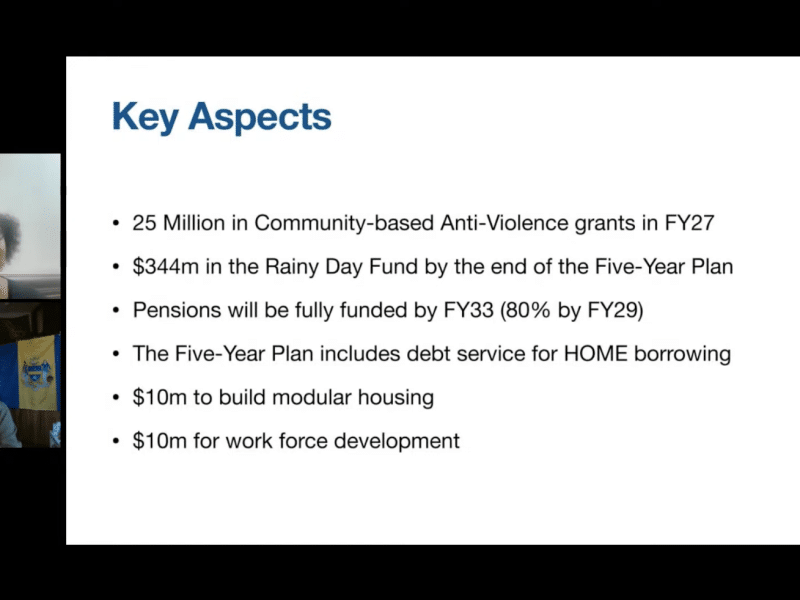
The proposed 2027 Operating Budget is just over $6.9 billion in spending on revenues of $6.5 billion. The difference between revenue and expenditures will be covered by previous fund balances.
Information provided by the Parker Administration touts $2.2 billion in “new, targeted investments” dedicated to Parker’s core campaign promises of making Philadelphia the “safest, cleanest and greenest big city in the nation.”
New operating investments in the 2027 Operating Budget include:
Public Safety: $117,879,947
Economic Opportunity: $52,167,237
Housing: $34,692,675
Core Support: $13,436,748
Clean and Green: $9,183,330
According to information provided by the Parker Administration, the budget includes the following initiatives:
Increasing economic mobility and opportunity through strategic investments in workforce development, access to City employment, and financial empowerment for Philadelphians.
Striving to end street homelessness through the creation of 1,000 new shelter beds with wraparound services and stronger connections to permanent supportive housing.
Investing in the Administration’s wellness ecosystem to ensure continuity of care for individuals contending with substance use disorder and mental health challenges.
Continuing public safety gains through prevention, intervention, and enforcement strategies, anti-violence investments, and Vision Zero improvements.
Expanding clean and green efforts through neighborhood cleaning, corridor revitalization, highway beautification, paving, ADA improvements, and environmental sustainability investments.
Building on the H.O.M.E. Initiative and the City’s historic housing investments to increase supply, preserve affordability, and improve access to quality housing.
Supporting education and workforce development through expanded PreK and Extended Day, Extended Year programming, direct support for the School District, and pathways to careers.
Reinforcing core government operations and the City workforce through investments in hiring, retention, procurement modernization, and labor stability.
Citing external pressures as a complicating factor in assessing the city’s long-term financial picture, the Administration believes Philadelphia’s finances are stable. Factors such as” inflation, a tight labor market, revenue volatility, sluggish job growth, and federal and economic uncertainty” create a muddled long-term projection.
Previously existing factors, such as the city’s high poverty rate coupled with a weaker tax base and rising costs, casts even more doubt on the city’s fiscal health.
Budget projections show the city’s fund balance declining from $392 million in FY 27 to $47 million in FY 31. This precipitous drop is due to the factors mentioned above, as well as a large pension bond payment coming due in FY 29. Best financial practices suggest that a city as large as Philadelphia should maintain about 17% of its operating budget in reserve. Factoring in the city’s Budget Stabilization Fund and the Federal Funding Reserve, the city will likely only maintain a 6% reserve.
The proposed budget also includes new city revenue streams. The hotel tax will see a 2% increase beginning in August of 2026, which will generate an additional $20 million per year. A new retail delivery tax of $0.25 per order, which will be charged to the retailer, will be implemented on July 1, 2027. This tax will exclude food, baby products, drugs, medical devices, and wholesale goods. The $15 million raised by this new tax each year will be dedicated to the Transportation Fund.
Closing a loophole in the Sales and Use Tax will require out-of-city sellers who collect the 6% state sales tax will now be required to charge the additional 2% sales tax required by the city. The annual $1.5 million generated by this change will be allocated to the city pension fund.
There will also be new revenue streams dedicated to the school district, with a $0.20 per ride tax on rideshares originating in the city, which will generate $9.6 million per year. The Use and Occupancy Tax will also be amended to include cell towers, which add an adtiional $2.4 million to the district coffers.
Hall Monitor will have a detailed breakdown of the operating and capital budgets on next Wednesday’s program.
This article is a part of Every Voice, Every Vote, a collaborative project managed by The Lenfest Institute for Journalism. The William Penn Foundation provides lead support for Every Voice, Every Vote in 2024 and 2025 with additional funding from The Lenfest Institute for Journalism, Comcast NBC Universal, The John S. and James L. Knight Foundation, Henry L. Kimelman Family Foundation, Judy and Peter Leone, Arctos Foundation, Wyncote Foundation, 25th Century Foundation, Dolfinger-McMahon Foundation, and Philadelphia Health Partnership. To learn more about the project and view a full list of supporters, visit www.everyvoice-everyvote.org. Editorial content is created independently of the project’s donors.
Our reporters sit through hours of city council meetings, dig through piles of documents, and ask tough questions other media overlook. Because we’re committed to addressing Philadelphia’s poverty crisis — and challenging those who sustain it. If you think this work is important too, please support our journalism.
We’re counting on readers like you.