On Friday, Nov. 22, Governor Shapiro “swooped into Philadelphia to announce he was redirecting $153 million in federal highway funds to SEPTA, averting a significant fare increase planned for Jan. 1.” Elected officials, from his party thanked the Governor for “riding to the rescue”. SEPTA announced that it would have to implement massive fare hikes and service cuts, which would lead to SEPTA’s death spiral if the Governor took no action.
In what must be considered good news for SEPTA riders, SEPTA canceled its request for a second round of fare hikes. But the timing and the amount “flexed” raise serious questions about what the Governor is doing.
The Governor’s announcement came 3 days after SEPTA forced its workers, with threats of service cuts that would lead to layoffs, to accept a contract that failed to keep up with the cost of living. The following day, SEPTA’s suburban-controlled board voted to raise City Transit division Key Card fares by 25% while keeping the regional rail line zone 1 increase to 6%. After forcing city riders to carry twice the burden of regional rail riders after the workers who keep the system operating were forced to accept a substandard contract, the Governor announced he was flexing the money.
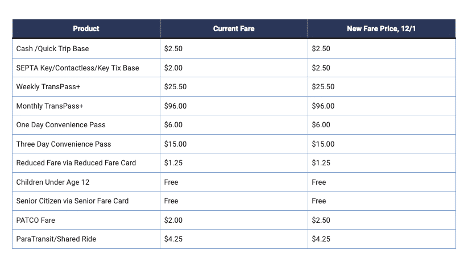

Had the Governor made the announcement a week earlier, perhaps the workers would have had a better contract, and the riders wouldn’t have been such a burden.
There might have been a reason the Governor couldn’t announce the flex in time to avoid the 25% fare hike and the substandard contract. However, none was given.
While thankful for the money, SEPTA claims there still isn’t enough. It allowed the fare increase to go into effect on Dec. 1 as if the Governor had not presented SEPTA with $153 million.
But does SEPTA have enough? If one follows the numbers, it seems that SEPTA has more than enough. In SEPTA’s operating budget, passed by the SEPTA board in May of this year, it projected to receive a $161 million increase in funding. Instead, SEPTA received $51 million more from the State than last year and $ 7 million more from the City of Philadelphia. There was no projected fare hike in the operating budget.
SEPTA took steps after receiving $103 million less than it projected. It re-instituted parking fees in its lots, raising $4 million. It placed a hold on hiring, saving $20 million. And it announced a proposed fare increase to generate $14.4 million in annual revenue.
Despite all those actions, SEPTA was still $64.6 million short of its projected amount. SEPTA is projected to use 12% of its $535 million fare stabilisation fund to keep the system operating.
The Governor’s “flex” provides SEPTA with all the other money it claimed it needed to balance its budget without the fare hike and more—$ 84 million above and beyond what SEPTA was expecting. More than enough to rescind the fare increase and offer TWU workers a signing bonus without touching its “Stabilization Fund.”
| Projected need from SEPTA’s operating Budget | $161 million |
| Received from State | $ 51 million |
| Extra from City of Philadelphia | $ 7million |
| Parking Fees | $ 4million |
| Not Hiring and Cost-Cutting | $ 20 million |
| December 1st 25% Fare Hike on Key Card | $14.4 million |
| Governor “Flex” on Nov 22nd | $153 million |
| Money SEPTA has above what it said it needed | $ 88.4 million |
What will SEPTA do with the extra money?
It should be clear to everyone who follows SEPTA that there is some turmoil at the authority. The general manager left without a named successor. SEPTA has been unable to lobby for the dependable funding it needs. It still has its $ 535 million “stabilization fund” surplus. And it is still canceling scheduled buses because it has been unable to hire and retain enough drivers to operate the system.
Will SEPTA use its stabilization fund and the $ 88.4 million “extra” it received from the Governor to improve service, hire drivers, increase safety, and make SEPTA more desirable and, therefore, more used? Or will it put the $ 88.4 million “extra” in a bank account next to the Fare Stabilization fund and keep it from the public?
Our reporters sit through hours of city council meetings, dig through piles of documents, and ask tough questions other media overlook. Because we’re committed to addressing Philadelphia’s poverty crisis — and challenging those who sustain it. If you think this work is important too, please support our journalism.
We’re counting on readers like you.