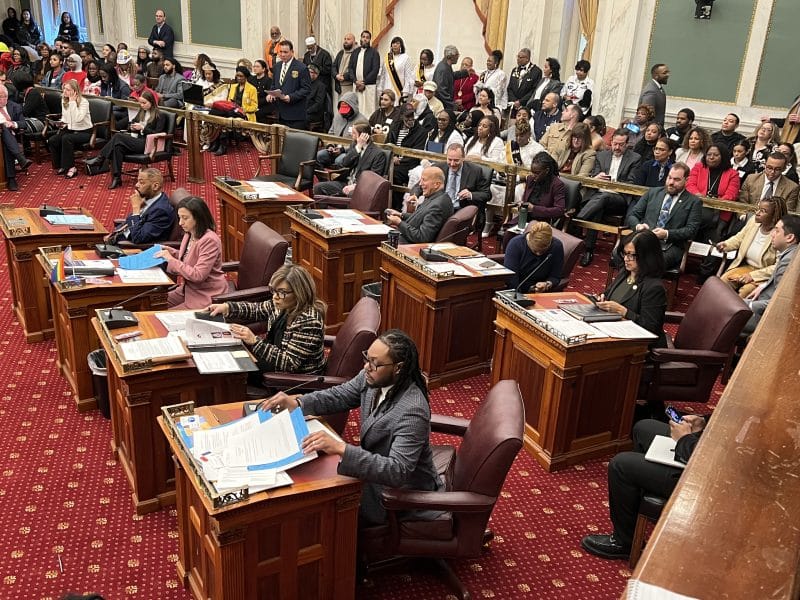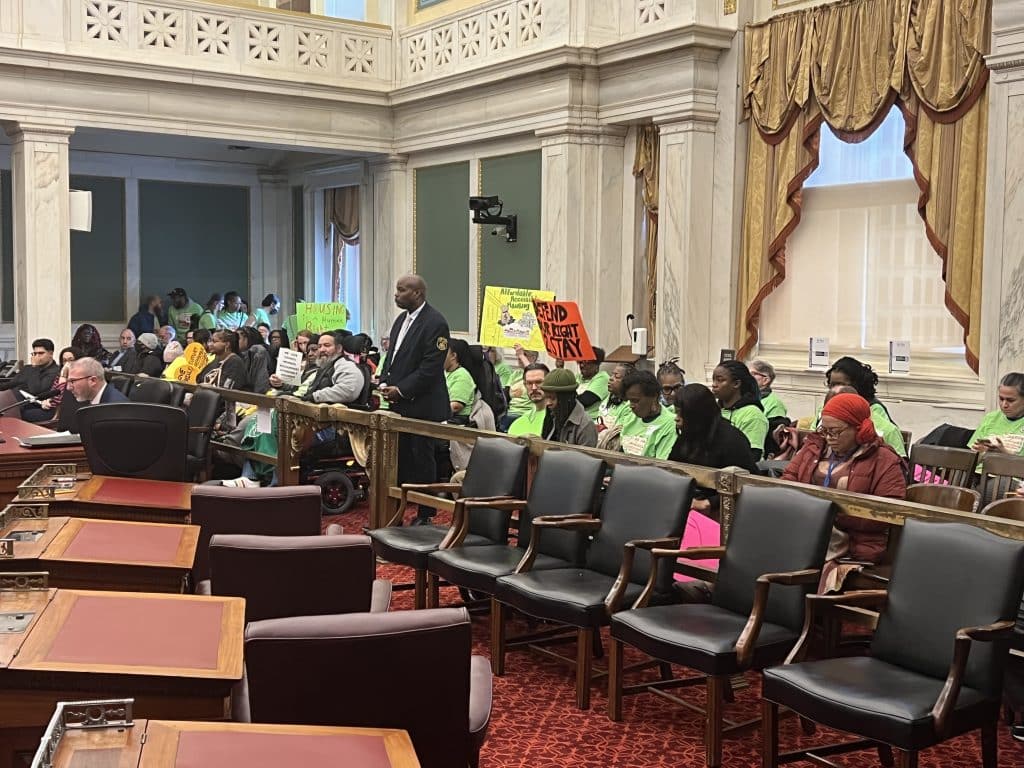
The Philadelphia City Council Committee on Housing, Neighborhood Development, and the Homeless met on Tuesday, February 11th, to hear testimony on Resolution No. 240697, “ how setting affordable housing program eligibility according to the metric of regional Area Median Income (AMI) fails to reflect the true state of housing affordability needs of Philadelphians, how this leads to City housing programs not providing enough funding to those who need
it most, and how the adoption of a more locally defined AMI can be utilized to
create and sustain genuinely affordable housing across the City of Philadelphia.”
In her opening remarks, Councilmember Gauthier discussed the flaws in the Annual Median Income (AMI) formula, which is assessed regionally as opposed to focusing solely on Philadelphia. The current AMI for the region, which incorporates wealthy suburban communities, is over $114,000. Gauthier said Philadelphians typically earn, at best, half of that number.
”This means that when the city subsidizes so-called “affordable housing” for residents earning 60% (to) 120% of AMI, it is still too expensive for hundreds of thousands of Philadelphians,” Gauthier said.
Mindy Watts, of the urban planning firm Interface Studios, said the affordable housing crisis is worsening.
“Our research shows that incomes in Philadelphia are relatively stagnant while housing costs have been going up exponentially,” Watts said. “This creates a serious mismatch. Since 2000, citywide median income has increased by just 9%, while the median home value jumped by 107%.”
Watts said in some neighborhoods, values have risen by more than 350%, while rents have increased by more than half city wide.
“One out of every three homes and one in two renters are paying more than they can afford for housing,” Watts continued. This mismatch between what people can afford to pay for housing and the cost of housing in our city is most threatening to low-income households, low-income seniors, and people living with a disability who are at a higher risk of housing insecurity.”
According to Watts, 30% of households in the city earn less than $30,000 per year, and 55% of renters in this income bracket do not have an affordable housing option. This equates to over 200,000 households. 100,000 of these earn less than $15,000 per year.
Emily Dowdall, president of policy solutions at the Reinvestment Fund, outlined five key goals the city should focus on to make housing more equitable from a 2018 Housing Action Plan.
”The five basic goals were housing vulnerable residents, preserving affordability, equitable growth without displacement, pathways to ownership and wealth, and promoting housing choice,” Dowdall said.
The general consensus among experts was that the city needs to reassess how it allocates housing funds and spend half of its housing dollars on households earning less than $30,000 per year.
Young Introduces Tenant Late Fees Bill, Bus Station Hearing Resolution
Councilmember Jay Young introduced a bill limiting late fees that may be charged to residential tenants. This is the latest in multiple pieces of legislation introduced by council members aimed at housing.
The legislation makes it illegal for a landlord to “charge or accept the payment of late fees, interest, or similar charges or penalties as the result of non-payment of rent for residential premises where such rental payment was withheld by the tenant or deducted to cover costs incurred by the tenant to render the premises habitable, provided that such withholding or deduction was:
(a) Consistent with the requirements of the City Rent Withholding Act, codified as 35 P.S. § 1700-1; or
(b) Determined by the Commission or a court of competent jurisdiction to be based on a breach of the implied warranty of habitability and, consistent with common law requirements, the tenant provided the landlord proper notice of the defect or condition giving rise to the alleged breach of the implied warranty of habitability and, if applicable, of the tenant’s intention to withhold rent or to deduct the reasonable cost of repair of such defect or condition from the rental payment.”
Councilmember Young also introduced a resolution “authorizing the Council Committee on Transportation and Public Utilities to hold hearings to investigate the potential locations of new intercity bus terminals in the City of Philadelphia.”
The previous bus terminal, located at 13th and Filbert Streets in Chinatown, was removed as part of the abortive 76 Place arena proposal. Buslines such as Greyhound and Megabus now pick up passengers at garages and along various streets throughout the city, causing complaints from residents and motorists.
According to the resolution, “the city’s transit plan, Philadelphia 2045, endorses calls for the construction of an intercity bus terminal at 30th Street Station, which used to have a nearby pickup point for Megabus and which Amtrak utilizes for its Thruway Service.”
Legislation Passed at the February 13th Session of City Council
Also naming Market Street from 7th to 8th as Emma Chappell Way, in honor of the trailblazing work she did to establish the City’s first bank operated by a Black woman. |
Urging Congress to expand the Child Tax Credit, an essential anti-poverty initiative that has drastically cut child poverty and benefitted millions of families.
Authorizing the Commissioner of Public Property to execute and deliver to the Philadelphia Redevelopment Authority deeds conveying fee simple title to 2406, 2434, 2440, 2444 N. 6th Street, 2425, 2427 N. 7th Street 2400, 2403, 2455 N. 15th Street, 2424, 2460 N. 16th Street, 2415 N. Bancroft Street, 1509 W. Boston Street, 1500, 1507 W. Cumberland Street, 1501-03, 1510 W. Firth Street, 1422, 1437 W. Hagert Street, 1422, 1430 Letterly Street, 2434, 2438, 2440, 2445 N. Marshall Street, 2452 N. Mole Street, 2418, 2419, 2421, 2428, 2433 N. Sydenham Street in the 5th Councilmanic District of the City of Philadelphia and further authorizing the Philadelphia Redevelopment Authority to transfer to the Philadelphia Land Bank fee simple title to such properties pursuant to Section 16-405 of The Philadelphia Code.
Authorizing the Philadelphia Land Bank to dispose of 2271 N. Philip Street located in the 7th Councilmanic District in accordance with the terms of Chapter 16-700 of The Philadelphia Code.
Authorizing the Philadelphia Land Bank to dispose of 2248 Ruffner Street located in the 8th Councilmanic District in accordance with the terms of Chapter 16-700 of The Philadelphia Code
Our reporters sit through hours of city council meetings, dig through piles of documents, and ask tough questions other media overlook. Because we’re committed to addressing Philadelphia’s poverty crisis — and challenging those who sustain it. If you think this work is important too, please support our journalism.
We’re counting on readers like you.