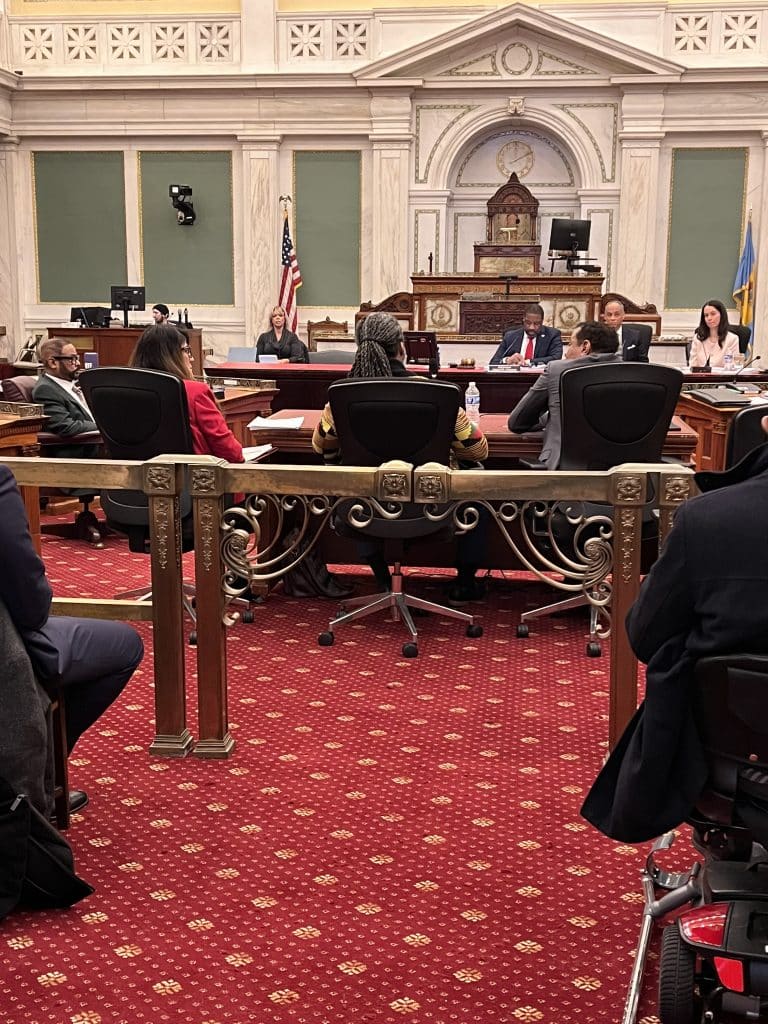
Budget season began this week for Philadelphia City Council, as various city departments provided testimony on financial needs and their general operations.
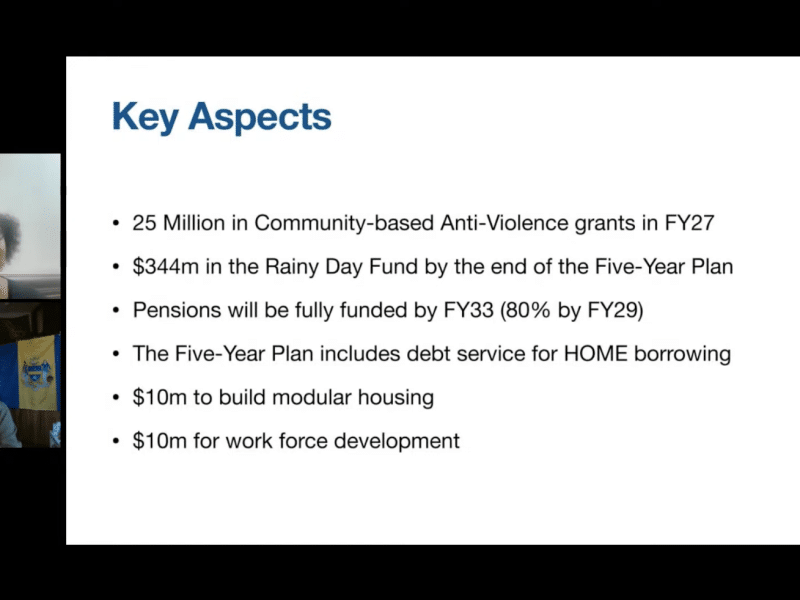
Describing the proposed legislation as the “One Philly, One Future” FY 2027 budget, Tiffany Thurman, Chief of Staff for Mayor Cherelle Parker, said the $6.97 Operating Budget continues the Mayor’s Clean and Green agenda, while adding $642 million in new operating investments over the next five years, with the Capital Budget including $1.5 billion in investments over the next six years.
The main features of this year’s budget include investments intended to increase economic mobility and opportunity, striving to end street homelessness, and investing in the Administration’s wellness ecosystem, which includes recovery programs for those dealing with addiction.
Thurman said while certain factors present challenges, such as the expiration of American Rescue Plan funds, significant federal regulatory and funding changes, economically sensitive tax revenue sources, high legacy costs, and high service demands that cause stress on a relatively weak tax base.
Questions from members of City Council focused on proposed new taxes, uncertainties regarding regulations from the Federal government, and the Mayor’s HOME Plan.
City Budget Director Sabrina Maynard said the city had lost five federal grants due to Trump Administration cuts, but with minimal impact on the overall city budget. The city typically receives over $2 billion in federal grants per year.
Council President Kenyatta Johnson expressed concern over potential cuts to nutritional programs, such as the Supplemental Nutrition Assistance Program (SNAP), and referenced stoppages that occurred late last year and how the city responded.
Deputy Mayor Vanessa Garrett Harley said the city worked with private and philanthropic partners when SNAP benefits had been paused, and the city is still preparing for further disruptions in that and other programs, as well as Philadelphians who may see changes in their benefits due to revised eligibility requirements.
“We continue to look and work without partners at the various food banks, so that we are prepared in the event that happens again,” Harley said. “Part of that work is around education, making sure people know about the potential changes and what they have to do to maintain those eligibility criteria, because we want to minimize the number of folks would could be impacted.”
In response to a question from Councilmember Nicholas O’Rourke, the Administration said 73,000 Philadelphians could be at risk of losing Medicare benefits, and 142,000 may lose SNAP benefits.
Regarding the increase in the proposed Ride Share Tax from $.20 per ride to a full dollar, Administration officials said the school district’s anticipated budget deficit was larger than originally thought. The original tax would have raised $9.6 million for the district. The new figure would contribute about $45 million of revenue.
“We all know that the Philadelphia public school system has been historically underfunded, and this year didn’t change that,” Chief Deputy Mayor Vanessa Garret Harley said. “(The school district) had been reliant on (American Rescue Plan) funds (which they dedicated to a number of positions that included vice principals and counselors.”
It is still unclear why the School District used the non-recurring ARP money to fund recurring positions, and why the $300 million deficit was not disclosed until after the Mayor’s budget address.
Councilmember Jamie Gauthier, chair of the Housing Committee, warned that 12% of all government housing can be sold by private owners this year. Similar to the fate of the University City Townhomes, many government housing developments are privately owned and, after a certain amount of time, can be sold to developers for, presumably, market rate housing unaffordable for former residents of the government subsidized housing.
“We have about 3-5 months (until) the owner of the 925 unit (affordable) housing portfolio, Neighborhood Restorations, will be put on the market,” Gauthier said. “The clock is running out. If we fail to act, it will be incredibly hard, if not impossible, to build affordable homes to replace what we have lost, erasing the progress that we’ve been working so hard to achieve.”
Gauthier said the owner of the property was willing to negotiate with the city, but that local government had to ensure the 925 homes will be permanently affordable. Gauthier then asked Administration officials directly if they would commit to investing in the property to keep it affordable. Chief of Staff Tiffany Thurman was not prepared to do so.
“We’re not going to make that commitment today,” Thurman said. “But that is not reflective of our overall commitment, nor is it reflective of our commitment to your (Gauthier’s) district to work together in a robust process.”
Regarding the city’s long-ailing pension fund, Finance Director Rob Dubow said various steps had been taken to fully fund the obligation in 2033. Currently, the fund is 67% funded, up from 50% ten years ago.
“We increased the amount of (employee) contributions (and) changed the way we fund it to make sure that all of that funding was above the amount required by state obligation,” Dubow said. “We also changed the benefit structure for non-uniform employees, so they would have hybrid pension plans.”
With the plan fully funded within the decade, Dubow said the city will save money by not having to use bonds to fill in the funding gaps, and that the city can meet its obligations.
“(It) shows that we’re keeping our commitment to our retirees in the end, (and) making sure our retirees get their payments,” Dubow said. “It also means that the unfunded liability, which is kind of like a mortgage we borrowed in past years, goes away, which will free up hundreds of millions of dollars we can use for a variety of investments and to help make sure we have a fund balance.”
This article is a part of Every Voice, Every Vote, a collaborative project managed by The Lenfest Institute for Journalism. The William Penn Foundation provides lead support for Every Voice, Every Vote in 2024 and 2025 with additional funding from The Lenfest Institute for Journalism, Comcast NBC Universal, The John S. and James L. Knight Foundation, Henry L. Kimelman Family Foundation, Judy and Peter Leone, Arctos Foundation, Wyncote Foundation, 25th Century Foundation, Dolfinger-McMahon Foundation, and Philadelphia Health Partnership. To learn more about the project and view a full list of supporters, visit www.everyvoice-everyvote.org. Editorial content is created independently of the project’s donors.
Our reporters sit through hours of city council meetings, dig through piles of documents, and ask tough questions other media overlook. Because we’re committed to addressing Philadelphia’s poverty crisis — and challenging those who sustain it. If you think this work is important too, please support our journalism.
We’re counting on readers like you.