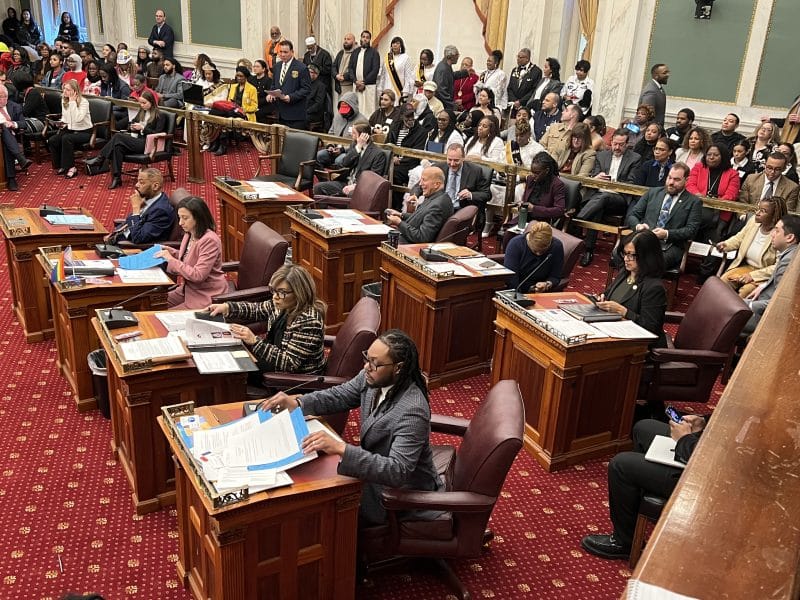
The Philadelphia City Council Committee on Education met Wednesday, July 31st, to hear testimony in a resolution investigating the “incidence, rate, impacts, and outcomes of homeless students the School District of Philadelphia.”
The hearing was held at the recently opened Alan Horwitz Sixth Man Center, a 100,000 square foot facility designed to provide programs for youth in the Nicetown section of the city.
Dr. Debora Carrera, Mayor Cherelle Parker’s Chief Education Officer, testified to the negative outcomes students facing homeless experience, including a higher likelihood or repeating a grade or being expelled, and having lower academic performance.
“Reducing the incidence of homelessness by creating permanent, affordable housing is a top long-term priority of the administrator,” Carrera said, “There are multiple city resources to identify and provide services to children and families experiencing homelessness.”
Amongst other initiatives, the Office of Homeless Services hired a “Homeless Liaison” to assist students experiencing homelessness. The services provided by the office include referrals to public benefits and enrichment programs, summer jobs, support for students with disabilities, and transportation services.
There were discrepancies regarding the exact number of students served by the district and city offices, a reoccurring theme during the summer council hearings. Last month, Philadelphia City Council’s Special Committee on Kensington could not determine how many empty treatment beds were available, as that information is not maintained in one readily accessible place.
According to Councilmember Isaiah Thomas, chair of the committee over 10,000 students were provided some sort of assistance via various programs in the 2022-2023 school year.
Dr. Zachary Wood, an Assistant Professor in the Institute of Public Service at Seattle University, where he focuses on urban poverty, testified that he had provided testimony for a similar Philadelphia City Council hearing eight years prior. In that time, little had changed.
Wood said those attempting to tackle the problem were focusing on the symptoms, not the causes.
“The numbers are worse now than they were eight years when I submitted testimony to this council,” Wood said.
When asked by Councilmember Nina Ahmad to offer possible solutions, Wood said coordination across various fields other than just education is crucial, because the conditions that cause student homelessness are not just a schools issue. Wood also suggested a better approach to community engagement, which he believes has been done poorly in the past.
The bulk of council’s ire, however, was reserved for the representatives of the school district. Councilmember Thomas, in particular, was chagrined that Superintendent Tony Watlington did not attend the hearing.
Particularly galling to council was the notion that the school liaisons who assist students experiencing homelessness are usually counselors within the school who are already burdened with myriad responsibilities.
When pressed further by the committee about who makes decisions regarding assistance for student homelessness and if concerns had been raised internally within the district, Office of Student Rights and Responsibilities Deputy Chief Rachel Holzman identified others in District leadership who influence policy. Council was not pleased those representatives from the Distrcit were not present at the hearing.
The most sobering part of the hearing were former students who experienced homelessness sharing their stories. One student explained she had actually slept on the roof of her school building, overslept, and decided to stay there for the entire day rather than face the embarrassment of showing her classmates where she had spent the night.
Others shared stories of sleeping in parks, movie theaters, public restrooms, and public transportation vehicles. Each explained the difficulty of accessing city services, and were only guided to such resources when someone at their school identified their problem and worked relentlessly to find them help.
By the end of the hearing, it was still unclear what would happen next-most likely, city council will look for information from the school district.
Our reporters sit through hours of city council meetings, dig through piles of documents, and ask tough questions other media overlook. Because we’re committed to addressing Philadelphia’s poverty crisis — and challenging those who sustain it. If you think this work is important too, please support our journalism.
We’re counting on readers like you.