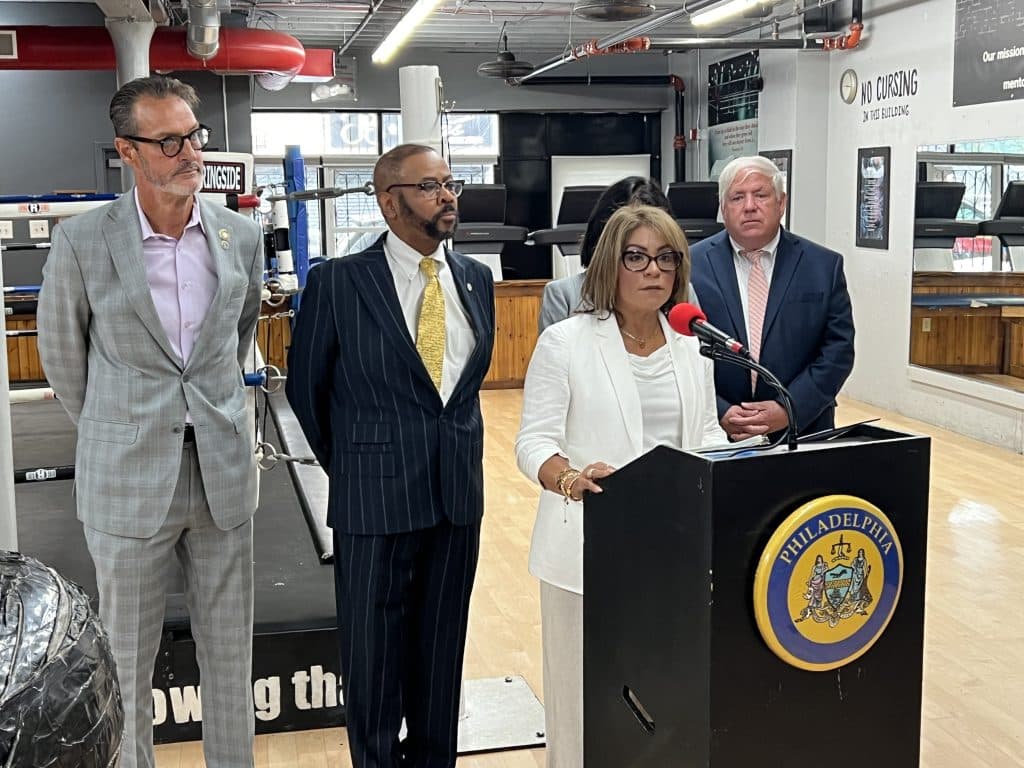
Philadelphia City Council’s Special Committee on Kensington met on Thrusday, July 18th 2024, to hear testimony regarding access to treatment beds in the Kensington area.
The Committee, chaired by Councilmember Quetcy Lozada, heard testimony from providers, administration officials, and other experts on what appears to be a system complicated by communication and technical issues.
Further muddying the waters of accessing treatment is the complex nature of making diagnosis; medical professionals are contending with substance abuse issues such as withdrawl symptoms, while also determining the severity of other medical complications.
Dr. Lara Carson Weinstein, who directs a post-doctoral fellowship program and Jefferson University concerning addictive medicine, said the addition of fentanyl and xylazine to existing narcotics can lead to overdose risks as users begin to develop a tolerance.
“Due to the dynamic drug supply, our patients are suffering from sever complications that often require a lot of treatment intervetions, like weeks of intravenous antibiotics for infection control, agressive wound care managment, and rehabilitation from amputations and spinal cord injuries that have rendered them unable to move or function,” Weinstein said.
Weinstein said each rehabilitation facility has a level of provided care which may not be a fit for patients with needs beyond substance treatment; some may be discharged from a hopsital for injuries or other illnesses, but may be too sick to enter a substance treatment facilty, guaranteeing they will not be accepted.
Additional complications arise when patients require psychiatric care. Some patients sometimes end up in medical/surgical beds to address their physical issues, but are not treated for mental illnesses and addiction issues, leading to release from the care facility without psychiatric treatment. This can lead to additional problems when the patient is released, and often leaves the patient more vulnerable than before.
Recommendations for streamlining the process from the Weinstein and her colleagues include creating a “dashboard” to keep a real-time record of available beds and the addition of a dedicated physician to assist in assigning services to incoming patients.
In response to a question from Councilmember Curtis Jones regarding cost and efficacy, Dr. Weinstein said evidence-based treatment, which includes methadone, buprenorphine, and naltrexone, can lead to a 50% decrease in mortality.
The harshest criticism and questions were reserved for Philadelphia’s Department of Behavioral Health and Intellectual Disabilities (DBHIDS), the city agency responsible for “providing behavioral health care, intellectual disability supports, and early intervention services in one comprehensive, integrated system.”
Councilmember Lozada was particularly concerned with the number of available beds and how bed availability is communicated.
DBHIDS was uncertain as to exactly how many treatment beds were available daily (although they did say usually around 100), how much the beds costs, how many providers were contracted to provide services, and how many people were currently on the streets of Kensington. Lozada found the lack of information troubling, repeatedly starting “There is a crisis in Kensington!”
Police Department representatives also shared their concerns, with recently appointed Deputy Commissioner Pedro Rosario explaining officers have a more difficult time getting people into treatment on weekends when city outreach staff are harder to contact. Rosario also said it takes, on average, 17 police contacts with an individual before they agree to some sort of treatment.
The Police Department testified that 681 people have entered some sort of treatment since January.
Our reporters sit through hours of city council meetings, dig through piles of documents, and ask tough questions other media overlook. Because we’re committed to addressing Philadelphia’s poverty crisis — and challenging those who sustain it. If you think this work is important too, please support our journalism.
We’re counting on readers like you.