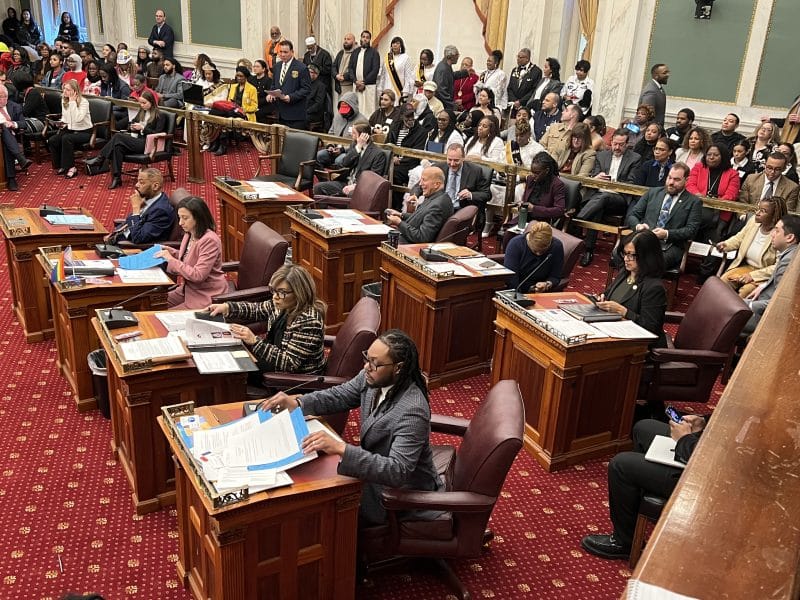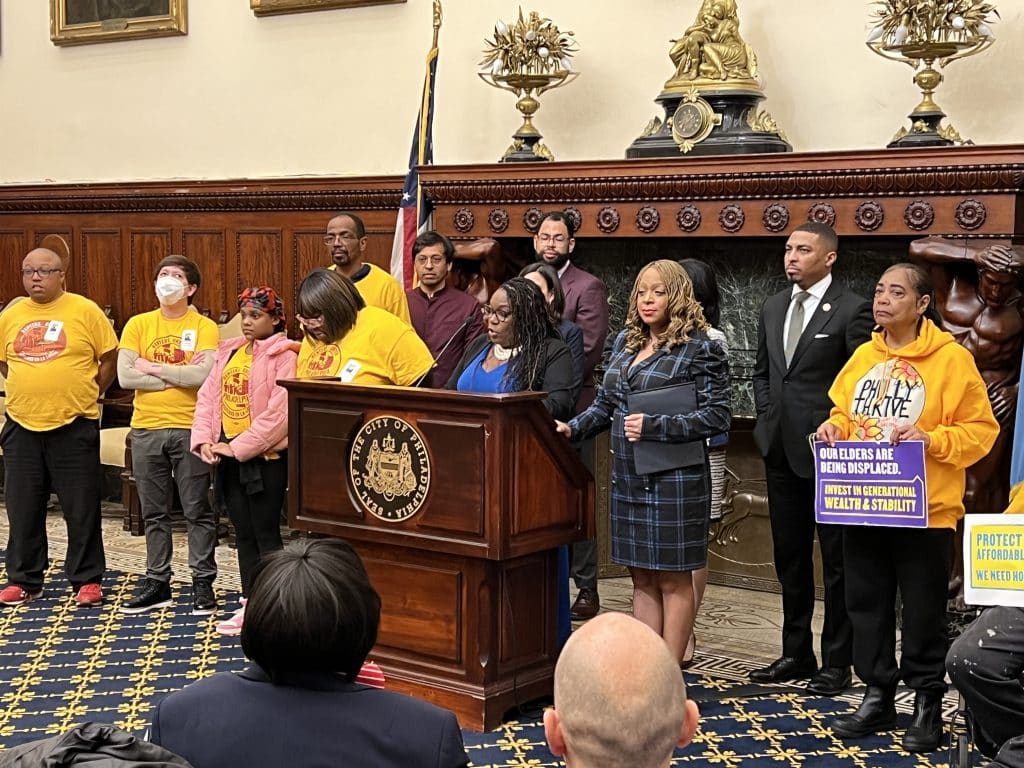
Councilmember Kendra Brooks introduced legislation to make the city’s Eviction Diversion program permanent, as the original legislation was set to sunset on June 30th, 2024.
The program, one of the first of its kind in the United States and a model for other municipalities, creates a mechanism for tenants and landlords to settle disputes arising between the two parties.
Read More
Brooks said the program had been successful, noting that an eviction on someone’s record can be devasting when looking for new housing. According to Brooks, thousands of disputes had been mediated satisfactorily. The city has contributed over $60 million in rental assistance over the past two years.
O’Rourke Calls for Rental Repair Hearing
Councilmember Nicholas O’Rourke introduced a resolution “Authorizing the Joint Committees on Housing, Neighborhood Development, and the Homeless, and Licenses and Inspections, to hold public hearings to examine the conditions of rental housing, rental code enforcement, and the need for rental repairs through the City of Philadelphia.”
According to the resolution, 55% for Philadelphia total housing units were built before 1950, and 72% before 1960, with 41% in need of repairs. With half of Philadelphians renting as opposed to owning, living conditions can sometimes be dangerous for a large portion of the city’s residents, as only 7% of rental properties are subject to inspection each year.
Read More
While landlords are required to obtain rental licenses, no formal inspection of their property is required. Meanwhile, an estimated 45% of rental properties were unlicensed.
Phillips Looks to Create Parent Engagment Task Force
Councilmember Anthony Phillips introduced a resolution “Authorizing the creation of a task force to study and develop proposals, strategies, and recommendations to enhance parental/guardian engagement, oversight, accountability, and resources within the City of Philadelphia.”
Citing the state of emergency declared by Mayor Parker, and decrying the lack of engagement in mental health services, misuse of social media, and a lack of resources for parents and guardian engagement, the resolution would create a council advisory body that would do the following:
Read More
- Investigate ways to equip parents and guardians with the necessary knowledge, skills, and resources for effective parenting in the digital age;
- Examine best practices on youth access to social media and delve into the factors contributing to its potentially harmful use;
- Explore strategies to provide parents with knowledge, skills, and resources to support their children’s educational needs — empowering parents to advocate for themselves and their children and improving opportunities for parents to collaborate with schools and the School District;
- Explore ways to increase parental oversight and provide recommendations based on those findings; and
- Assess ways to provide parents with resources promoting healthy lifestyle choices for their children and recommend resources for social services and mental health support for families.
The membership of the task force will be constituted as follows:
- Two members, one from the Majority Leader and one from the Minority Leader;
- Two members from the Mayor or her designee, based on recommendations from the Chief Public Safety Director and the Office of Youth Engagement;
- Two members from the School District of Philadelphia, one from the Office of Information Technology and one from the Office of Family and Community Engagement;
- One member from the Philadelphia Home and School Council;
- Three members from a non-profit that focuses on youth engagement, which includes but is not limited to violence reduction organizations, youth academic organizations, and youth empowerment organizations;
- Three parents/guardians appointed by the Chairs of the Council Committees on Education and Children and Youth;
- One member who is a licensed mental health professional for children;
- One member who is a secondary teacher;
- One member who is a secondary administrator;
- Three members who are currently in high school grades 9-12;
- A young person under 19 who is currently or formerly housed at the Juvenile Justice Service Center (JJSC)
Water Department Testifies at Budget Hearing
While a lot happened this week during the city’s budget hearings, we want to focus specifically on the Philadelphia Water Department’s testimony, and the questions asked of them by council.
Water Department Commissioner Randy Hayman testified that the department’s operating budget increase of $17 million (for a total of $533 million in fiscal year 2025) was due to increased labor agreements, regulatory compliance, and a transfer of certain positions from the capital to the operating budget.
Read More
Hayman also pointed to an increase in chemical costs, and said inflation was one of the most pressing factors when it came to rising costs and a need for increased revenue.
The Water Department, according to their testimony, has sought out $920 million in funding, and has been approved for $860 in low-interest loans and $50 million in grants.
Councilmember Mike Driscoll, chair of the Transportation and Public Utilities Committee, expressed concern over the department’s planned water rate increase.
“(We) want to work collaboratively to figure out if there are opportunities so we can exhaust every opportunity before we pass costs onto rate payers,” Driscoll said, noting the anxiety water customers in his district were expressing to him.
Currently, 74,000 Philadelphians are in various department-sponsored financial assistance programs.
Our reporters sit through hours of city council meetings, dig through piles of documents, and ask tough questions other media overlook. Because we’re committed to addressing Philadelphia’s poverty crisis — and challenging those who sustain it. If you think this work is important too, please support our journalism.
We’re counting on readers like you.