Energy Authority Touts Programs
Once again, Philadelphia City Council had a very busy week of budget hearings. In our efforts to provide you with comprehensive coverage of these important hearings, Hall Monitor will break down some key moments below.
Emily Schapira, President of the Philadelphia Energy Authority, discussed a litany of programs aimed at providing clean energy that can provide jobs to Philadelphia residents.
Read More
Solarize Philly, which is the largest Solarize program in the nation, has provided over 2700 homeowners with solar panels for their homes, of which 45% are moderate or low-income.
The program is part of a major initiative enacted by city council in 2016, called the Philadelphia Energy Campaign, which called for $1 billion in energy efficiency and clean energy projects in the city over 10 years, which would create 10,000 jobs in the process.
So far, the program has created 3275 jobs, invested $380 million in the city’s clean energy economy, and has aged Philadelphians $55.6 million in energy savings.
Additionally, via Inflation Reduction Act funding, the Authority was able to fund the Water and Sewer Line Protection Program, which serves 90,000 homes and has saved consumers over $60 million while also providing 105 homes with “last resort” funding for water and sewer emergencies that could not be covered by basic systems repairs.
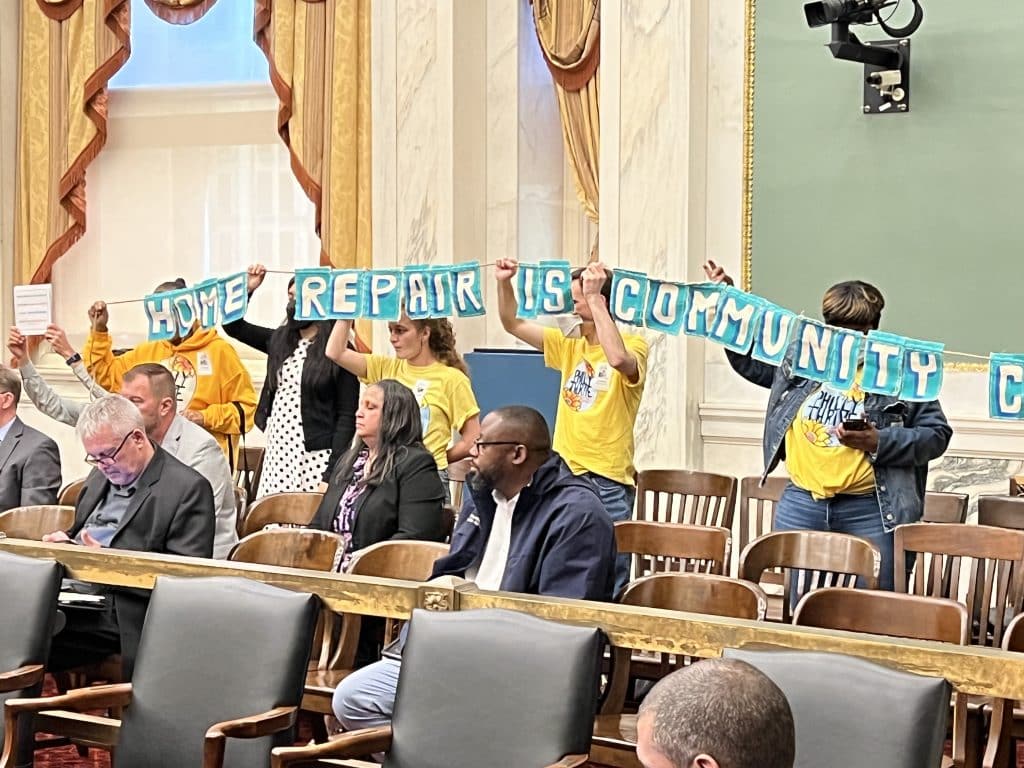
PEA also touted the “Built to Last” program, which is a home repair program for low-income Philadelphians. So far, the program has served over 300 homes, offering services such as replacing heating systems with efficient electric heat pumps. The program waitlist sits at 1100 households. Currently, the city does not provide funding for this program, but PEA is looking for $5 million in the upcoming budget.
Council Reacts to Arizona Abortion Ruling
Councilmember Nina Ahmad introduced a resolution condemning the recent decision of the Arizona Supreme Court to reinstate an 1864 law that essentially outlaws abortion in the state.
On Wednesday, during a break from Council’s budget proceedings, Ahmad was joined by Coucnilmembers Cindy Bass, Jamie Gauthier, Rue Landau, Nicholas O’Rourke, Jim Harrity, and Council President Kenyatta Johnson in decrying the law at an impromptu rally on the north apron of City Hall.
Read More
“I am incensed by yesterday’s news out of Arizona where there’s a state Supreme Court upheld 160 year old law that enforces a near-total abortion ban,” Ahmad said. “(Arizona” is the latest state to basically spit on the rights of women and birthing people to have autonomy over our own bodies.”
The resolution calls on the federal government to pass legislation, particularly the Women’s Health Protection Act and the Equal Access to Abortion Coverage in Health Insurance Act.
The 160 year-old Arizona law bans abortions from conception and makes no exception for rape or incest. The only circumstances under which an abortion would be permissible is if the life of the mother is in danger.
Gauthier Calls for Land Bank Hearing
Councilmember Jamie Gauthier introduced a resolution “Authorizing the Joint Committees on Housing, Neighborhood Development, and the Homeless and Public Property and Public Works to hold hearings on the ten-year performance of the Philadelphia Land Bank; what barriers exist to effective application review, process efficiency, and transparent communication; and how these can be solved to maximize this unique opportunity to create genuinely affordable housing and community-stewarded green spaces for neighborhoods that need them the most.”
The Philadelphia Land Bank was established in 2013 to “return vacant land to productive use” through taking possession of the properties and either selling or repurposing them. According to the resolution, the major priorities for the formation of the Land Bank was to provide permanent or long-term affordable housing, clear pathways for community members to acquire properties they have long been stewarding, and including communities in vacant land disposition decisions.
Read More
However, processing times for applications for community-driven uses has been hindered by policy and organizational structure changes. This has caused considerable delay in the development of community gardens and other open spaces, some of the key reasons the Land Bank was developed in the first place. In 2022, only four properties were disposed for these purposes.
Other hurdles to using Land Bank properties for garden or open-space uses include antiquated policies, and the lack of a formal application for residents or community groups to establish such spaces.
Additionally, Land Bank policies affect housing security. “Between 2008 and 2016, Philadelphia list 13,000 ‘low-cost’ apartments that cost $800 or less and gained 6000 ‘high end’ apartments that cost $2000 or more.”
Lozada Introduces Special Committee on Kensington
Councilmember Quetcy Lozada introduced a resolution establishing a special committee to examine and develop policies related to Kensington.
According to information provided by Lozada’s office, the committee “will analyze and examine the effectiveness of current policies and work together to establish a framework for addressing the root causes of these issues facing the Kensington area including poverty, crime, substance-use, and homelessness.”
Read More
Lozada said the committee will work with experts to develop “data driven solutions and restore stability to the neighborhood.”
Council President Kenyatta Johnson will appoint the members of the special committee, who will hold regular meetings to evaluate currently programs and policies, and consider best practices.
Our reporters sit through hours of city council meetings, dig through piles of documents, and ask tough questions other media overlook. Because we’re committed to addressing Philadelphia’s poverty crisis — and challenging those who sustain it. If you think this work is important too, please support our journalism.
We’re counting on readers like you.