
Photo: Lynda Rubin
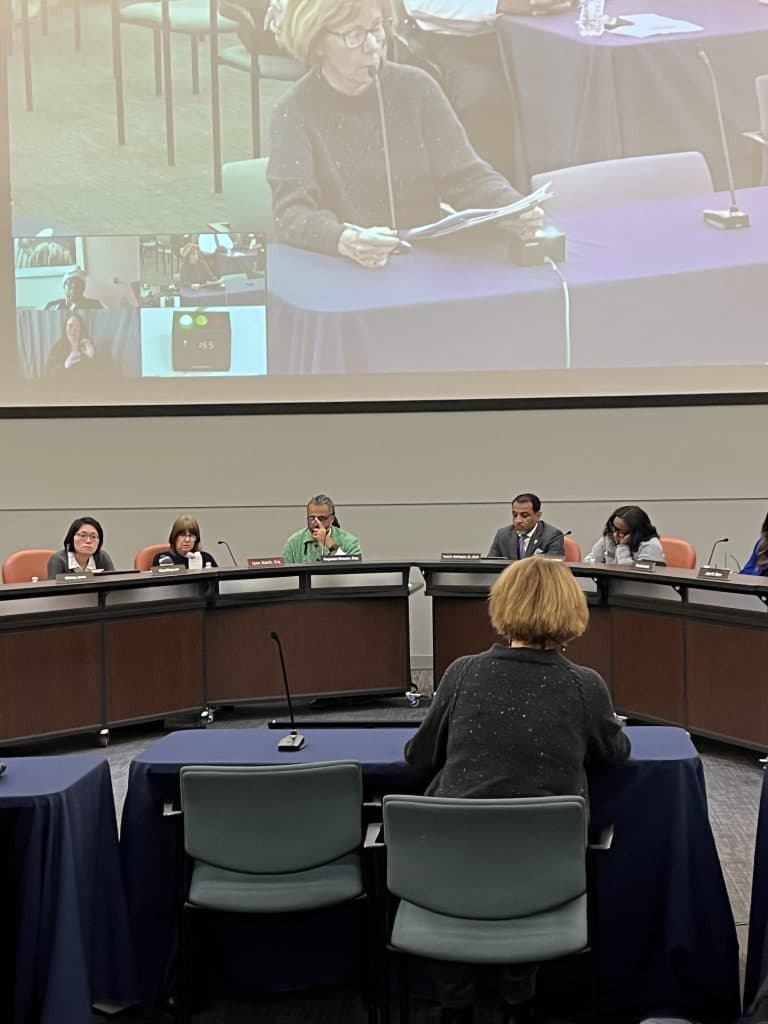
Last week, Philadelphia’s Board of Education, the governing body of the perennially cash-strapped district, voted to explore how it can give away school buildings and real estate worth tens of millions of dollars to the city. Mayor Cherelle Parker had let it be known that she wanted to acquire the district properties as part of her current housing initiative.
The district is nearing the conclusion of an expansive year-long facilities planning process. The proposed plan will include an unknown number of school closures, co-locations, and other measures that will change the system in significant ways. The district held a number of community meetings and conducted several surveys.
So many of those who participated in that process, including members of the district’s own appointed committees, were surprised to read in a December 8 Inquirer story that the board had scheduled a special action meeting later that week, the sole purpose of which was to vote on a resolution directing Superintendent Tony Watlington, Sr. and his administration to “pursue negotiations with the city to potentially convey certain vacant and surplus district property.” Convey as in “give away for free”. The board did not identify the buildings in question nor say how many were under consideration. The resolution included no estimate of the value of the buildings and any surrounding areas.
Most importantly, board leadership didn’t explain how giving away district property would benefit the city’s children.
Board President Reginald Streater seemed to rationalize the board’s actions when he told the Inquirer that the district is “an education institution” and that “the city possesses considerably more expertise and capacity than the district does regarding property development.” Streater certainly knows that for over 200 years, the district has educated children in buildings–buildings that it has built, operated and, yes, bought and sold. That does not make it a real estate concern, any more than owning City Hall makes the city one.
Streater had clearly decided to grant the mayor’s wishes before the board meeting, saying that it made sense for the board to move toward “being much more willing to be intergovernmental partners” with the city. The mayor does appoint the board members, who are then confirmed by City Council. But the city’s Home Rule Charter clearly mandates that the board act independently of any other governing body or office.
Chou-Wing Lam was one of two board members who voted against the resolution, noting that the city’s own Office of Property Assessment recently assessed the district’s vacant properties at $80 million. She argued that adopting the resolution would limit the board’s consideration of “other viable offers”. Crystal Cubbage concurred, rejecting any action that conveys property to the city without financial compensation while the under-resourced district “is facing a $300 million deficit”.
Much of Mayor Parker’s support has come from local real estate developers. It is important to remember that the district, once it relinquishes the properties, will have no say in whether they will be used for affordable housing or for high-end condos. And none of the board members questioned why the city, with a current capital budget of $5.46 billion, could not buy the school buildings.
During deliberation prior to voting on the resolution, board members on both sides of the issue expressed support for the mayor’s housing plans. Cubbage “applauded” Parker’s HOME initiative. Lam “fully” supported Parker’s “vision” to expand housing access. Streater posited that giving the buildings to the city might eventually further the city’s revitalization and “grow the city’s tax base”.
Board members are not part of the city’s executive branch. They do not work for the mayor. The board is an independent body entrusted to act as stewards of the district and all of its assets. Board members can support the mayor and any elected official as private citizens. But their discussions on official items should consider only what is best for the city’s children, their families and their communities. Yet it appears that the special meeting was called to reassure the mayor that the board would use its power to further her agenda. As Lam pointed out, the board does not need to pass a resolution to explore options or to communicate with any city official.
The board should release the entire list of its vacant buildings and their assessed worth. Only after holding public hearings should they decide whether to keep or sell them. There is no benefit, long- or short-term, to giving them away. And there is no benefit in rushing the process and excluding district stakeholders from it.
Lisa Haver is a former Philadelphia teacher. She is a co-founder and coordinator of the Alliance for Philadelphia Public Schools.
Our reporters sit through hours of city council meetings, dig through piles of documents, and ask tough questions other media overlook. Because we’re committed to addressing Philadelphia’s poverty crisis — and challenging those who sustain it. If you think this work is important too, please support our journalism.
We’re counting on readers like you.


