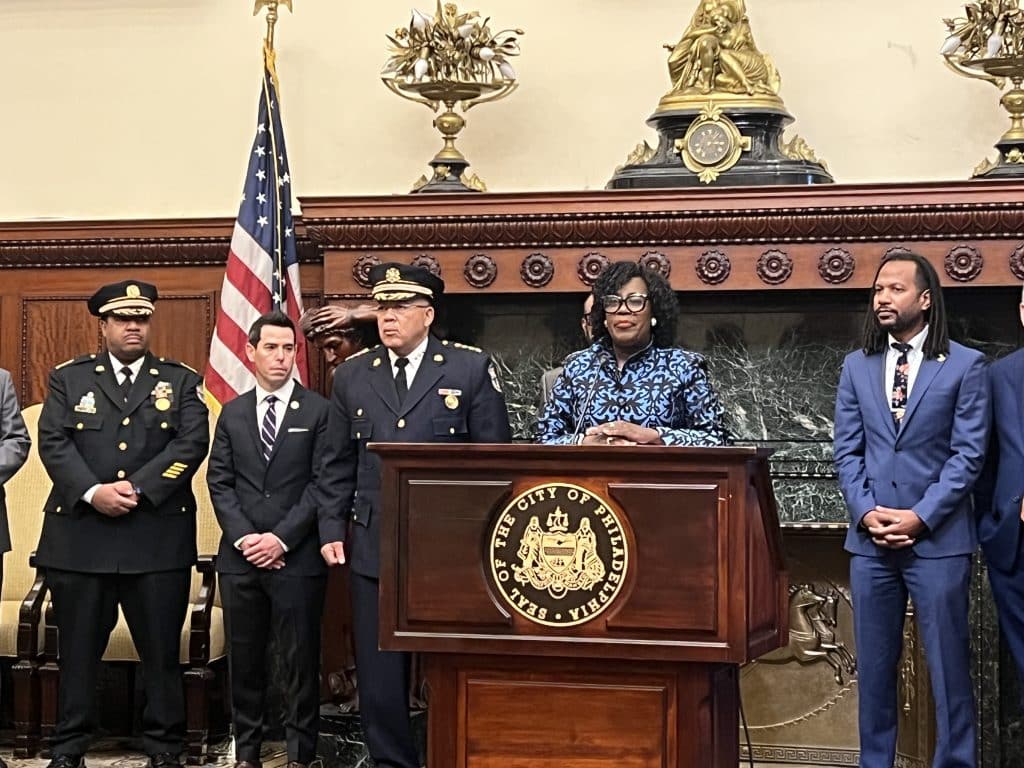
On Thursday, Philadelphia Mayor Cherelle Parker, with Police Commissioner Kevin Bethel, held a press conference announcing the development of a five-year Public Safety Strategy in Philadelphia.
Parker said the plan would focus on both intervention and enforcement.
”Prevention means investing early in our youth in communities, giving your people and adults pathways to success and an opportunity for them to not aim helplessly on our streets,” Parker said. “Intervention means meeting people where they are by offering treatment and supportive services to those who are struggling with addiction and violence.”
While the plan has not yet been completed, city officials are asking Philadelphians to weigh in on what issues are most important to them, so that these suggestions can be added to the final document. The survey can be accessed here.
Ahmad Holds Child Welfare Hearing
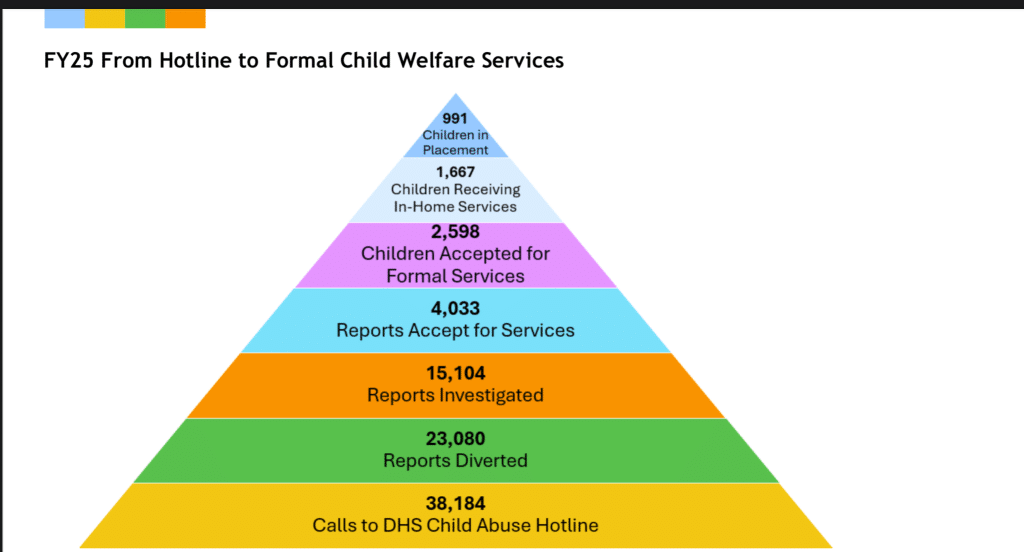
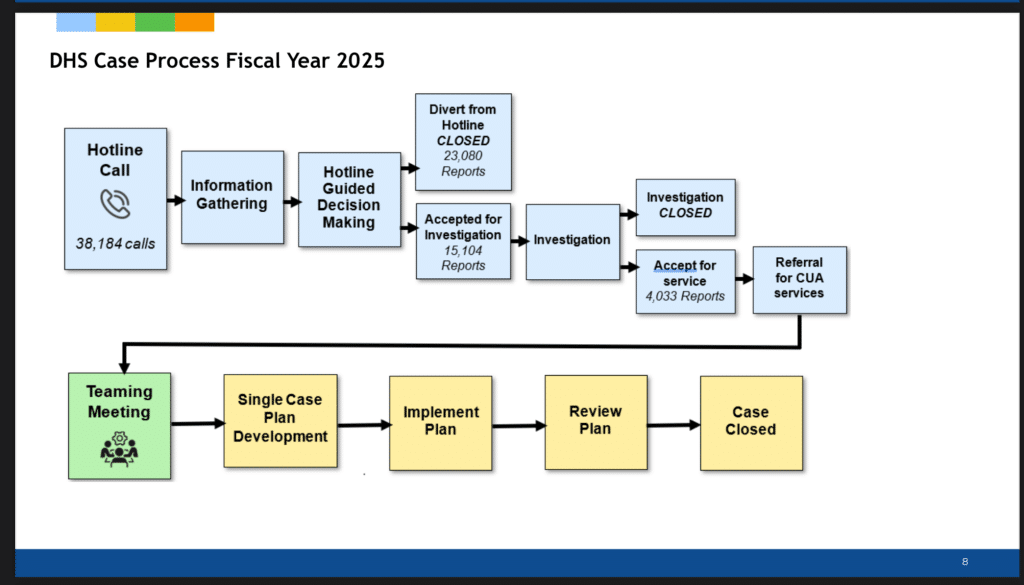
The Committee on Public Health and Human Services held a hearing regarding the policies of Department of Health and Human Services pertaining to child welfare protection.
The hearing focused on the processes the agency follows when dealing with child placement, and how it makes use of CUAs, otherwise known as Community Umbrella Agencies. These ten organizations are private companies contracted with DHS to perform family-related servies throughout the city. CUAs have the same authority in child-related matters as DHS.

CUAs have a complicated history, with performance unequal among various organizations. Current CUA scores are available here.
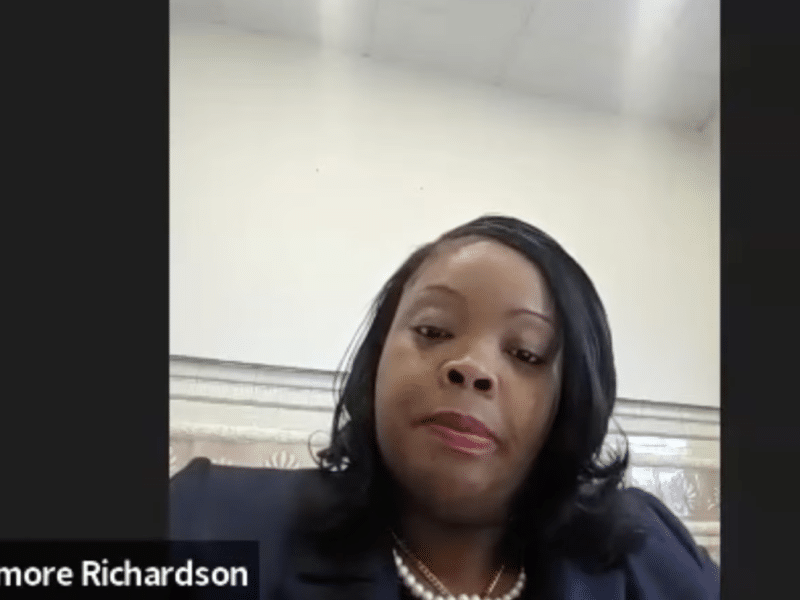
Ahmad began the hearing by emphasising the importance of hearing testimony from youngpeople who have been through the system to better understand what needs to change.
“This is not about blame,” Ahmad said. “This is about partnership, transparency, and progress. We all share the same responsibility to make sure thoat our child welfare system protects children, supports families, and helps every young person grow up with safety, dignity, and opportunities.”
Kimberly Ali. Director of the Department of Health and Human Services, said the field of child welfare is incredibly complex, because social workers are required to make daily decisions that significantly impact the lives of children and families.
“The amount of critical thinking, assessment, and decision-making thatis required o do this job well is not taken lightly,” Ali said. “SHS is making ongoing investments in staff, policies, and practices with the sole purpose of protecting children and stabilizing families.”
The most harrowing testimony came form 18-year-old Kysire Brown, who entered the foster system at the age of four after the death of his parents.
Brown detailed the physical and mental abuse he suffered from the age of four to 11 and how that lead to his eventual homelessness.
“I was physically assaulted many times,” Brown said. “He (foster father) (hit me in the head) with a golf club at age eight, (attacked me with a knife) and (injured my eyes) so bad I couldn’t see.”
Brown said DHS staff did not take his abuse seriously and only made the situation worse by performing home visits with no remediation actions taken.
In response to a question posed by Councilmember Ahmad regarding what DHS should be doing differently, Brown said the best thing a social worker can do is believe a child when they say the are being abused.
“It’s real,” Brown said. “When that DHS person comes and leaves (after reviewing an abuse claim) it’s the worst thing you can do.”
H.O.M.E. Plan Budget Report Released
Philadelphia Mayor Cherelle Parker has transmitted to City Council a resolution “approving the 2025-2026 Housing Opportunities Made Easy (H.O.M.E.) Program Annual Program Statement and Budget, which addresses expenditures by various agencies in the first year of the H.O.M.E. Program.”
The resolution, which outlines the funding allocations for the initial $194 million of the $800 million plan, will be reviewed by council for at least 60 days before it comes up for a vote. Hall Monitor has been told that the bond issuance will not occur until the resolution is passed.
The plan calls for 30,000 units of “new or preserved” housing, with the bulk of the funds being spent on programs designed to keep people in their homes through improvement and assistance programs. Other programs focus on assisting Philadelphians purchasing homes. About $20 million is dedicated for the building of new homes.
When reached for comment, Councilmember Jaime Gauthier, chair of the Housing Committee, offered the following statement:
“I am encouraged that the mayor’s proposed budget for the first year of her HOME Initiative reflects several changes I championed this spring, especially around strengthening home repair programs. With Council’s legally required 60-day review period now underway, I look forward to working closely with Mayor Parker, Council President Johnson, my Council colleagues, and the community to carefully review and tweak this proposal. As I have emphasized from the start, addressing our city’s housing crisis means seizing this historic opportunity to support the 200,000 households earning under $30,000 a year — families who are just one maintenance emergency or rent hike away from homelessness.”
Below are descriptions of the programs and the amount currently allotted for each. These numbers are subject to change over the next 60 days.
Budget Allocations for Each Program
Adaptive Modifications Program (AMP). This program shall provide free
adaptation projects to provide easier access to and mobility within homes (which
may be delivered pursuant to grant or other arrangements) for permanently
disabled renters (with permission of the related property owner) and homeowners
with household income up to 80% of Area Median Income (AMI). Eligible homes
shall be those meeting the AMP’s existing criteria.
$8,500,000
Affordable Housing Preservation (HPres). This program shall include the provision
of “gap” financing (i.e., financing including short to medium-term loans to address
timing considerations or longer-term financing to complete the “capital stack” for a
project financed predominantly from other sources) to developers for renovation,
acquisition of property and other expenditures for housing preservation projects.
HPres may consist of providing loans and/or grants to PIs, property owners and
developers for costs of existing property acquisition and rehabilitation, and
providing funds for existing property acquisition and rehabilitation directly by the
City or PIs for potential resale, to preserve existing affordable rental housing, with
special emphasis on the preservation of Low-Income Housing Tax Credit rental
housing developments. The major components of the HPres program will consist
of programs in the following areas for which proceeds may be expended:
Preservation Acquisition Funds – Providing funds for the public, private or
not for profit acquisition of rental units at risk of being converted to market-
rate units. This may include properties with expiring tax credits, projects
placed on the open market for sale or naturally occurring affordable housing
that is at risk of market-rate conversation, including the payment of
settlement and other costs related to the acquisition and transfer of such
properties and costs related to maintaining, managing and holding properties
prior to their resale or other conveyance.
Capital Improvements – Providing funds to be used to make capital
improvements to existing affordable units. These improvements may take
the form of wholesale rehabilitation or may include specific capital needs
such as roof replacement, new heating system, energy upgrades or
accessibility improvements.
$37,500,000
Affordable Housing Production (HPro). This program may similarly provide “gap”
financing for construction, reconstruction, acquisition of property and other
expenditures for housing production projects.
HPro may consist of providing loans and/or grants to PIs, property owners and
developers for costs of rehabilitation, property acquisition and new construction,
and providing funds for property acquisition directly by the City, to increase the
production of affordable rental housing, including mixed use. The major
components of the HPro program will consist of programs in the following areas
for which proceeds may be expended:
Low-Income Housing Tax Credit Projects – Providing funding as long-term,
low interest subordinate debt to fill financing gaps for low-income housing
projects which have already secured a reservation of tax credits.
Affordable Rental & Special Needs Housing Development – Providing
funding as long-term, low interest subordinate debt to fill financing gaps for
new residential development that serves low- and moderate-income
households and is not tied to Low Income Housing Tax Credits.
Housing Opportunities Fund – Providing patient capital in which the City,
the Authority or PHDC purchases an ownership stake in a privately
constructed and managed building while requiring that housing units in the
building be reserved for households earning 50% or less of Area Median
Income.
Increased Rental Affordability – Providing grant funding as short-term rent
assistance to buy down the cost of rent for newly created units to make them
affordable to low- and very low-income tenants, including with respect to
projects that may include a mix of units at market rate rents and certain
percentages of median rental prices.
Acquisition – Providing grant funding via the Philadelphia Land Bank to
purchase properties at Sheriff Sale in order to complete development parcels
for the development of affordable and mixed-income housing units.
$19,420,833
Basic Systems Repair Program (BSRP). This program shall provide free home
repairs (which may be delivered pursuant to grant or other arrangements) to correct
electrical, plumbing, heating, limited structural, and carpentry and roofing
emergencies. Eligible grant recipients shall be homeowners with household incomeup to 100% percent of AMI, and in owner-occupied homes which are eligible
according to BSRP’s existing criteria.
$34,775,000
Built to Last (BTL). This program shall provide free home repairs (which may be
delivered pursuant to grant or other arrangements) inclusive of what can be
provided via Basic Systems Repair along with additional energy conservation and
healthy housing repairs. Eligible grant recipients shall be homeowners in owner-
occupied homes which are eligible according to BTL’s existing criteria.
$8,250,000
Comprehensive Land and Property Acquisition Program.This program shall
provide capital for strategic property acquisition to increase the supply of
affordable residential units within the City through four complementary funding
mechanisms:
Acquisition Fund: The program will support the Housing Authority, PHDC,
and other eligible entities in acquiring occupied multifamily buildings and
developable land to expand affordable housing inventory.
Land Bank Acquisition Fund: Additionally, it will provide capital for
acquiring repossessed properties at public auctions to create affordable
owner-occupied and rental residential units.
Nonprofit Community and Anchor Institution Land Acquisition: The
program will also fund the acquisition of campus land from community
organizations and anchor institutions, providing access to large parcels of
viable property and underutilized buildings that can be transferred to the
Land Bank for conversion to affordable housing.
Purchase and Rehabilitation of Residential Housing Units: Furthermore, the
program shall provide grants and/or loans to Program Intermediaries (PIs)
for financing the costs of purchase and/or rehabilitation of existing, new, or
recently constructed residential housing stock within the City, particularly
within areas where supply levels have lowered prices or within certain
price/rent strata. This may include refinancing through the purchase of PI
debt.
All properties acquired through this program shall be permanently restricted from
disposal for market rate housing purposes, ensuring long-term affordability within
the City’s housing stock. The program emphasizes strategic acquisition ofproperties suitable for rehabilitation, development, or conversion to meet the City’s
affordable housing goals across multiple acquisition channels.
This unified approach creates a comprehensive acquisition strategy that addresses
various property types and acquisition opportunities while maintaining consistent
affordable housing requirements across all funding streams.
$4,000,000
Curbside Appeal Program. This program shall offer matching grants (which may
up to 100%) to enhance “curbside appeal” in City neighborhoods through
improvements that boost quality of life, attractiveness, and community cohesion.
Components of this program will include, but not be limited to, improvements such
as planting trees, greening vacant lots, installing street furniture, and repainting
doors and trim facing pedestrians, customers and visitors. Eligible recipients of
grants may include non-profit organizations and small businesses.
$1,000,000
Employer-Assisted Housing. This program shall provide participating employers
with financial assistance and services for such employers’ City-based employees,
including homebuyer assistance for first-time home buyers. Homebuyer assistance
may be in the form of below-market loans or other arrangements that “buy down”
the effective rate of such loans. Other financial assistance and services which may
be provided to such employees for residential purposes shall include loan and
credit counseling type services.
$500,000
Façade Improvement Program. This program shall provide one-time funding
(which may be administered on either a per residential unit basis or a per recipient
basis) for the repair of housing façade work. Already existing architectural details
in such facades may be restored or preserved. These projects may include
weatherization assistance (which may be provided through grants and/or other
services to homeowners or other property owners) required to maintain homes for
the long term or to prevent structural damage which may shorten the useful life of
such property.
$1,000,000
Homelessness Prevention. This program shall be operated by the City in order to
provide support to individuals and families at risk of homelessness, resources for
housing stabilization, and a pathway towards permanent housing for such
individuals and families. Specific services to be provided directly to such
individuals and families as part of this program shall be tailored toward meeting
direct needs for adequate shelter and housing.This program may consist of providing funds for the City or PIs to improve
existing properties or provide for the costs of the acquisition of properties and
their transfer to responsible owners/managers who will maintain the properties’
suitability for permanent housing options for homeless residents, including the
funding of loans to property owners and developers, the payment of settlement and
other costs related to the acquisition and transfer of such properties and costs
related to maintaining, managing and holding properties prior to their resale or
other conveyance, any of the foregoing of which may be implemented in whole or
in part through the funding of an acquisition and capital improvements fund. The
major components of this program will consist of programs in the following areas
for which proceeds may be expended:
Acquisition – Providing funds for the acquisition of properties to provide for
permanent housing for currently homeless individuals. Funding would either
take the form of direct property purchases to bring properties into the public
inventory or as long-term, subordinate loans to third party providers to
acquire properties.
Capital Improvements – Providing funds to either directly fund capital
improvements for property in public inventory or as long-term, subordinate
loans to private, third-party owners to make capital improvements to create
or maintain units for permanent, homeless housing. Capital improvements
may take the form of rehabilitation in order to convert a property from its
current or former use into a homeless housing facility or may include
specific capital needs such as roof replacement, new heating system, energy
upgrades or accessibility improvements.
Emergency Rental Assistance – Providing grant funding for those facing a
homelessness emergency coming in via the City’s Homelessness Prevention
Hotline. Funding can take the form of either a one-time payment for moving
costs (first month rent, last month rent, security deposit) or 12 months of
rental assistance with housing case management.
Small Landlord Incentive Program – Providing funds in the form of grants to
provide incentives, such as an upfront participation payment (per unit) and a
rental loss and damages reserve (per unit) for rental property owners who
commit to renting to people with rental assistance vouchers or other subsidy
for a period commensurate with receiving public funding support to
encourage their participation in providing housing to people exiting
homelessness.Children and Youth Homelessness – Providing funds for counseling, case
management, and rental assistance for the City or PIs to support School
District of Philadelphia students experiencing homelessness or at risk of
becoming homeless to combat truancy and increase academic achievement.
$3,800,000
Housing Counseling and Foreclosure/Eviction Prevention. This program shall
provide housing counseling services, mediation services, and assistance to City
residents at risk of eviction and foreclosure of their homes.
$2,850,000
Housing Plus Rental Assistance (PHLHousing+). Providing sustained rental
assistance to low-income families in the private rental market to complement the
Authority’s Housing Choice Voucher program. Funding will be administered
either by the City or Authority, prioritizing those already on the Housing Choice
Voucher waitlist, those participating in an existing rental assistance program that is
ending or at risk of expiration, or those in receipt of emergency vouchers being
terminated due to federal funding cuts.
$1,800,000
Neighborhood Infrastructure Improvement Programs (NIIP). This program shall
fund providing grants or loans to property owners for improvement or
enhancement of privately owned neighborhood infrastructure for the benefit of the
residents of the City. A principal focus of this program is the stabilization of
retaining walls, repair of dilapidated shared driveways, and removal of dangerous
trees in common alley ways. Retaining walls to be improved will in particular
include those that are classified by the City as imminently dangerous or unsafe
under the City Code. Improvements to other private assets in disrepair (e.g.,
driveways, alleys, sidewalks, trees, sewers) that may create dangerous or unhealthy
conditions may also be funded. The City may cause improvements or
enhancements to be made directly to property. The City may impose assessments
to adjacent property owners to recover costs.
$2,000,000
One Philly Mortgage Program. This program shall partner with local and regional
lending institutions to provide purchasers and owners of residential housing 30-
year fixed-rate loans with reduced down-payments and very low (or below market)
interest rates by utilizing loan loss reserves and by buying down interest rates
(points). This program is intended to remove the need for private mortgage
insurance (PMI) for participating borrowers.
$25,000,000
Philadelphia Accelerator Fund (Multi-family). This program shall provide funding
to be used in the form of loans to developers, or other assistance. The PhiladelphiaAccelerator Fund (PAF) provides flexible financing for affordable housing and
works to increase access to capital for Philadelphians across the City including
historically disadvantaged groups. This program will support the financing of
multi-family properties by PAF, or any successor or similar additional entity, and
may include, without limitation, mixed income and mixed-use projects.
$5,000,000
Philadelphia Accelerator Fund (Turn the Key). This program shall provide funding
to be used in the form of loans to borrowers under the Turn the Key Program
consistent with its provisions as currently in effect. This program will support the
financing of Turn the Key properties by PAF or any successor or similar additional
entity.
$1,500,000
Philly First Home (PFH). This program shall provide grants or forgivable loans for
first-time homebuyers (or other homebuyers eligible in accordance with existing
PFH guidelines) which funds are available to reduce the principal of homebuyer
loans and cover down payment and loan closing costs for such homebuyers with
household income of up to such percentage of AMI as the City may from to time
determine. Loan forgiveness is generally conditioned upon the homeowner
remaining in the home for a specified number of years. If the home is sold prior to
the end of the specified period, the loan must be repaid. A waiver may be issued
under extenuating circumstances on a case-by-case basis due to factors such as loss
of a job, job relocation or illness.
$8,666,667
Purchase Bank Liens. This program is designed to increase the City’s land
inventory available for housing development through the purchase by the City, the
Authority, or PHDC of liens on parcels of land (or the purchase of interests in real
estate in order for the City’s Land Bank to otherwise obtain such land and
associated real property with marketable title) from U.S. Bank National
Association (or its applicable affiliates) or from other banks, savings institutions,
and financial institutions.
$600,000
Remove Vacant or Blighted Housing through Demolition. This program will fund
the removal of blighted and vacant units owned by or in the possession of the City
directly (or through arrangements where ownership or possession is with the
Authority or PHDC) through demolition. The scope of this program may be
supplemented beyond demolition work to include site clearance, environmental
remediation, soil stabilization, stormwater management, and related work to cause
the applicable parcels to be ready for site preparation work for future development
and redevelopment pursuant to other programs and not to deteriorate during any
period of time pending such future development or redevelopment.
$3,000,000
Rent and Moving Assistance Programs (FreshStartPHL). This program shall
provide rent/security deposits for the benefit of individuals who are in danger of
eviction or homelessness. In administering this program, individuals who qualify
to be assisted may be supported in maintaining residence at either a current
location in the City or establishing residence at some other location in the City if
required rentals or other factors associated with the applicable current location are
not commercially reasonable, make the prospects of sustaining residence at such
location unfavorable, or lead to uneconomical results from the standpoint of
maximizing the number of City residents who can benefit from this program.
$1,000,000
Rental Improvement Fund (RIF). This program shall offer a loan product to small
landlords (30 or fewer units in the portfolio for the particular landlord) to be used
for making property repairs/improvements for their rental properties. Loans are
eligible for full forgiveness or a preferable 0% interest rate if landlords meet
program affordability requirements during the loan term. Subject to such later
adjustment of program loan parameters as the City may determine the loan is for
$10,000-$24,999 per property (up to $100,000 per landlord) over 10 years. The
loans may be forgiven in such a manner as the City determines, if conditions are
met. Loan forgiveness may begin at any point during the life of the loan. An
increased interest rate may be applied if affordability requirements are not met. For
purposes of this program, the categories of eligible repairs and improvements shall
include, but not be limited to, repairs/improvements addressing building code or
lead-paint issues, and repairs of the same types and character as those funded
through BSRP as well as AMP. Loan proceeds may also be used for working
capital for costs related to the rental properties of such small landlords incurred in
the ordinary course of their business.
$4,500,000
Shallow Rent Assistance, Property Based. This program shall expand the Shallow
Rent program to “buy affordability” in market-rate apartment buildings.
$434,783
Shallow Rent Program, Tenant-Based. This program shall provide rental assistance
through grants either to landlords or directly to tenants to provide rental payment
support for tenants living in affordable housing developments who are low-income
or cost burdened (i.e., spending more than 30% of their income on rent) and who
are at risk of being evicted.
$2,000,000
Tangled Title Prevention and Resolution Program. This program shall provide
comprehensive assistance to address tangled title issues for residents earning up to
80% of AMI through both remedial and preventive measures. The program willprovide funding to prevent or clear tangled title to homes, covering administrative,
legal, and other costs that may arise in resolving homeownership issues and
clearing legal title for eligible residents.
Additionally, the program will fund the creation and operation of a wills program
designed to serve participants in city homeownership programs. This preventive
component will assist residents in writing wills to avoid future tangled title issues,
ensuring proper legal documentation for property transfer and reducing the
likelihood of title complications for subsequent generations.
Through this dual approach, the program addresses both existing tangled title
problems and works proactively to prevent future title issues, supporting
homeownership stability and legal clarity for low- and moderate-income residents
within the City.
$1,250,000 (with an additional $1,250,000 for the Wills Program)
Eviction Diversion/Targeted Financial Assistance. This program shall offer
resources for landlords and tenants in residential rental properties to resolve
disputes. Funds under this program may be used to pay limited amounts of back
rent and future rent as part of the resolution. This program is intended to enable such parties to avoid costly or prolonged court proceedings.
$15,000,000
Streets and Services Holds City Hall Bike Lane Bill
The Philadelphia City Council on Streets and Services heard testimony on several bills, including contentious legislation that would allow for loading zones along Spring Garden Street and a bill that would place speed cameras at various spots throughout the city.
Bill No. 250649, which would create a bike lane around City Hall, we held. Councilmember Jay Young, who represents the 5th District, in which City Hall is located, offered the following explanation for the bill not being heard during this meeting:
“We understand that many people are eager to move forward with incorporating this type of traffic infrastructure. We want to make sure that there is opportunity to review the impact of such infrastructure in our city’s densest corridor. Looking at the testimony from the Streets Committee meeting on September 29, it’s clear that there are different types of infrastructure needs in communities across the city. We want to make sure we have the flexibility to observe the results and make any necessary adjustments to improve the quality of life for all users before permanently making it law.”
Regarding Bill No. 250770, which would place speed cameras at various points in the city, Council had questions about the lack of camera placement in high traffic areas such as Lincoln Drive.
When asked by Councilmember Nina Ahmad why Lincoln Drive did not make the cut for the first five speed camera areas in this legislation, Administration officials said Lincoln Drive had not made the top five areas for people habitually driving above the speed limit.
Another point of contention was the sharing of data collected used by the city to make decisions on where enhanced enforcement measures should be placed.
In response to a question from Councilmember Young, city officials said certain aspects of the traffic and engineering studies are “privileged” and not something that can be made public, and that “speed studies are a document that’s not discoverable” and not shareable. This prompted Young to ask how Council could make a sound decision on this legislation without having all available data.
”What you’re saying is the member of this committee, who has the (responsibility to pass legislation) regarding automatic speed enforcement, but we can’t have access to the data that determines where the automated speed enforcement should be,” Young said.
The new enforcement zones authorized by the legislation are as follows:
Pennsylvania Route 1004 (Erie Avenue and Torresdale Avenue) at any location
between Pennsylvania State Route 13 (Hunting Park Avenue) and Pennsylvania State Route
1016 (Linden Avenue) that is identified by the Department of Streets and the Philadelphia
Parking Authority in consultation with the Pennsylvania Department of Transportation.
Pennsylvania Route 2001 (Oregon Avenue, Christopher Columbus Boulevard,
Delaware Avenue, and Richmond Street) at any location between Pennsylvania Route 611
(Broad Street) and Pennsylvania Route 1009 (Bridge Street) that is identified by the Department
of Streets and the Philadelphia Parking Authority in consultation with the Pennsylvania
Department of Transportation.
(*) Pennsylvania Route 2016 (Allegheny Avenue) at any location between Pennsylvania
Route 3009 (Ridge Avenue) and Pennsylvania Route 1021 (Delaware Avenue) that is identified
by the Department of Streets and the Philadelphia Parking Authority in consultation with the
Pennsylvania Department of Transportation.
Our reporters sit through hours of city council meetings, dig through piles of documents, and ask tough questions other media overlook. Because we’re committed to addressing Philadelphia’s poverty crisis — and challenging those who sustain it. If you think this work is important too, please support our journalism.
We’re counting on readers like you.