Budget Approved
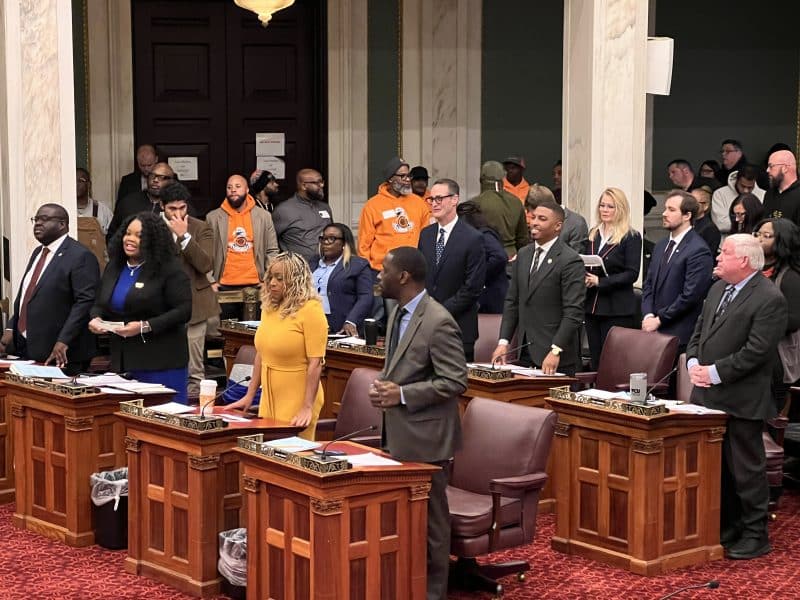
At nearly 1:00 AM Thursday morning, Philadelphia City Council and Mayor Cherelle Parker reached an agreement on the 2025 Fiscal Year budget.
The final operating budget rose from $6.29 billion to $6.36 billion after final negotiations were complete. The city’s capital budget will be $5.46 billion, a slight increase from the original $5.456 billion.
Read More
Final passage of the budget bills will occur at the June 13th meeting of City Council, the last meeting of the spring session.
A press release from the Mayor’s office highlighted the following items:
An increase in the Homestead Exemption from $80,000 to $100,000, which the administration believes will save up to $280 on homeowner’s property taxes. Additionally, the city will institute a low-income tax freeze for qualifying homeowners.
An investment of $636 million in public safety across both the operating budget and capital budget over the next five years. The budget calls for the hiring of 400 new police officers, expansion of and new training for community policing, technology upgrades, and combatting the open-air drug markets.
The budget will also fund the mayor’s $100 million “citywide wellness ecosystem,” which will focus on long-term care, treatment, and housing for those experiencing addiction and homelessness.
An increased focus on and more funding to reduce property crimes and quality-of-life issues such as illegal all-terrain vehicle usage, car meet-ups, retail theft, and nuisance businesses.
The budget also includes an additional $477 million operating and capital investment in Clean and Green programs, such as local block cleaning and addressing illegal dumping, abandoned cars, and litter.
Economic Opportunity ($306 million in operating and capital expenses) and Education ($293 in operating and capital) also see increases, including the millage rate of city property taxes being adjusted so that the school district’s share is now 56%, up from 55%, which will provide an extra $24 million this year and $129 million over the next five years.
Another crucial element of the budget is a $100 million investment in housing over the course of the Five-Year Plan. Included in the funding is $14 million for rebuilding the University City Townhomes and $19 million to support rental assistance programs.
Hall Monitor will provide more budget coverage on our radio/television program next Wednesday.
Health Center Legislation Advances
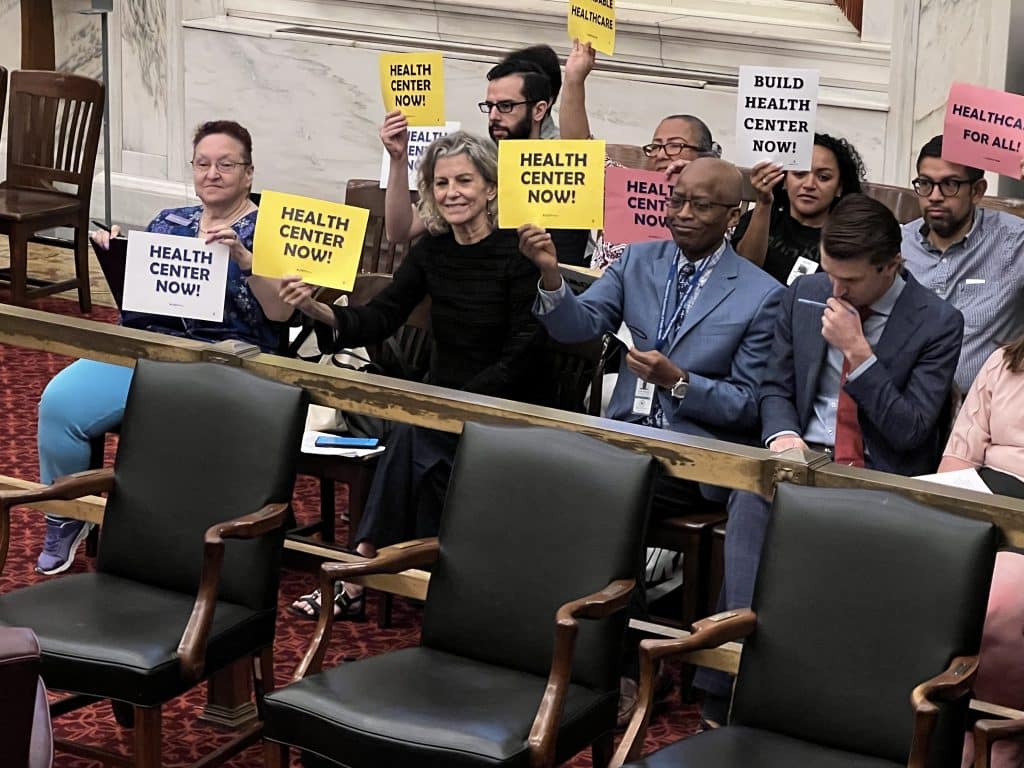
The Committee on Rules heard testimony on the proposed health center to be constructed on Roosevelt Boulevard, a story Hall Monitor has been covering for months.
Many of the Philadelphians who utilize city health centers live under the poverty line, and 40% are uninsured. Wait times in the area’s only health center have become untenable, with some patients waiting for over a year for a scheduled appointment.
Read More
Each health center also has an in-house pharmacy, which has become more of a need with chain pharmacies closing in the city.
Opponents to the legislation were not against the building of a health center in the area, but were more concerned with the location being unsafe and the historical nature of the site.
The legislation was recommended favorably by the committee.
Squilla Calls for UArts Hearing
Councilmember Mark Squilla introduced a resolution “Authorizing the Committee on Education to hold hearings to examine the sudden closing of the University of the Arts (UArts). The impact this sudden closing will have on the Philadelphia higher education system and most importantly the negative impacts on the current student body and staff.”
The resolution was prompted by the unusual nature of the institution’s closing last week, which came as a surprise to students, faculty, staff, alumna, and the neighborhood.
Read More
While there were long-term systemic issues at the institution in regards to enrollment and finances, its sudden closure is a highly unusual development. Currently, other city institutions have worked to create seamless transfer options.
Our reporters sit through hours of city council meetings, dig through piles of documents, and ask tough questions other media overlook. Because we’re committed to addressing Philadelphia’s poverty crisis — and challenging those who sustain it. If you think this work is important too, please support our journalism.
We’re counting on readers like you.