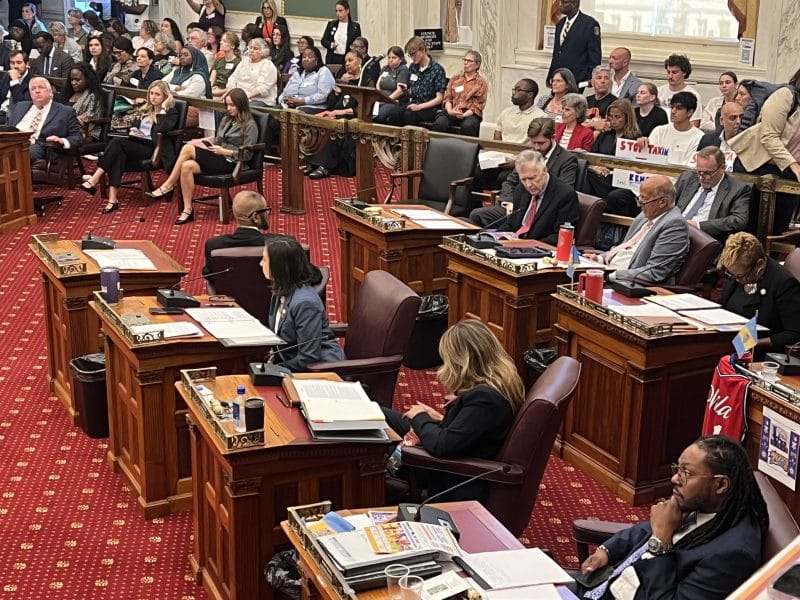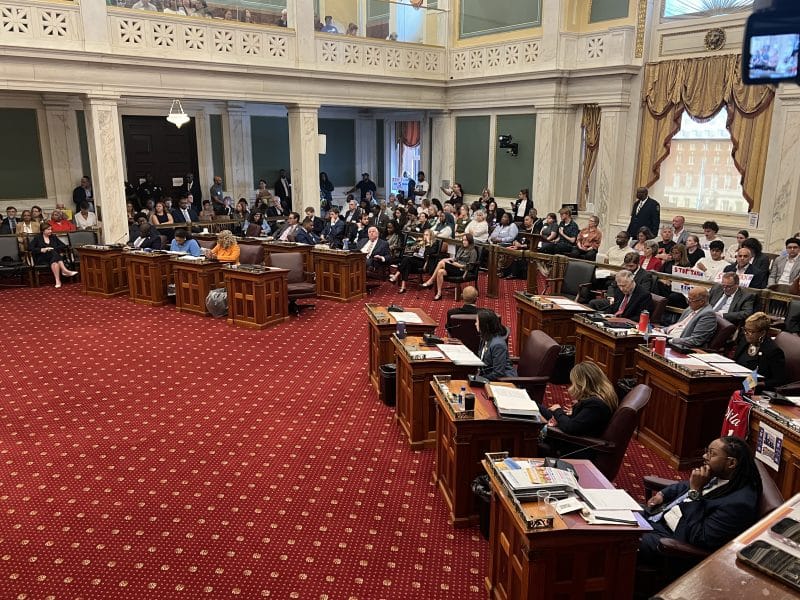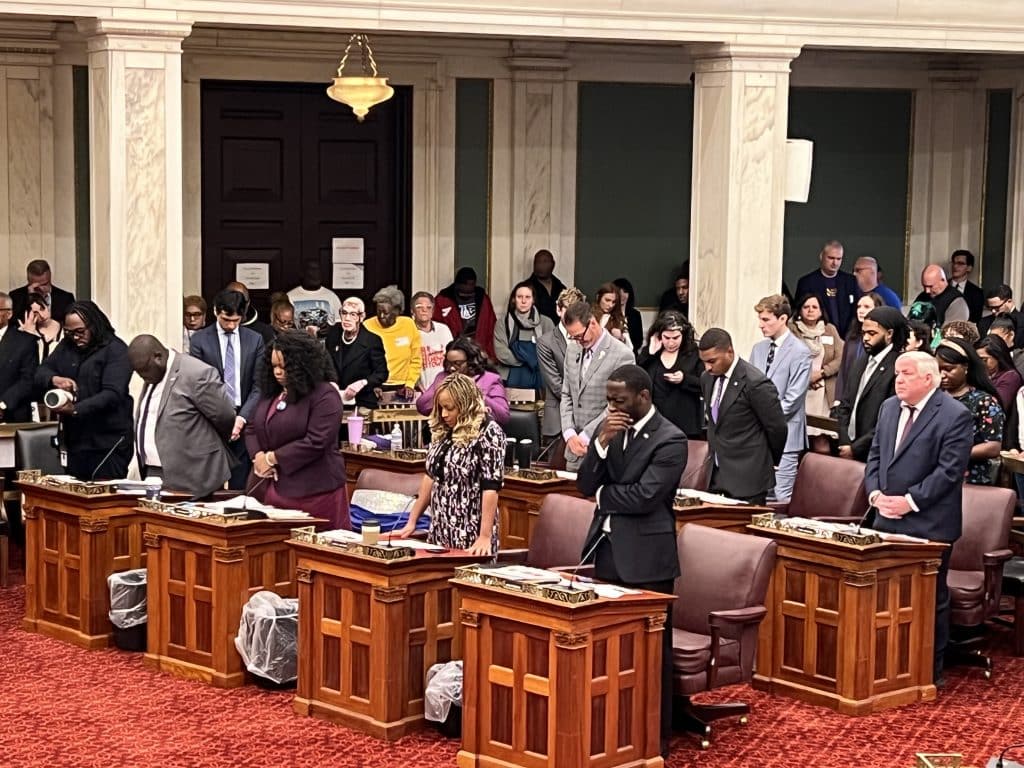
The Philadelphia City Council joint committee on Public Safety and Health and Human Services met Monday, March 17th to hear testimony on Resolution No. 240703, which “authorized the joint committees to investigate the effectiveness and potential expansion of mobile mental health unites administered by the Department of Behavioral Health and Intelletucal Disability Services.”
Councilmember Curtis Jones, chair of the Public Safety Committee, spoke about the 7 AM Monday roll call in which he takes part with school in his district, which he said is designed to ensure students arrive and leave school safely. Recounting a conversation with a school principal, Jones said some school officials have concerns over contacting police when dealing with severe student behavioral incidents.
“There was an incident where a 240-pound African American man who suffers from an intellectual disability found out in class that his parent had died,” Jones said. “(After he found out) he had an episode and started tearing up the room. (The principal) refused to call the police because the student’s grief would not be taken into consideration and possibly result in an intervention that wasn’t warranted in the continuum of response.”
Councilmember Jamie Gauthier, the sponsor of the legislation, said her inspiration for holding the hearing was the death of Walter Wallace Jr.
“That interaction was 41 seconds,” Gauthier said. “Walter Wallace Jr. had a knife and certainly was behaving erratically, but I will never forget his mom and his neighbors screaming to the police that he wasn’t a threat and to have kindness and patients with him.”
Marquita Williams, Interim Commission of the Department of Behavioral Health and Intelectual Disabilities Services, testified about the city’s “Crisis 2.0” framework.
According to Williams, between January 2023 and January 2025, the city recorded 14,302 988 dispatches.The crisis line now handles over 6000 calls per month which provide telephonic crisis intervention, clinical consultation, and dispatch of mobile crisis teams.
Williams highlighted key improvements DBHIDS instituted over the last three years, including:
The city’s first adult behavirual health urgent care 3125 North Broad Street, which has conducted 1133 service encounters between September of 2024 and January of 2025
The opening of a 5th adult crisis center in West Philadelphia’s Hosptial of the University of Pennsylvania.
The launch of the 988 Suicide and Crisis Lifeline, which handles over 6000 calls per month.
A 36% increase in warm transfers between 911 services and 988 due to increased cooperation
“The goal of the mobile is to stablize individuals in the community wherever possible ,t hus minimign the need for hspitizaltion,” Williams said. “Moble ciris isporsiotn data shows that over 50% of dispatches reesulted in no need for urgent or emerging servies and these cases wer resolved successfully in he community.”
A chief concern among council was the high rate of turnover among outreach workers, caused by the relatively low pay received by staff.
“The average rage for a certified peer specialist is between $15 and $20 (per hour for a mobile crisis team member),” Williams said. “If we’re talking about a Master’s level clinician, (it’s about) $30 per hour, which is about $15 lower than a comparable job with a clinician background.”
Rental Inspections
The Philadelphia City Council Committee on Housing, Neighborhood Development, and the Homeless, and the Committee on Licenses and Inspections held a joint hearing to “examine rental housing conditions, rental code enforcement, and the need for rental repairs in Philadelphia.”
Currently, Philadelphia lacks a regular rental inspection program, which only about 7% of rental units being inspected annually.
Philadelphia in one of the only major cities in the country that does not regularly inspect rental units.
Councilmember Jamie Gauthier, chair of the Housing Committee, lauded the proposed $800 million in housing investment announced by Mayor Cherelle Parker during last week’s budget address, calling the city’s housing crisis a funding issue.
”The city already has several programs that successfully create and preserve affordable housing,” Gauthier said. “But their budgets are just too small to meet the need. This is especially true when it comes to our housing stock.”
Gauthier said renters are in a vulnerable position when they have to choose between living in unhealthy or unsafe conditions because the rent is lower, or when and if they take their chances in an unaffordable market.
“Corporate landlords who get rich of our constituents must be held accountable to the legal standards mandated by council,” Gauthier said. “And tenants need to the their city will protect them.”
Recounting the tragedy of a West Philadelphia apartment building in which a carbon monoxide leak killed a tenant, Gauthier said a subsequent investigation found numerous safety concerns. However, residents had at no point contacted L&I dure for concerns of retaliation or simply because they didn’t know they could.
Sherry Thomas, Director of the Housing & Habitability Initiative for the Legal Clinic for the Disabled, said renters have few options to address issues when their landlord isn’t responsive.
“Renters can repair the issue themselves and deduct from their rent, chose to withhold their rent to incentivize repairs, or choose to vacate the property,” Thomas said.
But not many of these options are feasible for many disabled renters, particulalry those who rely on Supplemental Security Income (SSI). Those receiving SSI cannot hold more than $2000 in their bank account without purring their SSI payment at risk, Thomas said.
“For other, even through the law recognizes withholding rent as a valid way to incentivize a landlord to to make repairs, it does not prevent a landlord from filing an evecition action agains the for unpaid rent,” Thomas said. “Once a case is filed, a tenant has no choice but to deal with it, either defding themselves in a trial or reaching an agreement with a landlord, who is alreday hostile to them. In both scenarios, a very real outcome is eviction.”
Thomas recounted the story of a tenant who withheld rent due to serious issues with plumbing. Despite having lived there for 15 years and agreeing to pay the back rent once the repairs were made, the landlord took the tenant to court and moved forward with the eviction. The court sided with the landlord and evicted the tenant, despite the tenant following the law.
Key take-aways from the hearing included recommendations to invest in affordable housing programs, hire more housing inspectors, using algorithm-based targeting to optimize inspection schedules, and allocating $10 million to support tenants displaced due to building condemnations or major repairs.
Philly 311
The Philadelphia City Council Committee on Technology to hear testimony on the “operation and effectiveness of the Philly 311 hotline and its engagement with city departments.”
The service was created in 2008 to handle non-emergency inquiries so as to reduce the burden on the 911 system. Typical requests deal with Streets Department and License and Inspections issues, and other department such as Water, Fire, Police, Parks and Recreation, Transportation, and the Community Life Improvement Program (CLIP).
Jocelyn Jones, Executive Director of Philly 311, testified that the system responds to, on average, 1600 calls and 800 non-call (via an online application) cases per day.
Councilmembers questioned the representatives from 311, the Streets Department, and Licenses and Inspections as to customer satisfaction, specifically around the use of an “unfounded” designation when resolving cases.
Ralph DiPietro, Deputy Commissioner of Strategic Initiatives/Quality Control Quality of Life Department, testified that nearly a third of his department’s 311 calls were designated unfounded due to no violation actually taking place.
Going forward, Philly 311 and the departments with which it collaborates the most will look to strengthen inter-department coordination, and enhance data tracking. 311 will also work to improve the app experience, as it has been subject to crashing and low user ratings.
Furthermore, constituent departments will hold monthly and quarterly meetings, improve public outreach, and improve system integration across various departments.
Our reporters sit through hours of city council meetings, dig through piles of documents, and ask tough questions other media overlook. Because we’re committed to addressing Philadelphia’s poverty crisis — and challenging those who sustain it. If you think this work is important too, please support our journalism.
We’re counting on readers like you.