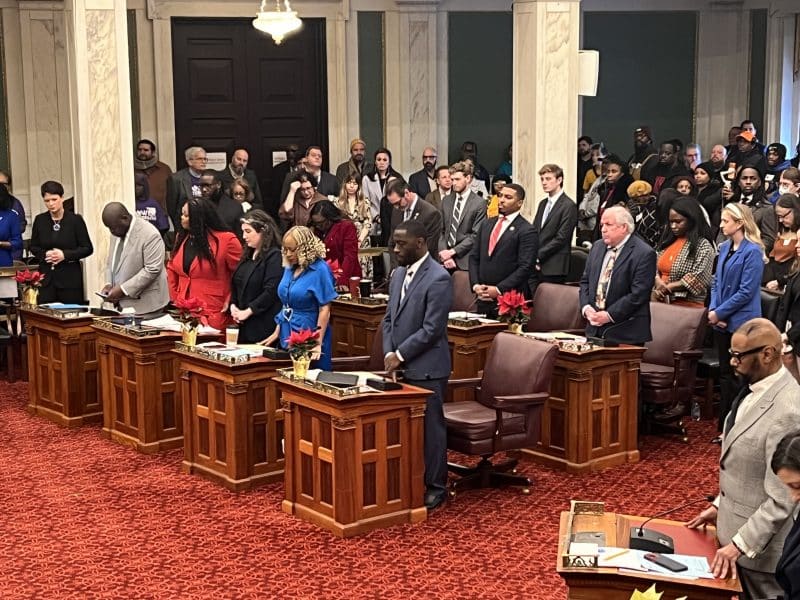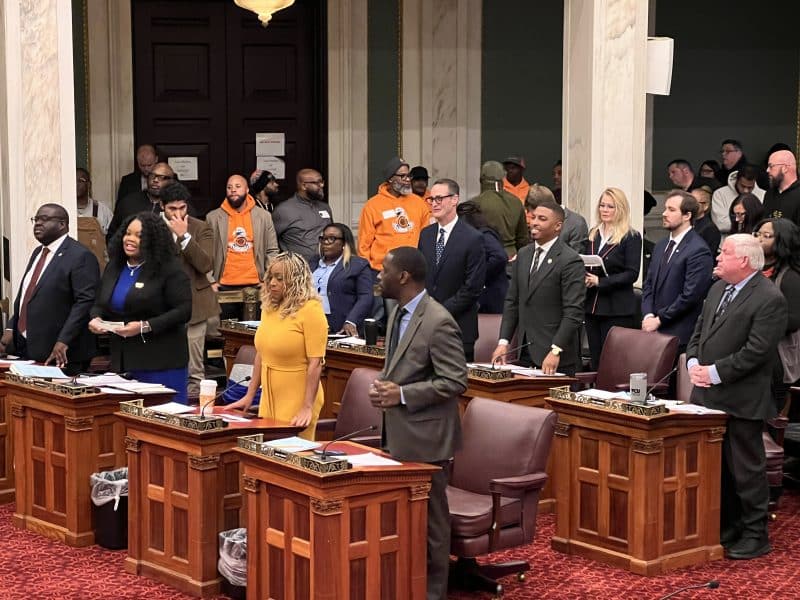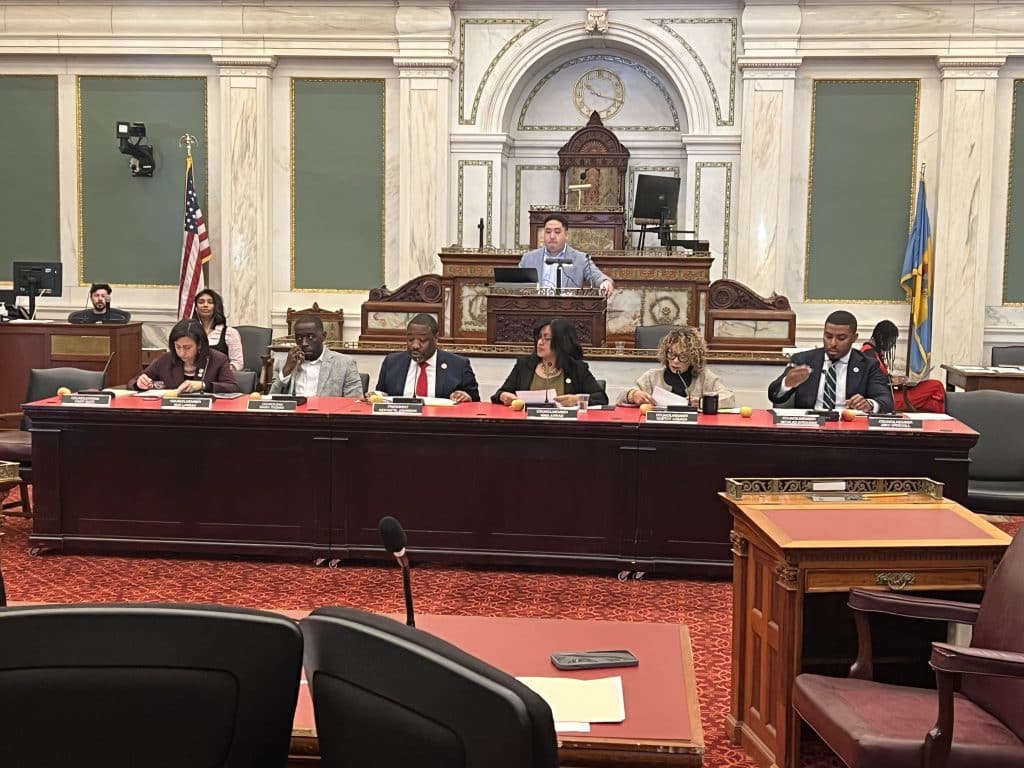
The Philadelphia City Council Committee on Public Health and Human Services held a hearing “to examine the impacts of the current crisis threatening the Supplemental Nutrition Assistance Program (SNAP) and Supplemental Nutrition Assistance Program Education (SNAP-Ed) on food and nutrition security in Philadelphia, including barriers to accessing benefits, disruptions to nutrition education and outreach, consequences for residents, and opportunities for coordinated City and community response.”
At the time of this writing, there is still uncertainty regarding the status of SNAP benefits. A federal court directed the Trump Administration to pay at least partial benefits; however, the Administration has given mixed-signals on their actual intentions, with Trump himself saying benefits would not go out until the government shutdown ended.
For their parts, both the city and the commonwealth have attempted to respond to the crisis. At the state level, Governor Josh Shapiro has made $5 million in emergency funding available to Pennsylvania food banks; and locally, the Parker Administration has launched the “One Philly (SNAP) Support Plan, which aims to provide a combined $14 million in aid from different sources.
Currently, nearly 500,000 Philadelphians rely on SNAP, or almost one-third of the city. SNAP benefits vary according to family size, ranging from $292 per month for a single person, to $1756 for a family of eight (adding $220 per person after eight). For a family of four, the benefit is $975 per month, or $253.75 per family member.
That same family of four cannot earn more than $5200 per month to qualify for the above benefits. The annual total of the monthly income limit for that family of four is $62,400. The average rent in the city of Philadelphia is $1600 per month, according to Zillow, and the Bureau of Labor Statistics reports the average price of food for a family of four is about $780 per month.
When these numbers are added together (and we’re not even counting other necessities such as healthcare costs, transportation, clothing, or any of the other myriad expenses endured by a household) this family of four has spent almost half their income on food and shelter.
It is important to note these numbers are based on a family of four earning the highest income allowable under the current program constraints; this does not reflect lower-income participants, who would see less in their bank accounts after food and shelter were deducted for the month.
Justifiably aggrieved, City Council President Kenyatta Johnson, the sponsor of the resolution, condemned inaction at the federal level while explaining the impact the cuts would have in Philadelphia.
“30% of the children in Philadelphia are food insecure,” Johnson said. “That’s one-in-three children who go to bed hungry. We have to make sure we are addressing the long-term strategy to address food insecurity here.”
Councilmember Nina Ahmad, chair of the committee, was more pointed in her remarks.
“This is not fiscal discipline,” Ahmad said. “This is cruelty by design. Families in Philadelphia are paying the price. SNAP is not a luxury.”
According to information provided by Orlando Rendon, the Executive Director of the Office of Community Empowerment and Opportunity, 17.6% of all Philadelphians were deemed “food insecure” by Feeding America, a nationwide network of food banks, food pantries, and local meal programs. Rendon also said Philadelphians received over $96.2 million in SNAP benefits in September of 2025 alone.
Rendon also outlined the city’s efforts, which include:
- A $2 million contribution to Philabundance and Share, the City’s two largest food distribution partners
- $2 million in individual grants to food security organizations, known as the One Philly SNAP Support Grant Program
- $6 million provided by philanthropic partners to support food banks
- Expanding the One Philly Produce Project to 43 Community and Extended Day/Extended Year Program schools
- A $1 million allocation to the Department of Human Services for food assistance for vulnerable families
While only a week into the stoppage, the impact is being felt across the region. Loree Jones Brown, the Chief Executive Officer of Philabundance, said there was already a surge in need.
“Our pantry patterns are seeing scared faces and longer lines,” Jones Brown said. “On Saturday, Germantown Avenue Crisis Ministry served a record 102 households, up from their already higher-than-average 65 households they’ve been serving lately.”
Other pantries have seen a similar, record-breaking level of need,including many people who have never been to a food pantry before. Others report dwindling reserves and emptying food storage warehouses, adding to the alarm.
While the city, its partner organizations, and the philanthropic community are doing more, these efforts are minuscule in comparison to the reach of the federal government. This remains a very fluid situation, on which Hall Monitor will be keeping a close eye.
This article is a part of Every Voice, Every Vote, a collaborative project managed by The Lenfest Institute for Journalism. The William Penn Foundation provides lead support for Every Voice, Every Vote in 2024 and 2025 with additional funding from The Lenfest Institute for Journalism, Comcast NBC Universal, The John S. and James L. Knight Foundation, Henry L. Kimelman Family Foundation, Judy and Peter Leone, Arctos Foundation, Wyncote Foundation, 25th Century Foundation, Dolfinger-McMahon Foundation, and Philadelphia Health Partnership. To learn more about the project and view a full list of supporters, visit www.everyvoice-everyvote.org. Editorial content is created independently of the project’s donors.
Our reporters sit through hours of city council meetings, dig through piles of documents, and ask tough questions other media overlook. Because we’re committed to addressing Philadelphia’s poverty crisis — and challenging those who sustain it. If you think this work is important too, please support our journalism.
We’re counting on readers like you.